
Pest Control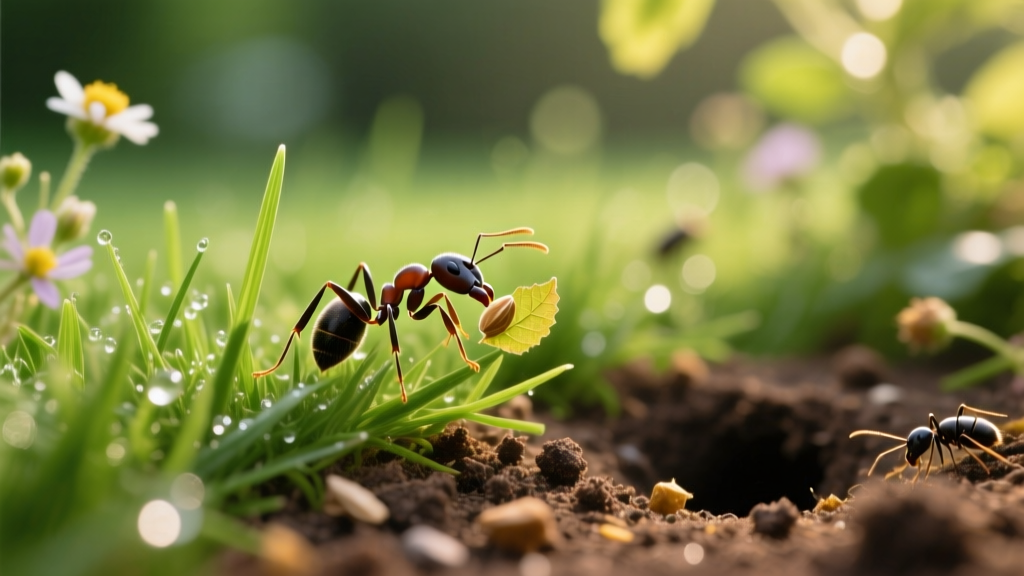
What Does the Ant Do in a Growing Garden? Roles Explained
The Dual Nature of Ants in Garden Ecosystems
When homeowners search for answers to the question, "what does the ant do in a grow garden or raised bed?", the reality is far more complex than a simple friend-or-foe binary. Ants are keystone invertebrates that fundamentally alter soil chemistry, structure, and local food webs. In a thriving garden ecosystem, an ant colony acts as both a subterranean engineering firm and an above-ground livestock rancher. Understanding the specific ecological role your local ant population plays is the first step in deciding whether to encourage their presence or deploy targeted pest control protocols.
According to the University of California Statewide Integrated Pest Management Program, while ants rarely cause direct structural damage to living plant tissue, their secondary behaviors—particularly mutualistic relationships with sap-sucking insects—can devastate crop yields. Conversely, their subterranean activities often outpace earthworms in soil aeration and nutrient cycling. Let us break down the exact mechanical and biological impacts ants have on your garden soil and plant health.
Subterranean Engineers: Soil Aeration and Nutrient Cycling
Beneath the topsoil, ants are relentless excavators. A mature colony of the common black garden ant (Lasius neoniger) can move between 1 to 2 pounds of soil per week, transporting subsoil to the surface and pulling organic matter downward. This bioturbation process yields measurable agronomic benefits:
- Macroporosity Enhancement: Ant tunnels create permanent vertical channels that increase water infiltration rates by up to 30% in compacted clay soils, reducing surface runoff and root rot risks.
- Nutrient Hotspots: Ant middens (nest mounds) contain significantly higher concentrations of nitrogen, phosphorus, and potassium compared to surrounding soil, acting as slow-release organic fertilizer nodes.
- pH Buffering: By mixing calcium-rich subsoil with acidic topsoil, ant activity can naturally buffer soil pH over time, creating a more hospitable environment for alkaline-preferring brassicas.
The Dark Side: Aphid Farming and Trophobiosis
The primary reason ants transition from beneficial insects to severe garden pests is their practice of trophobiosis—specifically, farming aphids, mealybugs, and scale insects. Ants feed on the sugar-rich honeydew excreted by these sap-suckers. In exchange, the ants act as aggressive bodyguards, physically attacking natural predators like ladybugs (Coccinellidae) and parasitic wasps.
⚠️ Warning: The Honeydew Multiplier Effect
A single colony of Argentine ants (Linepithema humile) can protect thousands of aphids across multiple host plants. If you observe a sudden, unexplained explosion in aphid populations on your roses or tomatoes, trace the stems down to the soil line. If you see a highway of ants commuting up the stalk, treating the aphids alone will fail; you must sever the mutualism by controlling the ant colony first.
A single colony of Argentine ants (Linepithema humile) can protect thousands of aphids across multiple host plants. If you observe a sudden, unexplained explosion in aphid populations on your roses or tomatoes, trace the stems down to the soil line. If you see a highway of ants commuting up the stalk, treating the aphids alone will fail; you must sever the mutualism by controlling the ant colony first.
Species Identification Matrix: Who is in your soil?
Accurate identification dictates your management strategy. Not all ants farm aphids, and not all ants damage roots. Use this matrix to identify the primary actors in your garden beds.
| Species | Primary Garden Role | Threat Level | Key Identification Marker |
|---|---|---|---|
| Lasius neoniger (Black Garden Ant) | Soil aeration, seed dispersal, occasional aphid tending | Low to Moderate | Uniform dark brown/black, 3-5mm, distinct citrus odor when crushed |
| Solenopsis invicta (Red Imported Fire Ant) | Aggressive predation, root disturbance, stinging hazard | Severe | Reddish-brown, 2-6mm, builds large dome mounds in full sun |
| Camponotus pennsylvanicus (Carpenter Ant) | Decomposition of dead wood, minimal soil impact | Low (in garden) | Large (6-13mm), black, smoothly rounded thorax profile |
| Linepithema humile (Argentine Ant) | Heavy aphid/mealybug farming, displaces native ants | High | Light to dark brown, 2-3mm, travels in massive, wide foraging trails |
Myrmecochory: The Unsung Seed Dispersers
One highly beneficial, yet frequently overlooked, answer to what the ant does in a growing garden is seed dispersal, a process known as myrmecochory. Many native wildflowers and groundcovers produce seeds equipped with an elaiosome—a lipid-rich, fleshy appendage that mimics the nutritional profile of insect prey. Ants carry these seeds deep into their nests, consume the elaiosome, and leave the intact seed in their nutrient-rich, subterranean refuse chambers. This provides the seed with a protected, fertilized microenvironment for germination. If you are cultivating native pollinator gardens featuring species like Trillium, Bloodroot, or Violas, ant populations are essential for natural propagation.
Actionable Management: When and How to Intervene
Tolerating ants is the default recommendation for healthy garden ecosystems. However, intervention becomes mandatory when ants begin farming sap-suckers on high-value crops or when mound-building species (like Fire Ants) compromise root systems or pose a stinging hazard to gardeners. The University of Kentucky Department of Entomology emphasizes that contact sprays are largely ineffective for long-term garden ant control, as they only kill surface foragers while leaving the queen and deep-brood intact.
Step-by-Step Baiting Protocol for Aphid-Tending Ants
To collapse a colony that is actively protecting garden pests, you must exploit their foraging behavior using slow-acting toxicants that allow workers to share the bait via trophallaxis (mouth-to-mouth feeding) with the queen.
- Identify the Foraging Trail: Locate the exact path the ants use to travel from the soil line up the plant stem. Do not disturb the trail.
- Select the Correct Active Ingredient:
- For sweet-feeding ants (Argentine, Black Garden): Use a Borax-based liquid bait (e.g., Terro T300B, 5.4% Sodium Tetraborate) costing roughly $8 per multi-pack, or an Indoxacarb gel (e.g., Advion Ant Gel, 0.6% Indoxacarb) costing around $28 for a 4-tube pack. Indoxacarb is highly effective due to its bio-activation inside the insect's gut.
- For protein/grease-feeding ants (Fire Ants): Use a granular bait containing Spinosad (e.g., Monterey Garden Insect Spray or granular bait), an organic-approved option derived from soil bacteria.
- Strategic Placement: Apply liquid gel baits in discrete dabs on cardboard squares placed directly on the soil near the base of the infested plant. Avoid placing bait directly on the plant foliage to protect non-target pollinators.
- Monitor and Reapply: Expect a massive increase in ant activity around the bait for the first 24 hours. Do not kill these ants; they are the delivery mechanism. Colony collapse typically occurs within 7 to 14 days.
💡 Pro-Tip: The Tanglefoot Barrier Method
If you need immediate relief for a specific fruit tree or raised bed while waiting for baits to work, apply a band of horticultural glue (like Tanglefoot) around the base of the stem or trunk over a layer of protective tape. This physical barrier instantly halts ant access to the canopy, leaving the aphids vulnerable to natural ladybug predation within 48 hours.
If you need immediate relief for a specific fruit tree or raised bed while waiting for baits to work, apply a band of horticultural glue (like Tanglefoot) around the base of the stem or trunk over a layer of protective tape. This physical barrier instantly halts ant access to the canopy, leaving the aphids vulnerable to natural ladybug predation within 48 hours.
Ecosystem Balance Over Eradication
Ultimately, answering what the ant does in a grow garden requires observing their specific behaviors rather than reacting to their mere presence. By shifting your perspective from total eradication to targeted ecosystem management, you preserve the vital soil-aeration benefits of native ants while surgically removing the colonies that threaten your crop yields through pest-farming mutualisms. Monitor your soil health, identify the species, and deploy slow-acting baits only when the ecological balance tips against your harvest.

