
Pest Control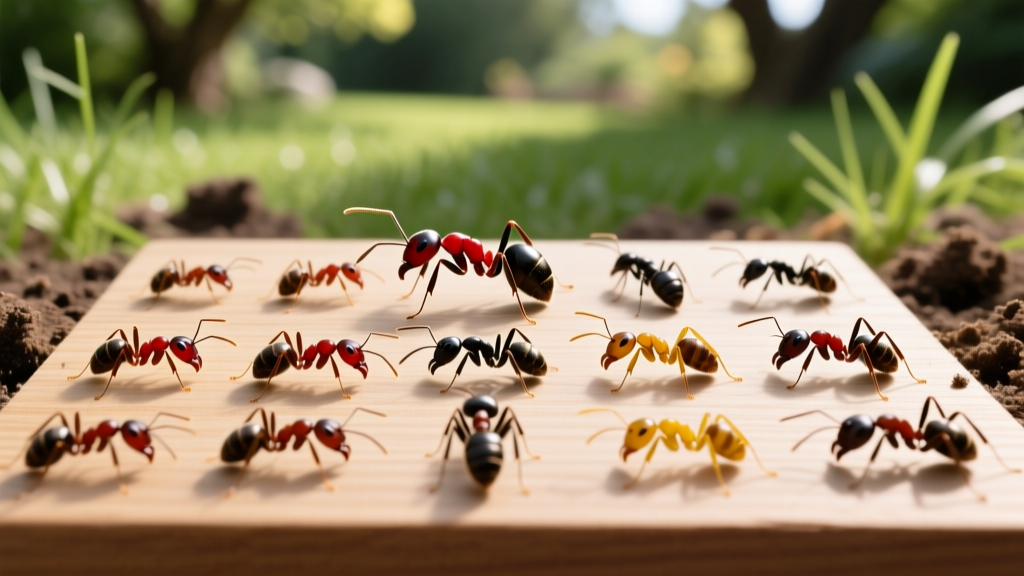
How Many Kinds of Ants Are There? ID & Treatment Cost Guide
The Global and Local Ant Population
When homeowners ask, "how many kinds of ants are there?", the answer depends on whether you are looking at global biodiversity or the specific pests invading your lawn. Globally, entomologists have described over 14,000 distinct ant species, with estimates suggesting up to 22,000 species exist when accounting for undiscovered populations in tropical canopies and subterranean environments. In North America alone, roughly 1,000 species have been cataloged.
However, from a lawn care and pest management perspective, this massive taxonomic number shrinks dramatically. Only about 15 to 20 species routinely invade residential yards, foundations, and structural wood in the United States. Identifying which of these specific kinds of ants you are dealing with is not just an academic exercise; it is the single most critical factor in determining your treatment dosage, chemical selection, and overall pest control budget.
Why Species Identification Dictates Your Treatment Budget
Different ant species exhibit vastly different nesting behaviors, foraging patterns, and colony structures. A treatment that eradicates an Odorous House Ant colony for under $20 will completely fail against a Carpenter Ant infestation, which may require $150+ in specialized wood-injection foams and perimeter barriers. According to the University of California Integrated Pest Management Program, misidentification often leads to the over-application of broad-spectrum repellents, which merely causes colony budding (splitting) in species like Argentine and Pharaoh ants, doubling your long-term costs.
2026 Cost & Dosage Matrix for the 5 Most Common Lawn Ants
The table below breaks down the primary lawn-invading ants, their nesting habits, and the estimated DIY material costs to treat a standard 1/4-acre lot (approx. 10,000 sq. ft. with a 400 linear foot perimeter).
| Ant Species | Nesting Habit | Primary Treatment Method | Est. DIY Material Cost (1/4 Acre) |
|---|---|---|---|
| Carpenter Ant | Moist, decaying wood | Non-repellent liquid + wood foam | $85 - $130 |
| Red Imported Fire Ant | Large soil mounds in sun | Mound drench + broadcast bait | $40 - $65 |
| Odorous House Ant | Shallow soil, under mulch | Non-repellent perimeter spray | $25 - $40 |
| Argentine Ant | Moist soil, shallow networks | Liquid barrier + sweet gel bait | $50 - $75 |
| Pavement Ant | Under concrete, driveways | Granular bait + crack/crevice gel | $30 - $45 |
Product Spotlights: Dosage and Coverage Breakdown
To manage costs effectively, you must calibrate your products to the specific biology of the target species. Here is a deep dive into the two most effective active ingredients used in modern DIY ant control, complete with exact mixing ratios and coverage metrics.
Non-Repellent Liquids: Fipronil (Termidor SC)
Fipronil is the gold standard for perimeter defenses against Odorous House, Argentine, and Carpenter ants. Because it is non-repellent, foraging ants do not detect it, allowing them to track the chemical back to the colony and trigger a transfer effect.
- Concentration: 9.1% Fipronil
- Standard Dosage: 0.8 fluid ounces per gallon of water.
- Coverage: 1 finished gallon treats 1,000 square feet of broadcast area OR 1,000 linear feet when applied as a 6-inch wide by 6-inch deep trench around a foundation.
- Cost Analysis: A 20 oz bottle of Termidor SC costs approximately $75 in 2026. At the 0.8 oz/gal rate, one bottle yields 25 gallons of finished solution. This provides enough chemical to trench 25,000 linear feet, meaning the chemical cost to protect the perimeter of an average home (approx. 200 linear feet) is roughly $0.60 per application.
Warning: Fipronil is highly toxic to aquatic life and bees. The Environmental Protection Agency (EPA) strictly prohibits applying this chemical near bodies of water or directly onto blooming weeds where pollinators are active. Always trench and cover the soil to prevent runoff.
Protein and Sweet Baits: Indoxacarb (Advion Ant Gel)
For species that nest deep in the soil or inside wall voids where liquid sprays cannot reach—such as Pavement and Argentine ants—gel baits utilizing Indoxacarb are highly effective. The active ingredient requires ingestion and enzymatic conversion inside the ant's gut to become lethal, ensuring the forager lives long enough to share the bait via trophallaxis (regurgitation).
- Dosage: Apply 3 to 5 small dots (about the size of a pea) per 10 linear feet of foraging trails.
- Coverage: One 30-gram tube will treat roughly 15 to 20 active trail zones.
- Cost Analysis: A box of four 30g tubes retails for about $38. For a heavy Argentine ant invasion requiring weekly re-application over a month, your total bait cost will be $38, compared to $150+ for professional baiting services.
Calculating Your Lawn's Perimeter and Square Footage
Over-purchasing chemicals is a common mistake that inflates pest control budgets. Before buying granular baits or liquid concentrates, calculate your exact treatment zones.
- Perimeter Trenching (Liquids): Measure the linear footage of your home's foundation. Add the linear footage of any detached structures (sheds, garages). Multiply this total by 2 if you plan to treat both the exterior foundation and the interior baseboards.
- Broadcast Areas (Granular Baits): For Fire Ant management, you need to treat the entire yard. Measure the length and width of your lawn. Multiply them to get square footage. According to Texas A&M AgriLife Extension, broadcast baits for Red Imported Fire Ants should be applied at a rate of 1 to 1.5 lbs per acre. For a 10,000 sq. ft. lawn (approx. 0.23 acres), you only need 5 to 6 ounces of granular bait per application.
Pro Calibration Tip: To calibrate your pump sprayer for liquid barriers, fill it with exactly 1 gallon of plain water. Spray a 10-foot section of your foundation using your standard walking speed and nozzle pressure. Measure how much water is left. If you used 0.5 gallons to cover 10 linear feet, your output is 0.5 gallons per 10 feet, meaning you will need 5 gallons to treat a 100-foot wall.
DIY vs. Professional Treatment Costs
When dealing with massive super-colonies (common with Argentine ants) or structural threats (Carpenter ants), homeowners must weigh the upfront savings of DIY against the guarantee of professional service.
When to DIY
If you are dealing with seasonal Odorous House Ants or localized Fire Ant mounds, DIY is highly cost-effective. A $45 investment in Fipronil and a $25 pump sprayer will provide 3 to 5 years of perimeter defense, averaging out to less than $15 per year.
When to Hire a Professional
If you identify Carpenter Ants, the colony is likely nesting inside your structural timber or attic insulation. Professionals utilize specialized equipment like dust injectors and foaming machines to penetrate wall voids. Expect to pay between $350 and $600 for an initial Carpenter Ant eradication service in 2026, which includes a 1-year warranty. Attempting to treat structural Carpenter Ants with surface sprays will result in thousands of dollars in undetected wood rot and framing damage.
Frequently Asked Questions
Are there any ants that are beneficial to the lawn?
Yes. Many of the 1,000+ North American species are entirely beneficial. Native harvester ants and field ants aerate the soil, break down organic matter, and prey on destructive pests like flea and tick larvae. Unless ants are entering your home, damaging structural wood, or building massive mounds that smother turfgrass (like Fire Ants), treatment is usually unnecessary.
Why do my ant treatments keep failing in the spring?
Spring treatments often fail because homeowners use fast-acting repellent sprays (like Bifenthrin or Deltamethrin) from big-box stores. These kill the visible foragers instantly but trigger the colony to split into multiple satellite nests—a survival mechanism called budding. Switching to a slow-acting, non-repellent like Fipronil or an Indoxacarb gel bait ensures the queen is eliminated.

