
Pest Control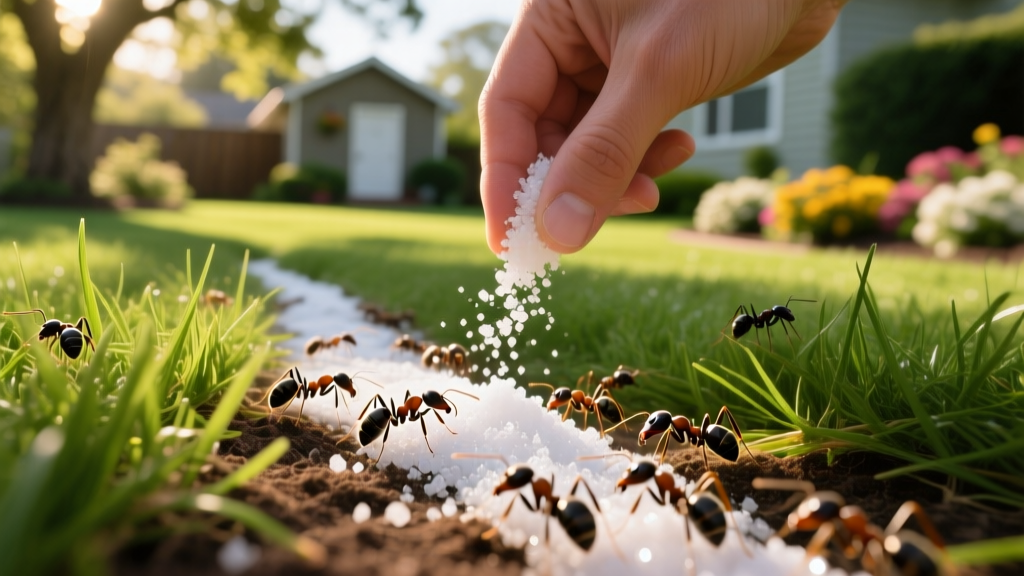
Ants and Salt: Does Salting Your Yard Actually Kill Ant Colonies?
The Internet Myth: Pouring Salt on Ant Mounds
When faced with a sprawling ant colony ruining a patio edge or tunneling through a lawn, many homeowners search for cheap, immediate DIY solutions. The search for "ants and salt" yields thousands of forum posts suggesting that dumping table salt (sodium chloride) directly onto mounds or creating salt barriers will eradicate the infestation. Mechanically, this advice is rooted in basic biology. However, as a long-term yard defense strategy, salting your soil is one of the most destructive mistakes you can make for your turfgrass and garden beds.
While sodium chloride does possess desiccant properties that can kill individual insects, the collateral damage to your soil's chemistry and your lawn's root system far outweighs the temporary pest control benefits. Understanding the exact interaction between ants, salt, and soil cation exchange capacity (CEC) is critical before you reach for the Morton's canister.
The Science Behind Ants and Salt: How It Actually Works
Ants are highly susceptible to osmotic shock. When an insect comes into direct contact with high concentrations of sodium chloride, the salt draws moisture out of their hemolymph (insect blood) and soft tissues through osmosis. Furthermore, salt crystals can physically abrade the waxy outer layer of an ant's exoskeleton, accelerating water loss and leading to fatal desiccation.
Because ants rely on environmental moisture to maintain colony humidity, they will actively avoid foraging in highly saline environments. This is why a thick line of salt might temporarily deter a trailing line of Argentine ants from crossing a driveway threshold. However, this deterrence is strictly behavioral and temporary; it does not eliminate the queen, nor does it destroy the subterranean brood.
⚠️ WARNING: The Soil Salinity Danger
Applying salt to soil raises the Electrical Conductivity (EC) to toxic levels. Once sodium ions bind to soil clay particles, they displace essential calcium and magnesium, causing soil aggregates to collapse. This results in severe soil compaction, eliminating the oxygen and water infiltration your turfgrass needs to survive.
Why Salting Your Lawn is a Catastrophic Mistake
The primary reason pest control professionals strongly advise against using salt for yard ant defense lies in soil chemistry. According to University of Minnesota Extension turfgrass specialists, excess sodium in the soil creates a condition known as physiological drought. Even if the soil is physically wet, the high salt concentration lowers the soil's water potential, making it impossible for grass roots to absorb moisture.
When you pour a cup of salt onto an ant mound in your Bermuda or Fescue lawn, you are effectively creating a localized dead zone. The sodium ions (Na+) carry a single positive charge, unlike the double positive charge of calcium (Ca2+). This charge difference causes the sodium to break apart the flocculated structure of clay-heavy soils. The result is a hardpan crust that repels water, stunts root growth, and leaves a bare, brown patch in your yard that can take multiple seasons and heavy gypsum (calcium sulfate) applications to remediate.
Treatment Comparison: Salt vs. Proven Yard Ant Solutions
To effectively manage ant populations without destroying your landscape, you must transition from crude desiccants to targeted, low-impact pest control methods. The table below compares the efficacy, cost, and environmental impact of common ant treatments.
| Treatment Type | Active Ingredient | Avg. Cost | Soil Impact | Colony Kill Rate |
|---|---|---|---|---|
| Table Salt | Sodium Chloride | $1.50 / box | Severe (Destroys CEC) | Low (Surface only) |
| Diatomaceous Earth | Amorphous Silica | $15.00 / 4lb | Neutral / Safe | Moderate (Dry conditions) |
| Protein/Sweet Gel Bait | Indoxacarb / Thiamethoxam | $35.00 / tube | Negligible | High (Trophallaxis transfer) |
| Liquid Perimeter Barrier | Fipronil / Bifenthrin | $80.00 / bottle | Low (When applied correctly) | High (Non-repellent transfer) |
The Epsom Salt Confusion: Magnesium Sulfate vs. Sodium Chloride
A frequent point of confusion in gardening forums is the recommendation to use Epsom salt for pest control. Epsom salt is chemically distinct from table salt; it is magnesium sulfate (MgSO4), not sodium chloride. While Epsom salt is an excellent supplemental fertilizer for correcting magnesium deficiencies in tomatoes and peppers, it does not kill or deter ants. Applying Epsom salt to an ant mound will simply fertilize the weeds growing on top of it. For desiccation-based pest control, amorphous silica (Diatomaceous Earth) is the correct, soil-safe alternative.
Actionable Alternatives for Yard Ant Defense
According to the University of California Agriculture and Natural Resources Integrated Pest Management program, successful ant management requires targeting the colony's social structure rather than just killing visible foragers. Implement this three-step protocol to defend your yard without compromising soil health.
Step 1: Identify and Deploy Targeted Baits
Ant species have shifting dietary preferences based on their reproductive cycle. In spring, they typically seek proteins and fats to feed the developing brood. In late summer, they switch to carbohydrates (sugars) to build energy reserves.
- For Sweet Ants (Argentine, Odorous House): Use a gel bait containing Thiamethoxam or Indoxacarb (e.g., Optigard or Advion). Apply 3-5 pea-sized drops near trails, not directly on the mound.
- For Grease/Protein Ants (Fire Ants, Pavement Ants): Use a granular bait containing Spinosad or Hydramethylnon (e.g., Amdro). Broadcast at a rate of 1.5 lbs per acre.
The worker ants will carry the slow-acting toxicant back to the nest and share it with the queen via trophallaxis, collapsing the colony from the inside out within 7 to 14 days.
Step 2: Establish a Non-Repellent Perimeter Barrier
To prevent re-infestation from neighboring properties, apply a non-repellent liquid insecticide around the foundation of your home and the perimeter of your hardscapes. Products containing Fipronil (such as Termidor SC) are undetectable to ants. The insects walk through the treated soil, pick up the active ingredient on their tarsi, and spread it to nestmates through grooming. Mix at a rate of 0.8 fl oz per gallon of water and apply in a 1-foot wide band along the foundation. This barrier remains active in the soil for up to 6 months.
Step 3: Use Desiccant Dusts in Dry, Protected Areas
If you specifically want a physical, non-chemical desiccant to replace the "salt barrier" concept, use food-grade Diatomaceous Earth (DE). DE consists of fossilized diatoms with microscopic, razor-sharp edges that slice through the ant's exoskeleton. Apply a thin, barely visible layer under patio furniture, inside dry crawl spaces, or along the back edges of garden bed retaining walls. Note: DE loses its efficacy when wet, so it must be reapplied after irrigation or rainfall.
Frequently Asked Questions
Will pouring boiling salt water on an ant mound kill the colony?
The boiling water will kill the ants it directly contacts through thermal shock, but the salt left behind will sterilize the soil, preventing grass from growing in that spot for months. The thermal kill zone rarely reaches deep enough to destroy the primary queen, meaning the colony will often rebound and relocate a few feet away.
Can I use rock salt to keep ants out of my garden beds?
No. Rock salt will leach into the soil profile with every rainfall, raising the Sodium Adsorption Ratio (SAR). This will cause severe root burn and nutrient lockout in your ornamental plants and vegetables. Use a botanical barrier like cedar mulch or a targeted bait instead.
How long does it take for salt to break down in yard soil?
Sodium chloride does not "break down" or degrade organically. It must be physically flushed out of the soil profile through heavy, deep irrigation (leaching). In heavy clay soils, this process can take years and often requires the application of pelletized gypsum (calcium sulfate) to displace the sodium ions from the soil's cation exchange sites.

