
Pest Control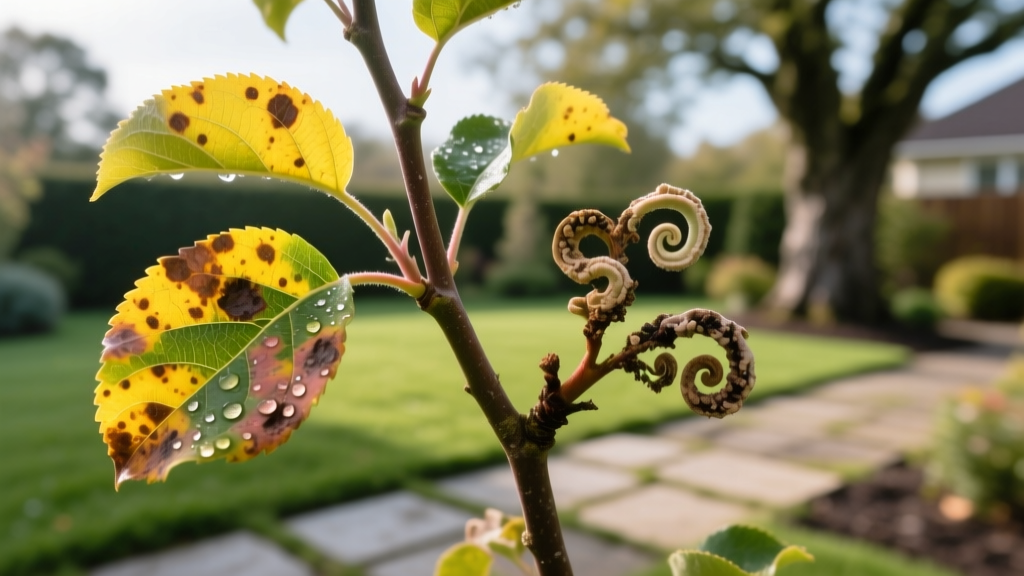
Identifying Apple Plant Diseases: Symptoms & Rescue Fixes
The Diagnostic Matrix: Identifying Common Apple Plant Diseases
When your orchard or backyard apple trees begin to decline, rapid identification is the difference between saving your harvest and losing the entire tree. Apple plant diseases are primarily driven by fungal pathogens and bacteria that exploit specific vulnerabilities during the tree's phenological growth stages. Misdiagnosing a bacterial infection as a fungal one will lead to wasted chemical applications and irreversible canopy loss.
Below is a rapid-triage matrix to help you cross-reference visual symptoms with the correct pathogen type and immediate rescue protocols. Accurate diagnosis requires examining both the upper and lower leaf surfaces, as well as the bark on newer shoots.
| Disease | Primary Visual Symptoms | Pathogen Type | Immediate Rescue Action |
|---|---|---|---|
| Apple Scab | Olive-green to black velvety spots on leaves; corky, scabby lesions on fruit. | Fungal (Venturia inaequalis) | Apply Myclobutanil or Captan; remove fallen leaf litter. |
| Cedar Apple Rust | Bright orange/yellow spots on upper leaves; tube-like projections underneath. | Fungal (Gymnosporangium) | Apply Mancozeb; remove nearby Juniper hosts if possible. |
| Fire Blight | Shepherd's crook wilting on shoot tips; amber ooze from bark cankers. | Bacterial (Erwinia amylovora) | Prune 12 inches below cankers; sterilize tools between cuts. |
| Powdery Mildew | White, powdery fungal coating on new shoots; stunted, distorted leaf growth. | Fungal (Podosphaera leucotricha) | Apply Potassium bicarbonate or Sulfur; improve canopy airflow. |
| Sooty Blotch & Flyspeck | Superficial black smudges or tiny black dots on the fruit skin. | Fungal Complex | Summer pruning for airflow; apply Thiophanate-methyl. |
Apple Scab and Cedar Apple Rust: The Early Spring Defoliators
Apple scab and cedar apple rust are the most frequent culprits behind premature summer defoliation. Both are fungal, but their life cycles and rescue treatments differ significantly. According to Penn State Extension, apple scab overwinters in fallen leaf litter, releasing ascospores precisely when apple buds reach the green-tip stage. If you see olive-green lesions forming on the leaves by mid-spring, the primary infection period has already occurred, and you are now dealing with secondary conidia spread.
Targeted Fungicide Rescue Protocol
If you missed the dormant and green-tip preventative sprays, you must switch to a rescue schedule using systemic fungicides. Contact fungicides like Mancozeb (FRAC Group M03) will only protect new tissue; they will not cure existing scab lesions. For active rescue, use a systemic sterol inhibitor like Spectracide Immunox (Myclobutanil, FRAC Group 3), which penetrates the leaf cuticle and halts fungal expansion within 24 hours.
- Product: Spectracide Immunox Multi-Purpose Fungicide (approx. $14-$16 per 16oz concentrate).
- Mix Rate: 1.25 fl oz per gallon of water.
- Application Interval: Every 7 to 10 days during active spring rain events.
- Rainfastness: 2 hours. If it rains before the 2-hour mark, reapply immediately.
Expert Warning: To prevent pathogen resistance, never apply Myclobutanil more than twice consecutively. Rotate with a protectant like Bonide Captan ($16 per 8oz) for the third application.
Fire Blight: The Bacterial Emergency Protocol
Fire blight is arguably the most destructive of all apple plant diseases because it is bacterial, meaning standard fungal sprays are entirely ineffective. The pathogen, Erwinia amylovora, enters through open blossoms or fresh wounds during warm, humid spring days (temperatures between 75°F and 85°F). The hallmark symptom is the 'shepherd's crook,' where the tip of a new shoot rapidly wilts, blackens, and bends downward.
⚠️ CRITICAL WARNING: Tool Sterilization
Pruning out fire blight without sterilizing your tools will spread the bacteria to healthy tissue, effectively inoculating the rest of your tree. Do not use bleach solutions, as they corrode steel and degrade rapidly. Keep a spray bottle of 70% isopropyl alcohol or a commercial quaternary ammonium disinfectant (like Lysol) on hand. Spray the blades of your bypass pruners and wipe them dry with a clean rag between every single cut.
Step-by-Step Rescue Pruning
According to the University of Minnesota Extension, aggressive pruning is the only viable rescue fix once the bacteria has entered the wood. Follow these exact measurements to ensure you remove the internal margin of infection:
- Locate the Margin: Identify the lowest point of visible bark discoloration or sunken cankers on the infected branch.
- Measure the Buffer: Measure exactly 12 inches below the visible margin of the infection into healthy-looking wood.
- Execute the Cut: Make a clean, angled cut using sterilized bypass pruners. Do not use anvil pruners, as they crush the cambium layer, creating new entry wounds.
- Dispose Safely: Burn the infected branches or bag them in heavy-duty contractor trash bags and send them to the landfill. Never chip fire-blight wood for mulch.
Sooty Blotch and Flyspeck: Late Summer Cosmetic Issues
While scab and fire blight threaten the tree's structural integrity, sooty blotch and flyspeck (SBFS) are late-summer diseases that ruin the marketability and visual appeal of the fruit. The SBFS complex thrives in prolonged periods of high humidity and poor air circulation within the canopy. The pathogens do not rot the fruit flesh; they grow exclusively on the epicuticular wax of the apple skin.
The Rescue Fix: If SBFS appears in mid-July, chemical rescue is difficult because the fungi are protected by the fruit's wax. Your immediate action should be summer pruning. Remove all water sprouts (vertical, non-fruiting shoots) and thin the canopy to allow wind to penetrate the center of the tree. This drops the micro-climate humidity below the 90% threshold required for SBFS spore germination. For future prevention, apply a summer cover spray of Thiophanate-methyl in early July before the summer humidity sets in.
Why Treatments Fail: Edge Cases and Application Mistakes
Many homeowners correctly identify apple plant diseases but fail to cure them due to chemical mismanagement. If your fungicide applications are not halting the spread, investigate these three common failure modes:
1. Alkaline Hydrolysis of Captan
Captan is a highly effective protectant fungicide, but it is extremely sensitive to water pH. If your local tap water is alkaline (pH above 7.0), the active ingredient will undergo alkaline hydrolysis, breaking down into inactive compounds within minutes of mixing. The Fix: Test your spray water with a $10 pH testing kit. If the pH is above 7.0, add a commercial spray buffer or acidifier to drop the water pH to 5.5 before adding the Captan.
2. Inadequate Spray Volume and Coverage
Fungal spores land primarily on the undersides of leaves. A light misting from a standard hose-end sprayer will only coat the upper canopy. For a mature, semi-dwarf apple tree (approx. 12 feet tall), you need a minimum of 2 to 3 gallons of mixed spray solution to achieve the 'point of runoff' stage, where the liquid just begins to drip from the leaves. Invest in a 4-gallon battery-powered backpack sprayer (approx. $120-$150) with an adjustable cone nozzle to penetrate the inner canopy.
3. Ignoring the Phenological Calendar
Fungicides applied after the 'petal fall' stage will not prevent primary apple scab infections, which occur earlier. You must align your sprays with the tree's biological clock, not the calendar date. Monitor your buds closely: apply your first copper or lime-sulfur spray at 'half-inch green tip,' your second at 'pink bud' (just before blossoms open), and your third at 'petal fall.' Spraying during full bloom is not only ineffective for scab, but it can also harm vital pollinator populations.
"Successful management of apple plant diseases relies less on the sheer toxicity of the chemical and more on the precision of the application timing. Hitting the pink bud stage with a systemic fungicide is the single most critical intervention a backyard grower can make to ensure a clean harvest."
By combining rigorous visual diagnosis with precise, phenologically timed interventions, you can halt the progression of apple plant diseases and restore your orchard's health without resorting to excessive chemical loads.

