
Pest Control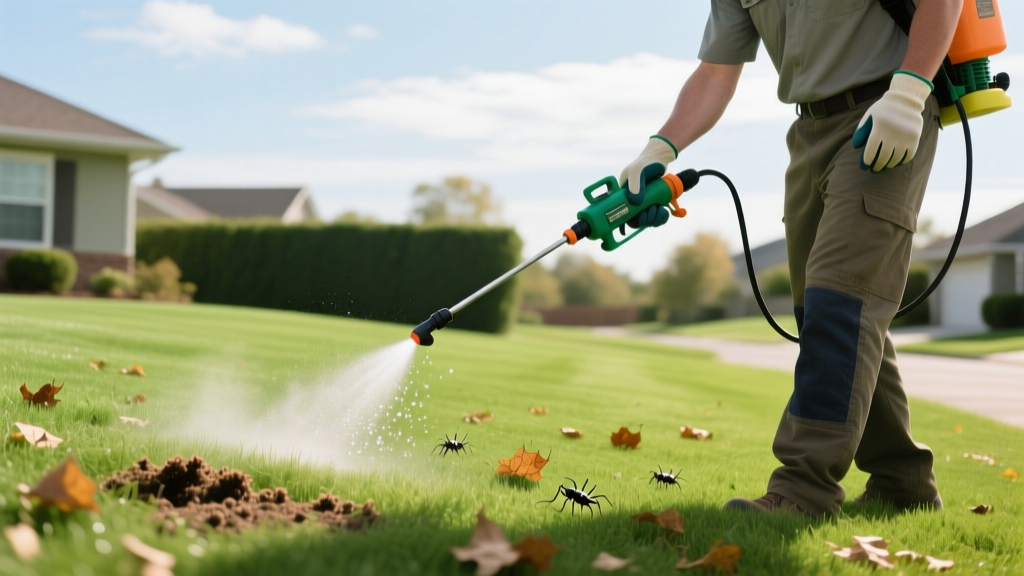
Applying Lawn Insecticides: Step-by-Step Grub and Pest Control
The Core Philosophy of Insecticide Application
Effective pest management relies on precision, not volume. The most common failure mode when applying lawn insecticides is not the choice of chemical, but improper calibration and poor timing. Whether you are targeting destructive white grubs, surface-feeding chinch bugs, or defoliating armyworms, the active ingredient must reach the target zone at the correct concentration. This step-by-step maintenance protocol details the exact calibration, selection, and application procedures required to eliminate turf pests without causing phytotoxicity or environmental runoff.
Phase 1: Pest Identification and Chemical Selection
Before purchasing any product, you must identify whether your target pest requires a systemic preventative or a fast-acting contact curative. Misapplying a preventative when grubs are already in their third-instar stage will result in total application failure.
| Pest Target | Insecticide Type | Active Ingredient | Brand Example | Cost per 1,000 sq ft | Application Window |
|---|---|---|---|---|---|
| White Grubs (Preventative) | Systemic | Chlorantraniliprole | Scotts GrubEx1 | $4.50 - $5.50 | Early Spring to Early Summer |
| White Grubs (Curative) | Contact/Penetrant | Trichlorfon (Dylox) | Bayer 24-Hour Grub Killer | $3.75 - $4.25 | Late Summer to Early Fall |
| Chinch Bugs | Contact | Bifenthrin | Talstar P Professional | $1.20 - $1.80 | Early Summer (First signs) |
| Armyworms | Contact/Ingested | Carbaryl | Sevin Liquid | $2.50 - $3.00 | Late Summer (Dusk application) |
Expert Insight: Chlorantraniliprole (GrubEx1) is highly favored by university extensions because it poses minimal risk to pollinators and earthworms compared to older neonicotinoids like imidacloprid. However, it takes 60 to 90 days to fully translocate through the root zone, meaning it must be applied in May or June for August grub protection.
Phase 2: Precision Equipment Calibration
Applying lawn insecticides without calibrating your sprayer leads to severe under-dosing (pest survival) or over-dosing (turf burn and soil contamination). Here is the exact calibration procedure for the two most common homeowner application tools.
Calibrating a Backpack Sprayer
For liquid concentrates like Talstar P or Sevin, a 4-gallon backpack sprayer equipped with a flat-fan nozzle (such as the TeeJet 8004VS) is the industry standard.
- Measure Output: Fill the sprayer with clean water. Spray into a 1-gallon measuring jug for exactly 60 seconds at your normal walking pace and pumping pressure (aim for 40 PSI).
- Calculate GPM: If you collect 1.5 gallons in 60 seconds, your output is 1.5 Gallons Per Minute (GPM).
- Determine Swath Width: A standard 8004VS nozzle at 20 inches above the turf yields a 4-foot effective swath width.
- Calculate Area per Minute: Walking at 3 miles per hour (264 feet per minute) x 4 feet swath = 1,056 square feet covered per minute.
- Mix the Tank: If the label requires 1 ounce of insecticide per 1,000 square feet, and you cover 1,056 sq ft per minute (using 1.5 gallons of water), you need to mix roughly 1.5 ounces of chemical per 1.5 gallons of water to treat that specific area accurately.
Calibrating a Hose-End Sprayer
Hose-end sprayers (like the Ortho Dial N Spray) rely on water pressure to siphon the concentrate. Set the dial to the exact ounces-per-gallon ratio specified on the lawn insecticide label. Critical edge case: If your home's water pressure exceeds 60 PSI, the siphon rate will skew high, over-applying the chemical. Install a simple inline pressure reducer if you notice the tank emptying faster than the label's calculated time.
Phase 3: The Application Protocol
Once calibrated, execute the application following these strict environmental parameters to maximize efficacy and minimize drift.
- Timing: Apply contact insecticides (like Carbaryl for armyworms) at dusk. UV light degrades carbaryl rapidly, and nocturnal pests are actively feeding at the surface during evening hours.
- Wind Conditions: Never spray when wind speeds exceed 5 MPH. Use a droplet size of 200-400 microns (medium to coarse) to prevent drift onto neighboring ornamental beds.
- Temperature Limits: Avoid applying liquid insecticides when ambient temperatures exceed 85°F. High heat increases volatilization, turning the liquid into a gas that can damage nearby broadleaf plants and reduce soil penetration.
- Overlap Technique: Walk in a grid pattern. Spray the perimeter first, then walk back and forth across the lawn, overlapping each pass by 6 inches to prevent untreated 'striping' where pests survive.
Safety Warning: Always wear nitrile gloves, long pants, and closed-toe shoes. While modern lawn insecticides like chlorantraniliprole have low mammalian toxicity, liquid concentrates can cause contact dermatitis. Keep pets and children off the treated area until the foliage is completely dry (typically 2 to 4 hours).
Phase 4: Post-Application Maintenance and Watering
The application is only half the process. How you manage the lawn immediately afterward dictates whether the chemical reaches the root zone or degrades on the thatch layer.
Watering In Systemic vs. Contact Products
If you applied a preventative systemic granular product (like Scotts GrubEx1), you must apply 0.5 inches of irrigation immediately after spreading. This washes the granules off the grass blades and into the soil profile where earthworm activity and root exudates begin breaking down the chemical. Failure to water in granular insecticides within 48 hours results in UV degradation and total product loss.
Conversely, if you applied a liquid contact spray for surface pests like chinch bugs or adult billbugs, do not water for at least 24 hours. The chemical needs to remain on the foliage and thatch surface where these pests live and feed.
Mowing Restrictions
Delay mowing for 48 hours post-application. When you do mow, leave the clippings on the lawn for the first cut to allow any residual chemical on the grass blades to break down naturally. If you must bag, do not compost the clippings; dispose of them in municipal yard waste to avoid contaminating your compost pile with residual herbicides or insecticides.
Troubleshooting: Why Your Insecticide Application Failed
If you applied lawn insecticides but still observe brown, dying turf or active pest feeding, evaluate these three common failure modes:
- The Thatch Barrier: If your lawn has more than 0.5 inches of thatch, granular and liquid insecticides will bind to the organic matter and never reach the soil-dwelling grubs. Fix: Perform core aeration or dethatching before your next application cycle.
- Wrong Instar Stage: Trichlorfon (Dylox) is highly effective against 1st and 2nd instar grubs in August but loses efficacy against large, 3rd instar grubs in October due to their thickened exoskeleton and reduced feeding rates. Fix: Switch to a nematode application (Heterorhabditis bacteriophora) for late-fall curative control.
- Alkaline Hydrolysis: Mixing liquid carbaryl or trichlorfon with water that has a high pH (above 8.0) causes rapid chemical breakdown. Fix: Test your tap water pH. If it is highly alkaline, add a commercial buffer acidifier to the tank mix before adding the insecticide.
For comprehensive regional data on pest life cycles and university-tested efficacy rates, consult resources like the Penn State Extension White Grub Management Guide and the EPA's Safe Pest Control Protocols. Proper calibration and precise timing will transform your lawn maintenance routine from a guessing game into a highly effective, science-backed pest defense system.

