
Pest Control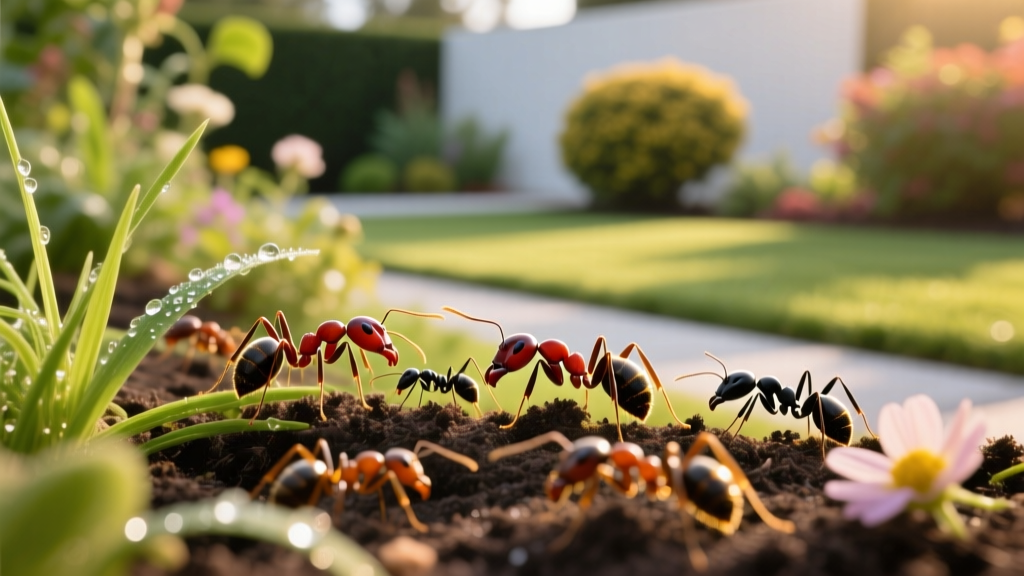
Are Ants Good for the Garden? Benefits, Risks, and Species Guide
The Dual Role of Ants in Garden Ecosystems
Homeowners frequently ask: are ants good for the garden? The answer is not a simple yes or no. Ants act as ecosystem engineers, fundamentally altering soil physics and biological food webs. In ornamental beds and naturalized areas, their presence is overwhelmingly beneficial. However, in managed turfgrass, vegetable gardens, and structural perimeters, specific ant species transition from beneficial insects to severe agricultural and structural pests.
Quick Assessment: If you see ants in your compost pile, flower beds, or under mulch, they are likely improving soil aeration and breaking down organic matter. If you see ants crawling up plant stems, swarming your lawn, or nesting near your home's foundation, intervention is required.
The Case FOR Ants: Ecosystem Services
When left undisturbed in non-turf areas, ant colonies provide measurable agronomic and ecological benefits that rival earthworm activity.
- Soil Aeration and Hydrology: Ant tunnels create macropores that increase water infiltration rates by up to 15% compared to ant-free soils. This prevents surface runoff and reduces soil compaction in heavy clay garden beds.
- Nutrient Cycling: Ants concentrate nitrogen, phosphorus, and potassium in their nests. According to the University of California Statewide Integrated Pest Management Program, soil within and immediately surrounding anthills often contains significantly higher levels of available nutrients than the surrounding bulk soil.
- Seed Dispersal (Myrmecochory): Many native spring ephemerals and wildflowers rely on harvester ants to carry their elaiosome-bearing seeds to nutrient-rich nest environments, facilitating germination.
- Predation: Foraging worker ants are opportunistic predators. They consume significant quantities of flea eggs, termite larvae, and caterpillar pupae, acting as a natural biological control agent.
The Case AGAINST Ants: When They Become Pests
The ecological value of ants collapses when their foraging behaviors conflict with human agricultural goals or structural integrity.
Aphid Farming and Mutualism
The most destructive garden behavior exhibited by ants is mutualistic farming. Species like the Argentine ant (*Linepithema humile*) and various sugar ants actively protect aphids, mealybugs, and scale insects from natural predators like lady beetles and parasitic wasps. In exchange, the ants harvest the honeydew excreted by these sap-sucking pests. This protection allows aphid populations to explode, leading to severe plant stunting, leaf curling, and the transmission of devastating plant viruses. Furthermore, the excess honeydew promotes the growth of black sooty mold, which blocks photosynthesis.
Turfgrass Mounding and Root Desiccation
In lawns, mound-building species (particularly pavement ants and fire ants) excavate deep chambers, depositing soil on the surface. These mounds smother the underlying turfgrass, block sunlight, and cause localized root desiccation. Additionally, hardened mounds dull mower blades and create uneven, hazardous walking surfaces.
Species Identification Matrix: Friend or Foe?
Correct identification is the prerequisite for any management decision. Use this matrix to evaluate the species in your yard.
| Species | Primary Habitat | Garden Impact | Action Required |
|---|---|---|---|
| Pavement Ant (Tetramorium caespitum) |
Driveways, sidewalks, lawn edges | Creates unsightly soil mounds in turf; rarely harms plants directly. | Tolerate in beds; treat if mounds damage lawn aesthetics. |
| Red Imported Fire Ant (Solenopsis invicta) |
Open sunny lawns, pastures, vegetable gardens | Aggressive stinging; damages okra/potato crops; harms ground-nesting birds. | Eradicate immediately using broadcast baits. See Texas A&M Fire Ant protocols. |
| Carpenter Ant (Camponotus pennsylvanicus) |
Moist, decaying wood, tree stumps, structural timbers | Does not eat wood but excavates it to nest, causing severe structural damage. | Locate and destroy satellite colonies; repair moisture leaks. |
| Harvester Ant (Pogonomyrmex spp.) |
Arid landscapes, native gardens, cleared soil patches | Clears vegetation around nest; disperses native seeds; painful sting. | Tolerate in native/xeriscape zones; avoid in high-traffic play areas. |
Decision Framework: Tolerate, Deter, or Eradicate?
Before purchasing chemical controls, run your specific ant problem through this triage framework to avoid unnecessary pesticide applications that harm soil biology.
- Step 1: Locate the Origin. Are the ants emerging from a centralized mound in the lawn, trailing from a crack in the driveway, or descending from a tree canopy? Trailing ants are usually foraging for honeydew or spilled sugars.
- Step 2: Assess the Damage Threshold. If ants are simply foraging over mulch, take no action. If they are farming aphids on your prized roses or tomatoes, intervention is mandatory.
- Step 3: Break the Mutualism First. If ants are protecting aphids, treat the aphids first. A strong blast of water or an application of insecticidal soap removes the food source, causing the ants to abandon the plant.
- Step 4: Select Targeted Intervention. Choose baits for colony elimination or repellents for perimeter defense.
Targeted Treatment Protocols
When eradication is necessary, broadcast sprays of contact insecticides (like bifenthrin) are largely ineffective against ant colonies because they only kill the 5% to 10% of workers currently foraging, leaving the queen intact to rapidly replenish the population. Modern pest control relies on slow-acting transfer toxins and baits.
Professional-Grade Gel Baits
For sugar-feeding ants invading garden structures or farming aphids, Advion Ant Gel (Active ingredient: 0.05% Indoxacarb) remains the industry standard. Priced at approximately $35 for a 4-tube pack, it exploits the ants' trophallaxis (food-sharing) behavior. Workers consume the gel, return to the nest, and feed it to the larvae and queen. The delayed action of Indoxacarb ensures the colony is poisoned before the foragers die. Apply small pea-sized drops near ant trails, avoiding direct application to soil where it can degrade rapidly under UV light.
Organic and OMRI-Listed Options
For vegetable gardens where synthetic chemicals are restricted, Monterey Garden Insect Spray (Active ingredient: Spinosad) offers a highly effective, OMRI-listed alternative. Priced around $22 for a 16 oz concentrate, Spinosad is derived from soil-dwelling bacteria and is highly toxic to ants upon ingestion and contact. It breaks down rapidly in sunlight, minimizing long-term soil residue. Apply as a drench directly to the entrance of anthills in the evening when foragers are returning to the nest.
Expert Warning on Carpenter Ants: If you observe large, black carpenter ants inside your home or near wooden raised garden beds, baits are often insufficient. According to Penn State Extension, carpenter ants require moisture-damaged wood to establish colonies. Eradication requires locating the parent colony (often in a nearby dead tree or stump) and treating it directly with dust formulations like DeltaDust, while simultaneously replacing the water-damaged wood in your structures.
Frequently Asked Questions
Do ants pollinate garden plants?
Rarely. While ants frequently visit flowers to scavenge nectar, they are highly inefficient pollinators. Their bodies lack the specialized hairs that trap pollen, and they secrete formic acid, which can actually sterilize or degrade pollen grains on contact. Rely on native bees, hoverflies, and butterflies for primary pollination services.
Can coffee grounds or cinnamon repel ants from garden beds?
Used coffee grounds and cinnamon powder act as mild, temporary physical irritants that may disrupt an established pheromone trail. However, they do not kill the colony, nor do they provide a lasting barrier. Once the grounds dry or the cinnamon blows away, foraging workers will simply establish a new trail. For persistent infestations, borax-based liquid baits (like Terro, containing 5.4% Sodium Tetraborate) offer a vastly superior, low-cost elimination strategy.

