
Pest Control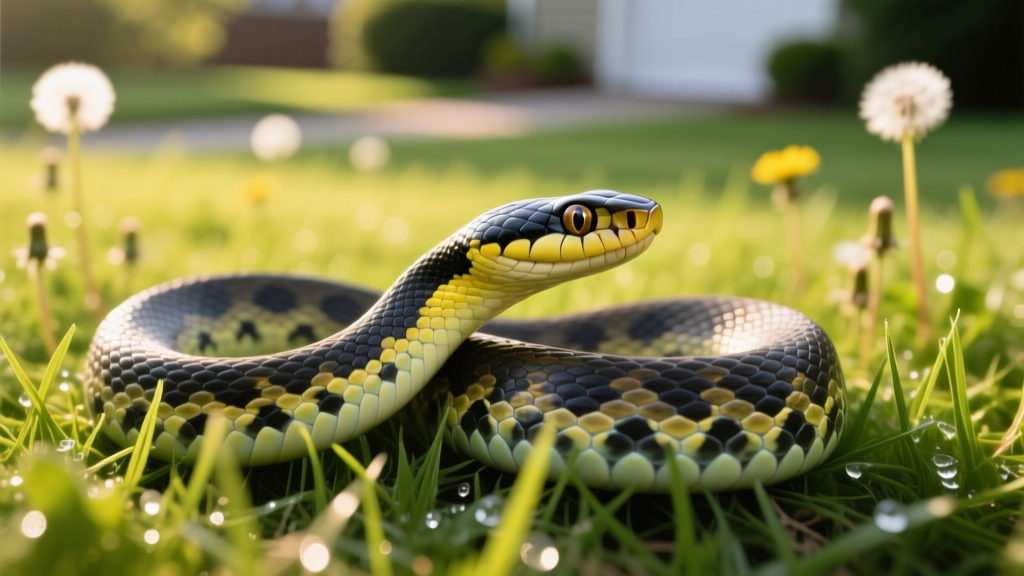
Are Garden Snakes Poisonous? A Homeowner's Identification Guide
The Short Answer: Are Garden Snakes Poisonous?
When homeowners ask, "are garden snakes poisonous?", the direct biological answer is no. However, the complete answer requires distinguishing between two frequently confused terms: poisonous and venomous. Furthermore, while the most common garden snakes are entirely harmless to humans, a few species possess mild venom delivery systems that are medically insignificant but biologically fascinating.
The vast majority of snakes found in residential landscaping—such as garter snakes, Dekay's brown snakes, and ringneck snakes—are non-venomous and pose zero threat to humans or pets. In fact, they are highly beneficial pest control agents that consume slugs, grubs, and rodents. This guide provides a definitive framework for identifying common garden snakes, understanding their biology, and implementing physical exclusion methods if you prefer a snake-free yard.
Biological Distinction: Poisonous vs. Venomous
Poisonous: An organism that delivers toxins when you bite or ingest it (e.g., poison dart frogs, toxic mushrooms). No snake is poisonous.
Venomous: An organism that actively injects toxins into you via a bite or sting (e.g., rattlesnakes, wasps). Most garden snakes are non-venomous.
Poisonous: An organism that delivers toxins when you bite or ingest it (e.g., poison dart frogs, toxic mushrooms). No snake is poisonous.
Venomous: An organism that actively injects toxins into you via a bite or sting (e.g., rattlesnakes, wasps). Most garden snakes are non-venomous.
The Garter Snake Exception: Duvernoy's Glands
The common garter snake (Thamnophis sirtalis), the most frequent snake encountered in North American gardens, is often cited in biological literature as having a "mild venom." Garter snakes possess Duvernoy's glands in their upper jaws, which secrete a toxic saliva used to subdue earthworms and amphibians.
However, they lack the specialized hollow fangs required to inject this venom deeply into human tissue. If a garter snake bites a human (which is rare, as they prefer to flee), the saliva may cause localized itching, mild swelling, or a minor allergic reaction, similar to a mosquito bite. It is not medically significant, and no antivenom is required. According to the University of Minnesota Extension, garter snakes are universally classified as harmless to humans and domestic pets.
Common Harmless Garden Snakes: Identification Matrix
Accurate identification prevents the unnecessary killing of beneficial predators. Use this matrix to identify the most common non-venomous snakes found in residential landscaping.
| Common Name | Scientific Name | Visual Identification Markers | Primary Garden Diet | Typical Habitat |
|---|---|---|---|---|
| Common Garter Snake | Thamnophis sirtalis | Three distinct longitudinal stripes (yellow, green, or white) running down a dark body. | Earthworms, slugs, small frogs | Damp soil, near water features, under mulch |
| Dekay's Brown Snake | Storeria dekayi | Small (9-13 inches), solid brown or gray, often with a lighter stripe down the back and small black dots. | Slugs, snails, pillbugs | Under rocks, logs, and dense groundcover |
| Eastern Ringneck Snake | Diadophis punctatus | Dark gray/black body with a bright yellow or orange band around the neck; coral-orange belly. | Earthworms, small salamanders | Under flat stones, leaf litter, decaying wood |
| Black Rat Snake | Pantherophis obsoletus | Large (4-6 feet), solid glossy black on top, white/yellow chin and throat. Juveniles are gray with brown blotches. | Mice, voles, rats, bird eggs | Trees, woodpiles, sheds, roof eaves |
Venomous Lookalikes: When to Be Cautious
While the snakes listed above are harmless, homeowners must be aware of venomous species that share similar habitats or coloration. The most frequent misidentification occurs between harmless rat snakes/corn snakes and the venomous Copperhead (Agkistrodon contortrix).
The Copperhead vs. Corn Snake Dilemma
Copperheads are responsible for the majority of venomous snake bites in the eastern United States, largely because they camouflage perfectly in suburban leaf litter and mulch beds.
- Copperhead (Venomous): Features a distinct, wide, diamond-shaped head that is significantly wider than its neck. The body pattern consists of dark, hourglass-shaped bands that are wider at the sides and narrower on the top of the back. The belly is usually plain white or gray.
- Corn Snake (Harmless): Features a narrow head that is barely wider than its neck. The body pattern consists of distinct, saddle-shaped blotches that are outlined in black. The belly features a prominent black-and-white checkerboard pattern.
Warning: The Coral Snake Rhyme is Unreliable
The traditional rhyme "Red touches yellow, kills a fellow; red touches black, friend of Jack" is used to distinguish venomous Eastern Coral Snakes from harmless Scarlet Kingsnakes. However, this rhyme only applies reliably in the United States. Mutations and geographic variations can result in coral snakes where red touches black. Always treat any small, brightly banded red/yellow/black snake with extreme caution and do not approach it.
The traditional rhyme "Red touches yellow, kills a fellow; red touches black, friend of Jack" is used to distinguish venomous Eastern Coral Snakes from harmless Scarlet Kingsnakes. However, this rhyme only applies reliably in the United States. Mutations and geographic variations can result in coral snakes where red touches black. Always treat any small, brightly banded red/yellow/black snake with extreme caution and do not approach it.
Step-by-Step Visual Identification Framework
If you encounter a snake in your garden, follow this decision tree from a safe distance (at least 6 feet away) to determine if it poses a threat. The National Park Service recommends never attempting to handle or closely inspect an unidentified snake.
- Observe the Head Shape: Does the snake have a wide, triangular, or diamond-shaped head with a distinct, thin neck? (Potential pit viper/venomous). Or is the head narrow, rounded, and roughly the same width as the body? (Likely harmless colubrid).
- Check for a Heat-Sensing Pit: If you have a clear, distant view of the side of the head (or are using a zoom lens), look for a small hole (loreal pit) between the eye and the nostril. Only venomous pit vipers (copperheads, rattlesnakes, cottonmouths) have this organ.
- Examine the Pupils: Non-venomous garden snakes typically have round pupils. Venomous pit vipers have vertical, cat-like slit pupils. (Note: Coral snakes are venomous but have round pupils, so this rule has exceptions).
- Analyze the Tail: If the tail ends in a rattle or a distinct, blunt button, it is a rattlesnake. Leave the area immediately.
Actionable Yard Management: How to Exclude Snakes
If you have confirmed the presence of harmless garden snakes but wish to deter them, or if you live in an area with venomous species and need to secure your property, habitat modification is the only proven, long-term strategy. Chemical repellents are largely ineffective and often illegal to use outdoors.
The Myth of Mothballs and Sulfur
Do not use mothballs (naphthalene or paradichlorobenzene) in your yard. According to the Clemson University Home & Garden Information Center, using mothballs outdoors is a violation of federal pesticide law. They dissolve rapidly in rain, contaminate soil and groundwater, and do not effectively repel snakes. Similarly, granular sulfur and lime have been proven in controlled studies to fail as snake deterrents.
Physical Exclusion Specifications
To physically block snakes from entering a specific garden bed, play area, or the perimeter of your home, install a snake-proof fence using the following exact specifications:
- Material: 1/4-inch (0.6 cm) galvanized hardware cloth. Standard chicken wire (1-inch mesh) is too large; small snakes like Dekay's brown snakes and juvenile copperheads will easily pass through it.
- Height: The fence must extend at least 30 inches above the ground.
- Burial Depth: Bury the bottom edge 4 inches into the soil to prevent snakes from burrowing underneath.
- Angle: Angle the entire fence outward away from the protected area at a 30-degree angle. Snakes are poor climbers of outward-sloping mesh.
- Gates: Ensure any gates have a sweeping rubber seal at the bottom with a gap no larger than 1/4 inch.
Habitat Modification (Removing the Food and Shelter)
Snakes enter yards for two reasons: to hunt or to hide. Eliminate both, and they will bypass your property.
- Mulch Management: Keep mulch layers no thicker than 2 inches. Deep mulch beds retain moisture and harbor the slugs and insects that attract brown snakes and garter snakes.
- Grass Height: Maintain your lawn at a minimum height of 2.5 to 3 inches. While this seems counterintuitive, grass taller than 4 inches provides a canopy for rodents, which in turn attracts large rat snakes and copperheads.
- Debris Removal: Eliminate flat stones, stacked firewood, and corrugated tin sheets resting directly on the soil. If you must store firewood, elevate it at least 12 inches off the ground on a metal rack.
- Rodent Control: Secure birdseed in metal, airtight bins. Spilled birdseed attracts mice, which are the primary food source for venomous copperheads.
First Aid Protocol: What to Do If Bitten
If you or a pet is bitten by an unidentified snake, treat the situation as a medical emergency until the species can be confirmed by a professional.
Do NOT apply a tourniquet, cut the wound, attempt to suck out the venom, or apply ice. These outdated methods accelerate tissue necrosis and increase the risk of severe infection.
Correct Immediate Actions:
- Retreat: Move the victim away from the snake to prevent a second bite. Snakes can strike multiple times in rapid succession.
- Immobilize: Keep the bitten limb immobilized and positioned at or slightly below heart level to slow venom circulation without pooling it in the extremity.
- Cleanse: Wash the bite site gently with plain soap and water. Cover it with a clean, dry dressing.
- Identify Safely: Take a photo of the snake from a safe distance (at least 6 feet away) using your smartphone's zoom function. Do not attempt to kill or capture the snake, as a majority of snakebites occur during these attempts.
- Seek Care: Proceed immediately to the nearest emergency room. Medical professionals will determine if antivenom (such as CroFab or Anavip) is required based on the progression of swelling and blood coagulation tests.
Frequently Asked Questions
Do garden snakes carry diseases that can harm my dogs?
Non-venomous garden snakes do not carry rabies. However, they can carry Salmonella bacteria on their skin and in their feces. If your dog catches and eats a garter snake, the primary risk is gastrointestinal upset or a mild bacterial infection, not a venomous reaction. Monitor your pet for vomiting or lethargy and consult a veterinarian if symptoms arise.
Why are there suddenly more snakes in my yard this year?
Snake population spikes in residential areas are almost always tied to prey availability. A wet spring followed by a hot summer leads to massive population booms in slugs, earthworms, and rodents. The snakes are simply following their food source. Addressing the underlying pest issue with targeted, pet-safe grub control or rodent exclusion will naturally reduce the snake population.
Are snake repellent ultrasonic stakes worth the money?
No. Controlled studies by wildlife biologists have repeatedly shown that ultrasonic or vibrating stakes do not deter snakes. Snakes lack external ears and do not hear airborne sounds the way mammals do; they sense ground-borne vibrations. While they may temporarily avoid a heavily vibrating stake, they quickly habituate to the constant frequency and will slither right past it within a few days.

