
Pest Control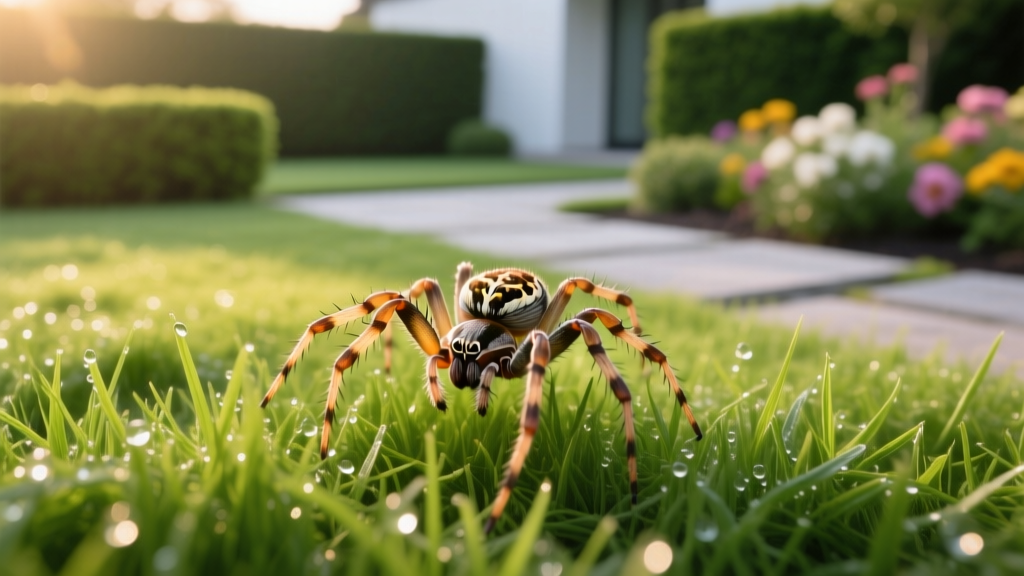
Are Grass Spiders Harmful? A Complete Lawn Identification Guide
The Short Answer: Are Grass Spiders Harmful?
Grass spiders (family Agelenidae, primarily the genus Agelenopsis) are entirely harmless to humans, pets, and turfgrass. Despite their alarming speed, dense webbing, and tendency to swarm in late summer, they possess venom that is far too weak to affect mammals, and their fangs rarely pierce human skin. More importantly, they do not feed on grass roots, blades, or soil microbes. Instead, they are apex micro-predators in your lawn ecosystem, actively hunting the insects that actually damage your turf and annoy your family.
Quick Verdict: Grass spiders pose zero structural, medical, or botanical threat. According to the UC Statewide Integrated Pest Management Program, they are classified as beneficial arachnids that provide natural pest control. Eradication is rarely recommended unless populations become a severe aesthetic nuisance.
Identifying the Grass Spider (Funnel Weaver)
Accurate identification prevents the unnecessary killing of beneficial predators. Grass spiders are frequently misidentified as wolf spiders or, in rare cases, brown recluses. To confirm you are dealing with an Agelenopsis species, look for these specific morphological and behavioral markers:
- Size and Coloring: Adult body lengths range from 1/2 to 3/4 inch, with a leg span reaching up to 2 inches. They typically feature a mottled tan, brown, or gray abdomen with two distinct, dark longitudinal stripes running down the cephalothorax (head region).
- Eye Arrangement: Unlike many other spiders, grass spiders have eight eyes arranged in two distinct, horizontal rows of four. This is a primary diagnostic feature when viewing them from above.
- The Funnel Web: This is their most defining characteristic. They spin flat, sheet-like webs across the top of the grass canopy with a distinct, tubular retreat (the funnel) extending into the thatch or a nearby ground hole. The spider waits inside this funnel, rushing out to grab prey that lands on the sheet.
Grass Spiders vs. Dangerous Lookalikes
Homeowners often panic when they see a brown spider darting across the lawn. Use this comparison matrix to differentiate the harmless grass spider from species that require caution.
| Species | Web Type | Eye Arrangement | Danger Level | Primary Habitat |
|---|---|---|---|---|
| Grass Spider | Sheet with funnel retreat | 8 eyes, 2 rows of 4 | Harmless | Turfgrass, low shrubs |
| Wolf Spider | None (active hunter) | 8 eyes, 3 rows (4-2-2) | Harmless (mild bite) | Soil surface, leaf litter |
| Brown Recluse | Irregular, messy cobweb | 6 eyes, 3 pairs (dyads) | Medically Significant | Dark woodpiles, sheds |
Warning: Brown recluses do not build funnel webs in open lawns, nor do they hunt in daylight. If you find a spider in a dark, undisturbed shed or woodpile with a violin-shaped marking on its back and only six eyes, avoid contact and consult a professional. However, the spiders running across your sunlit Bermuda or Fescue lawn are almost certainly harmless Agelenids.
The Ecological Benefits to Your Lawn
Before reaching for a pesticide, consider the biological services grass spiders provide. According to University of Kentucky Entomology, spiders are critical regulators of insect populations in urban and suburban landscapes.
A single mature grass spider can consume up to 2,000 insects annually. Their diet consists heavily of turf-damaging and nuisance pests, including:
- Mosquitoes and biting midges
- Fleas and ticks (reducing vectors for Lyme disease and pet discomfort)
- Aphids and leafhoppers (which transmit plant diseases)
- Small caterpillars and cutworms
- Grasshopper nymphs
Because grass spider silk is not sticky—they rely on the vibration of the web to detect prey—they do not trap pollinators like bees and butterflies, which generally do not land on the low grass canopy where these webs are situated.
Population Management: When and How to Intervene
Grass spider populations naturally explode in late August through October. This is mating season; males abandon their webs to wander across lawns and driveways in search of females. If the sheer volume of webs is ruining the aesthetics of your lawn or causing a phobia-related distress, you can manage them using low-impact cultural controls.
Cultural Lawn Practices
Grass spiders thrive in overgrown, damp environments. Altering the microclimate of your turf will naturally reduce their carrying capacity:
- Adjust Mowing Height: Maintain your turf at 2.5 to 3.5 inches. This removes the upper canopy where sheet webs are anchored, exposing spiders to predatory birds and harsh UV light.
- Reduce Moisture: Fix irrigation leaks and adjust sprinkler heads to avoid overwatering. Spiders require high humidity to prevent desiccation; a drier thatch layer forces them to relocate.
- Dethatch Annually: Removing thick thatch eliminates the physical anchor points for their funnel retreats.
DIY Essential Oil Deterrent Spray
If spiders are migrating onto your patio or foundation, use a botanical repellent rather than a broad-spectrum insecticide. This recipe disrupts their chemoreceptors without killing beneficial soil microbes.
- 16 oz cold water
- 15 drops pure peppermint essential oil
- 15 drops cedarwood essential oil
- 1 tsp liquid castile soap (acts as an emulsifier)
Application: Shake vigorously and spray along the foundation perimeter, patio furniture legs, and door thresholds every 14 days. Cost analysis: This DIY batch costs approximately $4 to make, compared to $150–$300 for a professional bifenthrin perimeter treatment that will indiscriminately kill pollinators and aquatic insects via runoff.
"Broad-spectrum pyrethroid sprays are highly ineffective against funnel weavers. Because grass spiders remain hidden inside their tubular retreats and do not forage across treated soil, contact sprays degrade in sunlight long before the spider ever walks across the chemical barrier."
Frequently Asked Questions
Can a grass spider bite a dog or cat?
While technically capable of biting if crushed against the skin, grass spider fangs are too small and weak to easily pierce the hide of a dog or cat. Even in the extremely rare event of a successful bite, the venom causes only localized, temporary redness—comparable to a mild mosquito bite. They pose zero systemic threat to pets.
Why are there suddenly hundreds of them on my driveway?
You are likely witnessing the autumn mating migration. Male grass spiders leave their funnel webs to sprint across hardscapes in search of pheromone trails left by females. This behavioral spike lasts only 3 to 4 weeks in early fall. Sweeping them into a dustpan and relocating them to a nearby wooded area is the most ecologically sound management strategy.
Do grass spiders come indoors?
Grass spiders are strictly outdoor, ground-dwelling arachnids. They require the structural support of grass blades and low shrubs to build their horizontal sheet webs. If you find a funnel-weaver indoors, it is usually a wandering male that slipped under a door gap by accident and will quickly desiccate in the dry, climate-controlled indoor air.

