
Pest Control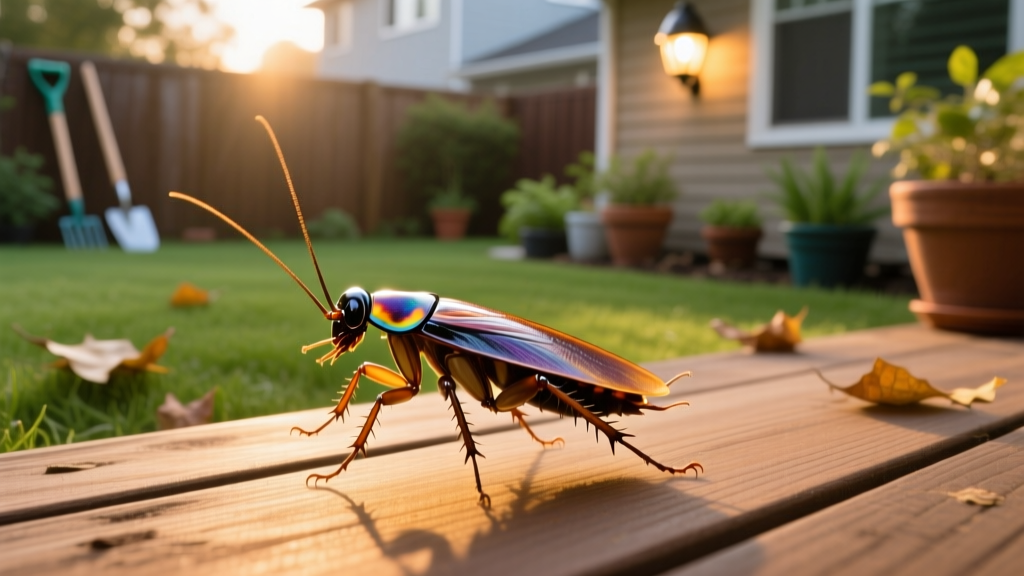
Are Roaches Attracted to Light? A Species & Lighting Guide
The Short Answer: Photophobia vs. Phototaxis
When homeowners ask, "are roaches attracted to light?", the answer requires a biological distinction between species. The vast majority of cockroaches that infest human structures are photophobic, meaning they actively scatter away from light sources. This negative phototaxis is a survival mechanism; cockroaches rely on thigmotaxis (the preference for tight, dark spaces) to hide from predators and conserve moisture. However, a specific subset of outdoor and peridomestic cockroach species are phototactic, meaning they are genuinely drawn to artificial illumination, often resulting in confusing encounters on porches and near windows.
Myth vs. Fact:
Myth: Turning off your porch light will stop all cockroaches from gathering near your doors.
Fact: While it deters phototactic species like wood roaches, structural pests like German cockroaches are already inside or hiding in exterior cracks. Light merely reveals their presence; it does not attract them.
Myth: Turning off your porch light will stop all cockroaches from gathering near your doors.
Fact: While it deters phototactic species like wood roaches, structural pests like German cockroaches are already inside or hiding in exterior cracks. Light merely reveals their presence; it does not attract them.
Species Breakdown: Which Roaches Fly to the Light?
To effectively manage perimeter pests, you must first identify which species you are dealing with. According to the National Pest Management Association's cockroach species guide, misidentification leads to the wrong treatment protocols. Below is a diagnostic matrix of common species and their relationship with artificial light.
| Common Name | Scientific Name | Light Response | Primary Habitat |
|---|---|---|---|
| German Cockroach | Blattella germanica | Photophobic (Flees light) | Indoor kitchens, appliances |
| American Cockroach | Periplaneta americana | Photophobic (Flees light) | Sewers, damp basements |
| Asian Cockroach | Blattella asahinai | Phototactic (Attracted to light) | Outdoor mulch, leaf litter |
| Wood Cockroach | Parcoblatta pennsylvanica | Phototactic (Strongly attracted) | Woodpiles, forest edges |
| Smokybrown Cockroach | Periplaneta fuliginosa | Neutral/Opportunistic | Gutters, eaves, tree holes |
The Asian cockroach (Blattella asahinai) is the most frequent culprit for homeowners who believe roaches are swarming their porch lights. Visually identical to the German cockroach, the Asian roach is a strong flier that uses celestial navigation. Artificial lights disrupt this navigation, causing them to spiral toward the bulb. As noted by Penn State Extension's pest management resources, wood roaches also frequently blunder into illuminated areas during their late-spring mating flights, causing severe alarm despite being harmless indoor nuisances that cannot breed inside homes.
The "Porch Light" Illusion: Why You See Them at Night
If German and American cockroaches hate light, why do you see them scurrying when you flip the switch? This is a classic observational bias. Cockroaches are nocturnal foragers. When you turn on the kitchen or garage light, you are not attracting them; you are interrupting their foraging cycle. The light triggers their photophobic escape response, causing them to dart into baseboard cracks. Furthermore, exterior security lights often illuminate the edges of hiding spots. A damp foundation crack housing American cockroaches becomes visible only when the 3000-lumen security floodlight hits the stucco. The light is a spotlight, not a magnet.
Actionable Lighting Modifications for Roach Prevention
If you are dealing with phototactic species (Asian or Wood roaches) or want to reduce the overall insect biomass near your home (which in turn attracts roach predators and scavengers), modifying your exterior lighting is a highly effective, chemical-free intervention. The EPA's Safe Pest Control guidelines emphasize habitat and environmental modification as the first line of defense.
Step 1: Shift Your Wavelengths (The 550nm Threshold)
Insect compound eyes are highly sensitive to ultraviolet, blue, and green light wavelengths (300nm to 500nm). They are virtually blind to longer wavelengths in the yellow, orange, and red spectrum (above 550nm). Standard white LEDs emit a massive spike in the 450nm blue spectrum, making them highly visible to insects.
- The Fix: Replace standard white porch bulbs with dedicated amber LEDs emitting light at 2000K or lower.
- Product Recommendation: The Feit Electric 60W Amber Bug Light LED (typically $8-$12) uses a specialized phosphor coating that eliminates the blue wavelength spike entirely.
- Smart Alternative: If you use smart lighting like the Philips Hue Outdoor Calla Bollard ($60-$80), program your landscaping scenes to a deep amber (Hex #FF5E00) after dusk to maintain visibility while remaining invisible to phototactic roaches.
Step 2: Deploy Motion-Activated Fixtures
Constant illumination creates a continuous beacon for flying Asian cockroaches from neighboring properties. Switching to motion-activated fixtures limits the exposure window. A roach flying toward your home will trigger the light, but because the sudden burst of high-lumen light is startling and temporary, the insect is less likely to establish a continuous navigational loop toward your door.
Warning: Avoid Bug Zappers for Roach Control
Do not rely on ultraviolet bug zappers to control cockroaches. Zappers attract phototactic insects but primarily kill beneficial pollinators, moths, and non-biting midges. Cockroaches are heavy-bodied and often survive the electrical grid, or they simply drop to the ground near your foundation, creating a secondary food source for ants and rodents.
Do not rely on ultraviolet bug zappers to control cockroaches. Zappers attract phototactic insects but primarily kill beneficial pollinators, moths, and non-biting midges. Cockroaches are heavy-bodied and often survive the electrical grid, or they simply drop to the ground near your foundation, creating a secondary food source for ants and rodents.
Expert Troubleshooting Flowchart: Nighttime Encounters
When you encounter a roach near a light source, follow this diagnostic sequence to determine your next steps:
- Observe the Flight Pattern: If the insect flutters erratically directly into the bulb fixture, you likely have an Asian cockroach or a wood roach. If it drops to the ground and runs in a straight, rapid line away from the light, it is likely a German or American cockroach that was caught out in the open.
- Check the Wings: Wood roaches have distinct, pale yellowish-white margins on their wings. Asian cockroaches look identical to German roaches but have longer, more robust wings that extend past their abdomen.
- Assess the Perimeter: If you identify Asian cockroaches, inspect your mulch beds and leaf litter within 100 feet of the light source. Asian roaches breed in shaded, moist ground cover. Apply a granular bait (such as Advion Insect Granule Bait, approx. $45 for a 5lb bag) directly to the mulch, not the concrete.
- Seal the Envelope: If phototactic roaches are gathering near your door, ensure your door sweeps have a gap of less than 1/16th of an inch. Asian cockroaches can compress their bodies to pass through incredibly tight thresholds.
Frequently Asked Questions
Do cockroaches come out when the lights are on?
Only under specific conditions. If an infestation is severe and the population density is high, cockroaches will be forced to forage during daylight hours or in illuminated spaces due to competition for resources and overcrowding in their dark harborage areas. Seeing roaches in the light is a primary indicator of a heavy, established indoor infestation.
Will leaving the light on keep roaches away?
No. Leaving interior lights on is an ineffective deterrent. While it may slightly delay their initial emergence from wall voids, cockroaches will quickly habituate to the illumination if food and water are present. Continuous lighting also wastes electricity and disrupts human circadian rhythms without providing any measurable pest control benefit.
Are the bugs flying around my streetlamp roaches?
Frequently, no. Homeowners often mistake June bugs (green fruit beetles), clicking beetles, or large water bugs for cockroaches when they swarm municipal streetlights. True cockroaches are generally poor, clumsy fliers and rarely swarm high-intensity municipal lighting in the massive clouds associated with beetle species.

