
Pest Control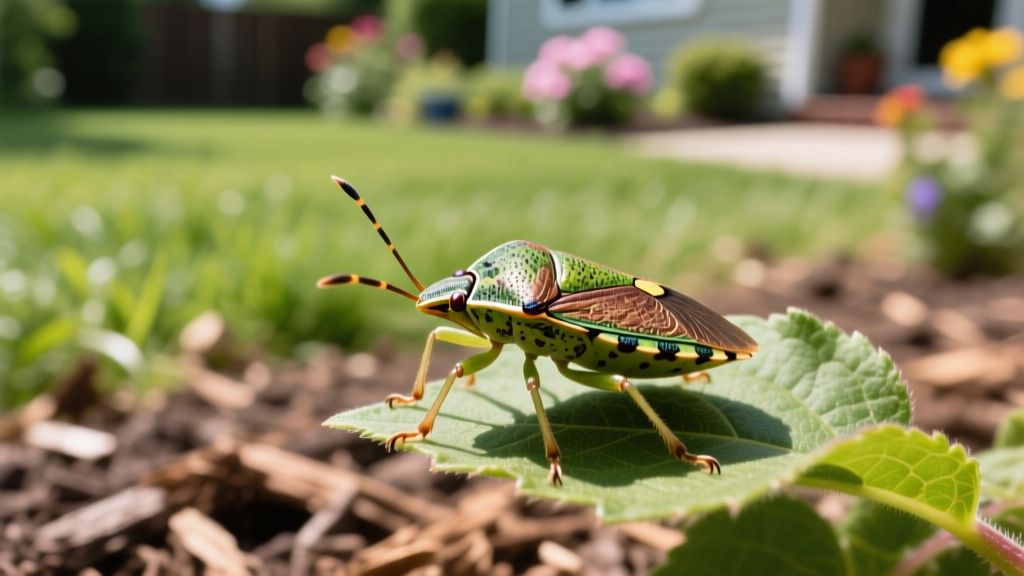
Are Stink Bugs Invasive Species? Origin, ID, and Yard Defense
The Short Answer: Which Stink Bugs Are Invasive?
When homeowners ask, "Are stink bugs invasive species?" the answer requires a taxonomic distinction. While North America has dozens of native stink bug species (family Pentatomidae) that play balanced roles in local ecosystems, the specific insect wreaking havoc on modern gardens and homes is indeed an invasive species. The Brown Marmorated Stink Bug (BMSB), scientifically known as Halyomorpha halys, is native to East Asia (China, Japan, Korea, and Taiwan).
First detected in Allentown, Pennsylvania, in the late 1990s, the BMSB lacked natural predators in its new environment. As of 2026, it has established breeding populations in over 47 U.S. states and multiple Canadian provinces. According to the StopBMSB coordinated agricultural project, this invasive species is highly polyphagous, meaning it feeds on over 300 different host plants, making it a severe threat to both commercial agriculture and residential landscaping.
Native vs. Invasive Distinction: Not all stink bugs are enemies. The native Green Stink Bug (Chinavia halaris) is an occasional pest but generally kept in check by local parasitoid wasps. Conversely, the invasive BMSB outcompetes native species and causes exponential crop damage due to a lack of localized biological controls.
Visual Identification Matrix: Invasive vs. Native vs. Beneficial
Accurate identification is the first step in targeted pest control. Misidentifying a beneficial predatory stink bug as an invasive pest can harm your garden's natural defense system. Use the matrix below to differentiate the invasive BMSB from common native lookalikes.
| Feature | Brown Marmorated (Invasive Pest) | Green Stink Bug (Native Pest) | Spined Soldier Bug (Beneficial) |
|---|---|---|---|
| Scientific Name | Halyomorpha halys | Chinavia halaris | Podisus maculiventris |
| Color & Pattern | Mottled brown/grey; distinct white bands on the last two antennal segments and the abdomen edge. | Uniform bright green (adults); nymphs are black, green, and yellow. | Yellowish-brown to dark brown; distinct sharp spines on the 'shoulders' (pronotum). |
| Shoulders (Pronotum) | Rounded, smooth edges without sharp spines. | Rounded, smooth edges. | Pronounced, sharp, outward-pointing spines. |
| Diet & Impact | Pierces fruits, vegetables, and ornamentals. Severe invasive pest. | Feeds on tomatoes, beans, and soybeans. Moderate native pest. | Predatory. Feeds on destructive caterpillars, beetle larvae, and sawflies. Highly beneficial. |
The Mechanics of Garden Damage
Understanding how the invasive BMSB damages plants explains why traditional surface sprays often fail. Stink bugs possess piercing-sucking mouthparts called a stylet. When a BMSB lands on a tomato, apple, or pepper, it extends this needle-like stylet deep into the plant tissue.
Enzymatic Injection and Necrosis
The bug injects a cocktail of digestive enzymes designed to break down plant cells into a slurry, which it then sucks back up. This enzymatic action kills the surrounding plant cells, resulting in specific damage profiles depending on the host:
- Tomatoes & Peppers: Manifests as "cloudy spot" disorder—white or yellowish spongy corky areas just beneath the skin that ruin the fruit's texture and make it susceptible to secondary bacterial rot.
- Apples & Pears: Causes "corking," where the flesh beneath the skin becomes hard, brown, and woody, often leading to severe fruit dimpling and deformity.
- Soybeans & Corn: Results in seed shrivel, delayed maturation, and the notorious "stay-green" syndrome, where the plant fails to senesce properly before harvest.
⚠️ Critical Warning: The Aggregation Pheromone
Never crush or squash a stink bug. When threatened or killed, BMSBs release a potent alarm pheromone. More dangerously, during late summer and fall, they emit an aggregation pheromone (specifically (E)-2-decenal) that signals other stink bugs to gather for overwintering. Squashing one on your patio can inadvertently invite dozens more to your home's exterior.
Never crush or squash a stink bug. When threatened or killed, BMSBs release a potent alarm pheromone. More dangerously, during late summer and fall, they emit an aggregation pheromone (specifically (E)-2-decenal) that signals other stink bugs to gather for overwintering. Squashing one on your patio can inadvertently invite dozens more to your home's exterior.
Advanced Yard Defense & Eradication Tactics
Managing an invasive species requires a multi-tiered Integrated Pest Management (IPM) approach. Relying solely on chemical sprays is ineffective due to the BMSB's high mobility and thick exoskeleton.
1. Perimeter Pheromone Trapping
Commercial traps utilize the synthetic aggregation pheromone to lure bugs away from your crops. The Strategy: Place traps like the AgBio BMSB Trap or Rescue! Stink Bug Trap at least 15 to 30 feet away from your garden or home. Placing a trap directly inside your vegetable patch will only draw more invasive bugs to your prized crops. Empty the trap reservoirs weekly using a bucket of soapy water to ensure the captured nymphs and adults drown quickly.
2. Trap Cropping
Exploit the BMSB's dietary preferences by planting a highly attractive "sacrificial" perimeter crop. Sunflowers, sorghum, and okra are highly preferred by BMSB over many common garden vegetables. Plant a dense border of sunflowers 30 feet from your main garden. Once the bugs aggregate on the sunflowers in late July, you can target that specific, concentrated area with localized treatments rather than spraying your entire yard.
3. Targeted Chemical Controls
If populations exceed the economic or aesthetic threshold, chemical intervention may be necessary. According to Penn State Extension entomologists, the BMSB's thick cuticle renders many organic contact sprays (like basic insecticidal soaps) largely ineffective on adults.
- Pyrethroids (e.g., Bifenthrin 7.9%): Products containing bifenthrin offer strong residual control on exterior walls and garden perimeters. Apply at a rate of 0.1 fl oz per gallon of water. Note: Highly toxic to bees; apply only at dusk when pollinators are inactive.
- Neonicotinoids (e.g., Imidacloprid): Effective as a systemic soil drench for ornamental trees early in the season, but generally discouraged for edible fruit-bearing plants due to pollinator risks.
- Kaolin Clay (Surround WP): An organic, non-toxic physical barrier. When sprayed on fruit, it creates a powdery film that irritates the stink bug's tarsi and masks the plant's volatile host odors, preventing the stylet from piercing the skin.
4. Biological Control: The Samurai Wasp
Nature is beginning to adapt to the invasion. The Samurai Wasp (Trissolcus japonicus), a natural parasitoid of the BMSB from Asia, was accidentally introduced to North America and is now actively spreading. This tiny, non-stinging wasp lays its eggs inside BMSB egg masses, effectively destroying the next generation of pests. Homeowners cannot purchase these wasps, but you can support local populations by avoiding broad-spectrum insecticide sprays and planting nectar-rich flowers (like cilantro, dill, and alyssum) to feed the adult wasps.
Overwintering Exclusion Protocols
Because the BMSB is an invasive species that evolved in temperate Asian climates, it seeks out human structures to survive freezing North American winters. They do not breed indoors or eat household structures; they simply want warmth. Prevention relies on mechanical exclusion in late August and early September.
- Seal Exterior Penetrations: Use high-quality silicone or silicone-latex caulk to seal cracks around window frames, door casings, and utility pipe penetrations. Focus heavily on the south and west-facing walls of your home, which receive the most afternoon sun.
- Upgrade Window Screens: Standard window screens often have gaps large enough for early-instar BMSB nymphs to pass through. Repair tears and ensure screens are at least 20-mesh (or finer) to block invasive nymphs.
- Attic & Soffit Vents: Install 1/4-inch hardware cloth or specialized vent covers over ridge vents, soffit vents, and gable vents to prevent mass ingress into the attic space.
By understanding the invasive origins, precise identification markers, and behavioral vulnerabilities of the Brown Marmorated Stink Bug, homeowners can shift from reactive panic to proactive, science-based yard defense. For ongoing regional tracking and localized management updates, consult the USDA APHIS pest management database to see current population pressure maps in your specific county.

