
Pest Control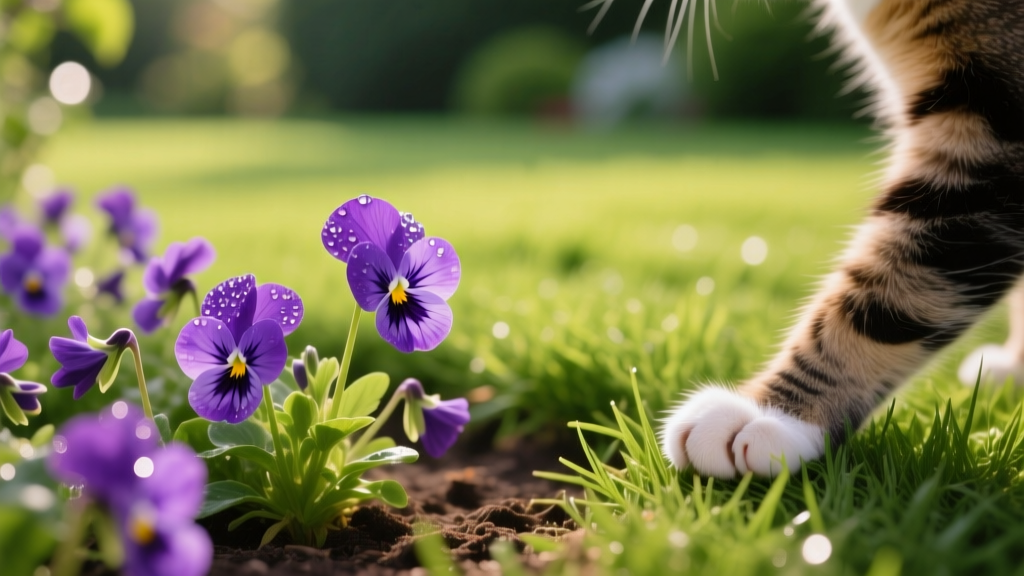
Are Violets Poisonous to Cats? A Complete Garden Safety Guide
The Short Answer: Are Violets Poisonous to Cats?
If your cat has taken a bite out of your garden violets or indoor African violets, there is no need to panic. According to the ASPCA's Toxic and Non-Toxic Plant List, true violets (Viola species) and African violets (Saintpaulia) are completely non-toxic to cats, dogs, and horses. They do not contain alkaloids, glycosides, or insoluble calcium oxalates that cause systemic poisoning.
However, 'non-toxic' does not mean 'free from consequences.' Cats are obligate carnivores, and their digestive tracts are not designed to process large amounts of fibrous plant matter. Ingesting a significant quantity of violet leaves or flowers can lead to mechanical gastrointestinal irritation, resulting in mild vomiting or diarrhea. Furthermore, the true danger in your garden often lies not in the violet plant itself, but in the chemical pesticides, herbicides, and organic fertilizers used to maintain it.
Botanical Identification: True Violets vs. Toxic Imposters
One of the most common mistakes homeowners make is misidentifying a toxic plant as a harmless violet. Several highly toxic garden plants share visual similarities with violets, particularly in their low-growing habits and heart-shaped or rounded foliage. Proper identification is a critical first step in garden pest management and pet safety.
| Plant Common Name | Scientific Name | Toxicity to Cats | Key Identifying Features |
|---|---|---|---|
| True Violets (Wild/Sweet) | Viola odorata, Viola tricolor | Non-Toxic | Heart-shaped leaves, 5-petal flowers (purple, white, yellow), low-growing ground cover. |
| African Violet | Saintpaulia ionantha | Non-Toxic | Fuzzy, succulent-like oval leaves, tubular flowers, typically grown as indoor houseplants. |
| Cyclamen | Cyclamen persicum | Highly Toxic | Heart-shaped leaves with silver marbling, swept-back petals. Contains toxic saponins causing severe vomiting and fatal heart arrhythmias. |
| Lily of the Valley | Convallaria majalis | Highly Toxic | Elliptical leaves, bell-shaped white flowers. Contains cardiac glycosides that cause severe cardiovascular collapse. |
| Monkshood | Aconitum napellus | Lethal | Deeply lobed leaves, helmet-shaped blue/purple flowers. Contains aconitine, causing rapid nervous system and respiratory failure. |
The Real Threat: Nursery Pesticides and Fertilizers
When evaluating whether your garden is safe for pets, you must look beyond the plant's natural biology. The EPA's guidelines on pesticides and pets highlight that secondary poisoning from garden treatments is a leading cause of veterinary emergencies.
⚠️ WARNING: Systemic Insecticides and Bone Meal
Many nursery-grown violets are pre-treated with Imidacloprid, a systemic neonicotinoid insecticide. When a cat chews on a treated leaf, they ingest the chemical, which can cause neurological tremors and hypersalivation. Additionally, gardeners often use Bone Meal or Blood Meal fertilizers on violet beds. These organic amendments are highly attractive to cats due to their scent. Ingestion can cause severe gastrointestinal blockages, iron toxicity, and life-threatening pancreatitis.
If you purchase violets from a commercial nursery, isolate them from your cat for at least 14 days. Flush the soil heavily with water to leach out residual water-soluble synthetic fertilizers, and gently wipe down the leaves with a damp cloth to remove surface pesticide residues before placing them in accessible areas.
Cat-Safe Pest Control for Your Violet Garden
Violets are susceptible to a variety of garden pests, including aphids, spider mites, thrips, and fungus gnats. Conventional chemical sprays containing pyrethroids (like permethrin) are highly toxic to cats and must be strictly avoided. Fortunately, you can maintain a pristine violet garden using targeted, pet-safe pest control protocols.
Recipe: DIY Pet-Safe Insecticidal Soap & Neem Solution
Neem oil (containing the active compound Azadirachtin) disrupts the life cycle of chewing and sucking insects without leaving toxic residues that harm mammals once dried. Here is the exact formulation for a cat-safe spray:
- 1 Quart of lukewarm distilled water
- 1 Teaspoon of cold-pressed, 100% pure neem oil
- 1/2 Teaspoon of mild liquid castile soap (acts as an emulsifier)
Application Protocol: Mix thoroughly and spray the underside of the violet leaves where aphids and mites congregate. Crucial Timing: Apply this solution at dusk. This prevents the oil from magnifying sunlight and burning the violet leaves, and ensures the spray is completely dry before your cat begins its evening garden patrol. Wet neem oil can cause mild stomach upset if licked directly off a leaf.
Soil-Dwelling Pests: Food-Grade Diatomaceous Earth
For fungus gnats and crawling insects in your violet beds, apply a thin layer of Food-Grade Diatomaceous Earth (DE) to the topsoil. DE is composed of fossilized diatoms that mechanically destroy the exoskeletons of insects. It is entirely non-toxic to cats if ingested. However, avoid creating thick clouds of dust during application, as inhaling large amounts of any fine particulate can irritate your cat's respiratory tract. Apply it when the soil is dry, and reapply after heavy rainfall.
Deterrent Strategies: Keeping Cats Out of Violet Beds
Even though violets are safe, you may want to protect your delicate garden beds from being used as a litter box or digging site. According to the American Veterinary Medical Association (AVMA), modifying the environment is the most effective way to prevent pet-related garden damage.
Expert Landscaping Tip: Avoid using cocoa mulch around your violets. While it looks beautiful and retains moisture, cocoa mulch contains theobromine—the same compound that makes chocolate toxic to cats and dogs. Opt for untreated cedar mulch or pine straw instead.
- Subsurface Wire Mesh: Lay 1-inch galvanized chicken wire flat on the soil surface and cover it lightly with mulch. Violets will easily grow through the gaps, but cats despise the feeling of the wire on their claws and will not dig in the bed.
- Olfactory Deterrents: Cats have a highly developed olfactory system. Planting safe, strongly scented herbs like rosemary, lavender, or Coleus caninus (Scaredy Cat plant) around the perimeter of your violet bed will naturally repel them without the use of toxic essential oils.
- Texture Barriers: Surround the base of your violet plants with sharp-edged pine cones or rough river stones. Cats prefer soft, loose dirt for their paws and will bypass textured areas.
Frequently Asked Questions
What should I do if my cat eats a violet treated with chemical fertilizer?
If you suspect your cat has ingested a plant treated with synthetic fertilizers or systemic pesticides, do not wait for symptoms to appear. Immediately contact the ASPCA Animal Poison Control Center or your local emergency veterinarian. Bring the plant's nursery tag or the fertilizer packaging with you to the clinic so the toxicologist can identify the exact active ingredients.
Are wild violets growing in my lawn safe for my cat?
Yes, wild violets (Viola papilionacea) are entirely safe. However, if you or your neighbors use broadleaf herbicides (like 2,4-D or Dicamba) to control weeds in the lawn, the violets will absorb these chemicals. Keep cats off the lawn for at least 48 hours after any chemical weed control application, or switch to pet-safe organic lawn care routines.
Can cats get high or hallucinate from eating violets?
No. Unlike catnip (Nepeta cataria) or silvervine, which contain nepetalactone and actinidine that trigger a euphoric response in felines, violets contain no psychoactive compounds. If your cat is obsessively chewing on violets, it is likely due to a behavioral quirk, a craving for dietary fiber, or simple boredom, rather than a pharmacological reaction.

