
Pest Control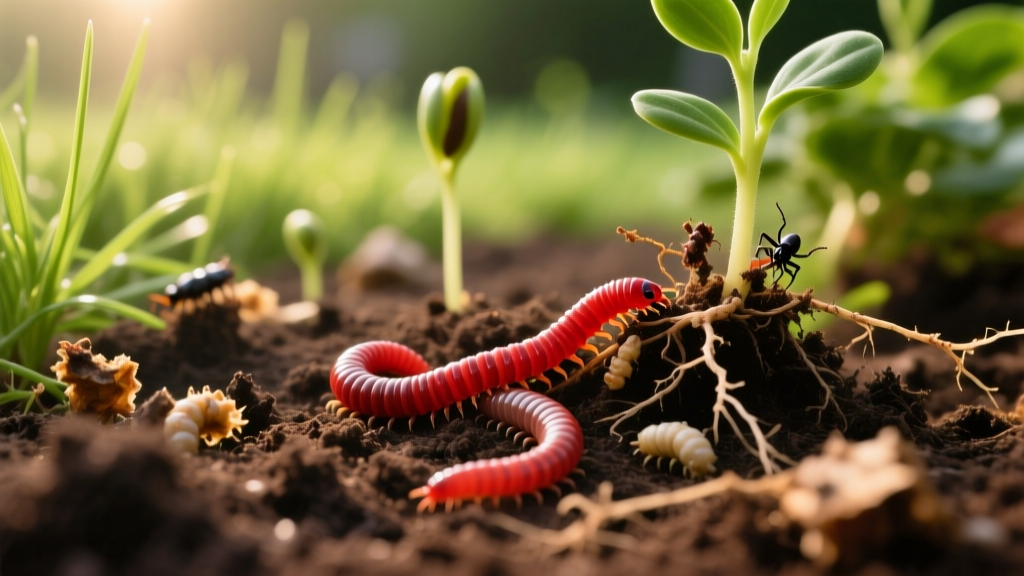
Are Worms Good for Plants? Identifying Soil Pests vs Beneficials
The Short Answer: Are Worms Good for Plants?
When homeowners ask, "are worms good for plants?", the answer requires a critical distinction between true earthworms and the destructive insect larvae that masquerade under the same colloquial name. True earthworms (class Oligochaeta) are unequivocally beneficial, acting as nature's premier soil engineers. However, the term "worm" is frequently misapplied to severe turf and garden pests, including white grubs, cutworms, and wireworms. Misidentifying a destructive grub as a beneficial earthworm can lead to catastrophic root loss in lawns and vegetable gardens.
Rule of Thumb: If the organism is segmented, lacks legs, and leaves behind dark, granular castings, it is a beneficial earthworm. If it has distinct legs, a hardened head capsule, or curls into a "C" shape when disturbed, you are dealing with a pest that requires immediate intervention.
The Beneficial Builders: True Earthworms
True earthworms, such as the common nightcrawler (Lumbricus terrestris) and the red wiggler (Eisenia fetida), are indispensable for soil health. They consume organic matter and excrete nutrient-dense castings. According to soil health research, earthworm castings contain up to 5 times more available nitrogen, 7 times more phosphorus, and 1,000 times more beneficial bacteria than the surrounding topsoil.
Key Identification Markers
- Body Structure: Smooth, segmented, and entirely legless.
- Coloration: Ranges from translucent pink to deep reddish-brown, depending on the species and diet.
- Movement: Undulating, peristaltic contractions using tiny setae (bristles) to grip soil walls.
- Soil Evidence: Presence of small, dark, granular mounds (castings) on the soil surface or within the root zone.
The Imposters: 4 Harmful "Worms" That Attack Lawns
Many of the most devastating lawn and garden pests are actually the larval stages of beetles and moths. Because they live in the soil and possess elongated bodies, they are routinely mistaken for worms. Understanding their distinct morphology is the first step in targeted pest control.
| Pest Name | Actual Classification | Visual Identification | Primary Damage |
|---|---|---|---|
| White Grubs | Beetle Larvae (e.g., Japanese Beetle) | Plump, white, C-shaped bodies with 6 legs near a brown head. | Sever grassroots, causing turf to roll up like carpet. |
| Cutworms | Moth Larvae (Agrotis ipsilon) | Gray or brown caterpillars, 1-2 inches long, hairless. | Chew through plant stems and grass blades at the soil line. |
| Armyworms | Moth Larvae (Mythimna unipuncta) | Greenish-brown caterpillars with distinct longitudinal stripes. | Defoliate large swaths of turf overnight; march in groups. |
| Wireworms | Click Beetle Larvae (Elateridae) | Hard, glossy, segmented, yellow-to-brown bodies; 3 pairs of short legs. | Bore into root vegetables, tubers, and turfgrass crowns. |
1. White Grubs (The Root Devourers)
White grubs are the larvae of scarab beetles. They reside in the top 2 to 4 inches of soil, feeding aggressively on grassroots. A healthy lawn can tolerate a few grubs, but populations exceeding 8 to 10 per square foot will cause rapid turf collapse. Secondary damage often occurs when predators like raccoons, skunks, and crows tear up the lawn to feed on the grubs.
2. Cutworms and Armyworms (The Blade Shearers)
Unlike grubs, cutworms and armyworms feed above ground, usually under the cover of darkness. Cutworms are solitary and notorious for felling young garden transplants by chewing through the stem at the soil surface. Armyworms are gregarious; they hatch in massive numbers and strip turfgrass of its blades in a matter of days, leaving behind only bare stems and frass (insect excrement).
3. Wireworms (The Root and Tuber Threat)
Wireworms are particularly problematic in newly established lawns or gardens converted from pastureland. Their hard, chitinous exoskeletons make them highly resistant to many standard soil drenches. They are infamous for tunneling through potatoes, carrots, and the basal crowns of turfgrass, introducing secondary bacterial and fungal rot.
Diagnostic Framework: The 1-Square-Foot Soil Test
Before applying any pest control product, you must quantify the population. Guessing leads to chemical overuse or under-treatment. Use this standardized diagnostic protocol to determine if your soil inhabitants are friends or foes.
- Mark the Zone: Use a tape measure and marking paint to outline a 12-inch by 12-inch square in a suspicious or damaged area of the lawn or garden bed.
- Cut the Sod: Using a sharp spade, cut down 3 to 4 inches deep along three sides of the square.
- Peel and Inspect: Roll back the sod flap like a carpet. Inspect the exposed soil and the underside of the thatch layer.
- Count and Classify: Count the number of organisms. Separate earthworms from insect larvae.
- Evaluate Thresholds:
- Earthworms: 10 to 50+ per square foot indicates excellent soil biology. Do not treat.
- White Grubs: More than 8 per square foot requires immediate curative or preventative treatment.
- Cutworms/Armyworms: More than 2 to 3 per square foot warrants biological or chemical intervention.
Critical Timing Alert: For white grubs, preventative treatments (like Chlorantraniliprole) must be applied in late spring (May/June) before eggs hatch. Curative treatments (like Trichlorfon) are only effective in late summer (August/September) when young grubs are actively feeding near the surface. Applying curatives in spring is a waste of resources.
Treatment Matrix: Organic vs. Conventional Controls
Once you have confirmed the presence of harmful pests, select a treatment based on your environmental preferences and the severity of the infestation. The EPA's guidelines on biological pesticides highlight the efficacy of targeted microbial controls for caterpillar pests, while conventional synthetics remain the standard for severe beetle larvae outbreaks.
| Target Pest | Organic / Biological Control | Conventional Chemical Control | Application Notes |
|---|---|---|---|
| White Grubs | Milky Spore (Paenibacillus popilliae), Beneficial Nematodes (Heterorhabditis bacteriophora) | Chlorantraniliprole (e.g., Scotts GrubEx), Trichlorfon (e.g., Dylox) | Water heavily after application to move the active ingredient into the root zone where grubs feed. |
| Cutworms / Armyworms | Bacillus thuringiensis var. kurstaki (Bt), Spinosad | Bifenthrin, Lambda-cyhalothrin | Apply Bt in the late afternoon/evening, as UV light degrades the bacteria and cutworms feed at night. |
| Wireworms | >Bait trapping with carrot pieces, Crop rotationImidacloprid (soil drench), Clothianidin | Wireworms are hard to kill once inside tubers; preventative soil treatment before planting is mandatory. |
For detailed regional thresholds and specific beetle life cycles, consulting local university extensions, such as the Penn State Extension guide on white grubs, provides localized data critical for timing your applications perfectly.
Frequently Asked Questions
Can I have too many earthworms in my lawn?
In most residential lawns, earthworm populations self-regulate based on available organic matter. However, in highly manicured spaces like golf course putting greens or elite tennis courts, excessive earthworm casting can create a bumpy surface that interferes with ball roll. In these rare, specialized scenarios, turf managers use topdressing with coarse sand and specific soil acidification techniques to discourage surface casting without killing the worms.
Do chemical grub killers hurt beneficial earthworms?
It depends on the active ingredient. Older, broad-spectrum carbamates and organophosphates are highly toxic to earthworms. Modern preventative compounds like Chlorantraniliprole (the active ingredient in Acelepryn and Scotts GrubEx) are highly targeted toward Lepidoptera and Coleoptera larvae and have a remarkably low toxicity profile for earthworms and beneficial soil microbes when applied at labeled rates.
How do I attract more earthworms to poor, compacted soil?
Earthworms require moisture, oxygen, and organic matter. To rehabilitate compacted clay soil, perform core aeration in the fall, followed by topdressing with a 1/4-inch layer of finished compost. Avoid using synthetic fertilizers with high salt indices, which can desiccate earthworm skin. Maintaining a soil pH between 6.0 and 7.0 creates the optimal environment for Lumbricus terrestris colonization.

