
Pest Control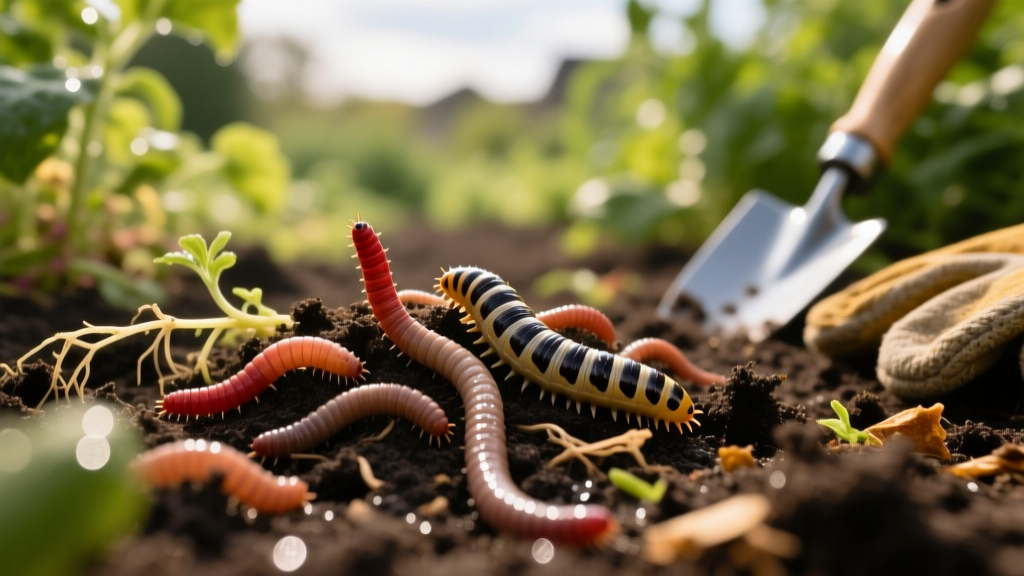
Are Worms Good for Gardens? Identifying Beneficial and Pest Worms
The Short Answer: It Depends on the Species
When gardeners ask, "are worms good for gardens?" the answer requires a taxonomic distinction. True earthworms (class Clitellata, subclass Oligochaeta) are foundational to soil health, acting as biological tillers and nutrient cyclers. However, the colloquial term "worm" is frequently applied to destructive insect larvae—such as grub worms and cutworms—and increasingly, to invasive annelids like the Asian jumping worm, which actively degrades soil structure.
Effective garden pest management begins with accurate identification. Applying broad-spectrum soil drenches to eliminate pest larvae can inadvertently wipe out beneficial earthworm populations, collapsing your soil food web. This guide provides the specific morphological traits, behavioral indicators, and targeted biological controls necessary to manage garden pests while preserving essential soil engineers.
The Beneficial Engineers: True Earthworms
Native and naturalized earthworms, such as the nightcrawler (Lumbricus terrestris) and the red wiggler (Eisenia fetida), are unequivocally beneficial. They consume organic matter and excrete castings that dramatically alter soil chemistry and physics.
Earthworm Casting Nutrient Profile
While exact NPK values fluctuate based on the worm's diet, vermicompost typically yields:
While exact NPK values fluctuate based on the worm's diet, vermicompost typically yields:
- Nitrogen (N): 1.5% - 2.5% (slow-release, non-burning)
- Phosphorus (P): 1.0% - 2.0% (highly bioavailable due to microbial solubilization)
- Potassium (K): 1.0% - 1.5%
- Microbial Biomass: Up to 20 times higher than surrounding bulk soil, heavily populated by plant-growth-promoting rhizobacteria (PGPR).
Beyond NPK, nightcrawlers create deep vertical macropores (up to 6 feet deep) that increase water infiltration rates by up to 30%, significantly reducing surface runoff and soil erosion during heavy rain events.
The Destructive Imposters: Garden Pest "Worms"
Many of the most damaging garden pests are not worms at all, but the larval stages of insects. Additionally, certain invasive true worms have become severe ecological threats.
1. White Grubs (Scarab Beetle Larvae)
Grub worms are the immature stage of scarab beetles (Japanese beetles, June bugs, and chafers). They reside in the top 2 to 4 inches of soil, feeding aggressively on the fine root hairs of turfgrass, strawberries, and young vegetable transplants. Severe infestations cause plants to wilt and detach easily from the soil, as the root system has been entirely severed.
2. Cutworms and Armyworms (Lepidoptera Larvae)
Cutworms are the caterpillars of noctuid moths. They are not soil-dwellers but surface-dwelling nocturnal feeders. A single black cutworm (Agrotis ipsilon) can sever the stems of up to five young seedlings in a single night, typically biting through the stem exactly at the soil line. Armyworms behave similarly but feed in massive, visible groups that can defoliate a garden bed in hours.
3. Invasive Jumping Worms (Amynthas spp.)
The most critical emerging threat in North American gardens is the invasive Asian jumping worm. Unlike beneficial earthworms that mix organic matter into the mineral soil, Amynthas species reside in the leaf litter and consume it at an unsustainable rate. According to Penn State Extension, this leaves behind a distinct, loose, coffee-ground-like casting layer that lacks structural integrity. This degraded top layer dries out rapidly, repels water, and destroys the mycorrhizal fungal networks that native plants and trees rely on for nutrient uptake.
Visual Identification Matrix
Use this diagnostic table to identify the "worms" you uncover while turning your garden soil.
| Species / Type | Morphology & Behavior | Garden Impact | Action Required |
|---|---|---|---|
| Nightcrawler (L. terrestris) |
Pinkish-brown, 4-8 inches. Sluggish movement. Leaves deep burrow holes. | Highly beneficial. Aerates deep soil and cycles nutrients. | Protect. Avoid broad-spectrum chemical drenches. |
| Red Wiggler (E. fetida) |
Reddish, 2-3 inches. Rapid, squirming movement. Found in compost bins. | Beneficial. Rapidly processes surface organic matter. | Protect. Add to vermicompost systems. |
| White Grub (Scarab Larvae) |
White/gray body, brown head, 6 legs near head. Rests in a tight "C" shape. | Destructive. Severs roots of turf and shallow-rooted crops. | Apply Heterorhabditis bacteriophora nematodes. |
| Cutworm (Noctuid Larvae) |
Gray/brown, greasy-looking, 1-2 inches. Curls into a spiral when disturbed. | Destructive. Fells young seedlings at the soil line. | Apply Bacillus thuringiensis var. kurstaki (Bt). |
| Jumping Worm (Amynthas spp.) |
Dark, iridescent clitellum. Thrashes violently and can shed tail when grabbed. | Ecologically destructive. Destroys soil structure and fungal networks. | Hand-remove and destroy. Solarize infected soil. |
Targeted Pest Control That Spares Earthworms
The cardinal rule of modern integrated pest management (IPM) is selectivity. You must eliminate the pest without sterilizing the soil. According to the University of Minnesota Extension, relying on carbaryl or imidacloprid soil drenches for grub control will cause collateral damage to native earthworm populations and beneficial predatory ground beetles.
Biological Control for Grubs: Beneficial Nematodes
For white grub infestations, apply the entomopathogenic nematode Heterorhabditis bacteriophora (Hb). These microscopic roundworms actively seek out grub larvae in the soil, penetrate their bodies, and release symbiotic bacteria that kill the host within 48 hours.
Application Specifics: Apply at a rate of 25,000 nematodes per square foot (roughly 1 billion per acre). A commercial package of 5 million nematodes costs approximately $35 to $45 and treats up to 2,000 square feet. Apply in the late afternoon when soil temperatures are between 60°F and 85°F, and irrigate immediately to wash them into the root zone. Hb nematodes are entirely harmless to earthworms.
Biological Control for Cutworms: Bt (Bacillus thuringiensis)
To stop cutworms and armyworms, use Bacillus thuringiensis var. kurstaki (Btk). Btk is a naturally occurring soil bacterium that produces crystalline proteins (Cry proteins). These proteins are only activated in the highly alkaline midgut of Lepidoptera larvae (caterpillars). Because earthworms possess an acidic digestive tract and lack the specific gut receptors, Btk passes through them without effect. Spray products like Monterey B.t. directly on plant foliage and the soil surface at dusk.
Soil Testing: The Mustard Pour Test
If you are unsure whether your garden soil harbors a healthy earthworm population or an invasive jumping worm infestation, perform a mustard pour test. This irritant drench forces subsurface annelids to the surface for counting without causing them long-term harm.
Mustard Pour Test Protocol:
- Mix 1/3 cup (approx. 80g) of ground yellow mustard seed powder into 1 gallon of water. Shake vigorously.
- Clear a 1-square-foot area of surface mulch and debris.
- Pour half the mixture slowly over the square foot area. Wait 2 minutes.
- Pour the remaining half. Wait another 5 minutes.
- Count and identify the worms that emerge. A healthy temperate garden soil should yield 10 to 20+ native earthworms per square foot. If dozens of thrashing, dark worms emerge, you likely have an Amynthas infestation.
"The presence of earthworms is a primary biological indicator of soil health, but gardeners must remain vigilant for invasive species like the Asian jumping worm, which fundamentally alters the nitrogen cycling and physical structure of forest and garden soils."
— Adapted from current soil ecology research, Environmental Protection Agency (EPA) Biological Control Guidelines.
Frequently Asked Questions
Do earthworms eat living plant roots?
No. True earthworms are detritivores. They lack the mandibles required to chew through living, healthy plant tissue. They consume decaying organic matter, fungi, and bacteria. If you see root damage, you are dealing with an insect larva (like a grub or root maggot), not an earthworm.
Can I use diatomaceous earth (DE) for pests without killing earthworms?
Food-grade diatomaceous earth is generally safe for earthworms when applied to the soil surface. Earthworms secrete a thick, protective mucus layer that shields them from the microscopic, abrasive silica edges of DE. However, DE is only effective against surface-dwelling pests like slugs and cutworms when kept completely dry; it loses its abrasive properties the moment it becomes wet.
How do I eradicate invasive jumping worms from my raised beds?
Chemical eradication of jumping worms is currently impossible without sterilizing the soil and killing beneficial biology. The most effective 2026 protocol is solarization: empty the bed, lay down a clear 6-mil polyethylene tarp during the peak heat of summer (July-August) for 4 to 6 weeks. Soil temperatures must reach 104°F at a depth of 2 inches for several consecutive days to kill the worms and their heat-resistant cocoons.

