
Pest Control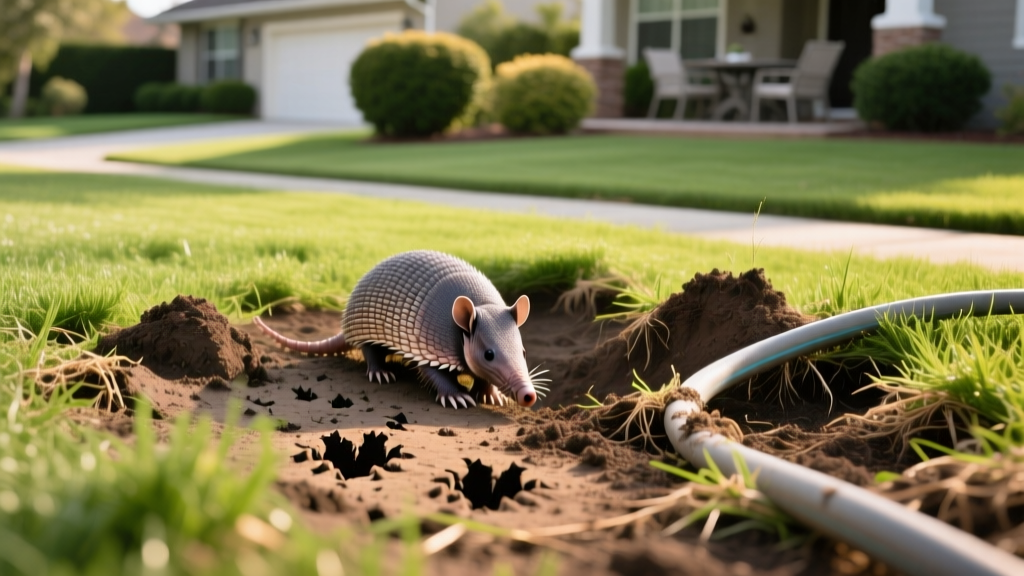
Diagnosing Armadillo Lawn Damage: Symptoms and Rescue Fixes
The nine-banded armadillo (Dasypus novemcinctus) is a relentless forager. When they target your yard, they can transform a pristine lawn into a minefield of shallow craters overnight. Unlike moles that tunnel extensively, or skunks that peel back sod, armadillos dig precise, conical pits while hunting for subterranean insects. Accurately diagnosing armadillo lawn damage is the critical first step before deploying rescue fixes and exclusion strategies. Misidentifying the culprit leads to wasted time, ineffective treatments, and further turf degradation.
The Diagnostic Matrix: Is It Armadillo Lawn Damage?
Homeowners frequently confuse armadillo foraging with the activity of other common turf pests. According to wildlife biologists at the Missouri Department of Conservation, armadillos rely on their highly developed sense of smell to locate food just beneath the soil surface, resulting in very specific excavation patterns. Use the diagnostic matrix below to confirm the pest before attempting repairs.
| Pest | Hole Shape & Dimensions | Soil Displacement | Primary Target | Surface Evidence |
|---|---|---|---|---|
| Armadillo | Conical pits; 1-3" deep, 3-5" wide | Loose soil scattered around the rim | White grubs, ants, earthworms | Multiple craters clustered in moist areas |
| Mole | No surface holes (unless volcano mounds) | Raised soil ridges, volcano-shaped mounds | Earthworms, soil insects | Spongy turf, raised tunnel networks |
| Skunk | Precise, cylindrical divots; 1-2" deep | Small plugs of grass and soil flipped over | Grubs, lawn insects | Torn grass blades, distinct musk odor |
| Vole | Small, clean holes; 1-1.5" diameter | Minimal displacement, often near roots | Plant roots, bulbs, bark | Surface runways through grass, chewed bark |
Why Armadillos Target Your Turf
Armadillos do not dig randomly. Their excavation is driven by two primary environmental factors: soil moisture and grub populations. Armadillos prefer loose, loamy, or sandy soils that retain moisture, as these environments harbor the highest concentrations of Coleoptera larvae (white grubs) and earthworms. If your lawn has a history of Japanese beetle or June beetle infestations, or if you over-irrigate your turf creating a perpetually damp topsoil layer, your yard becomes a high-value foraging zone.
Furthermore, armadillos have poor eyesight but possess an olfactory system capable of detecting grubs up to 8 inches beneath the surface. When they smell a dense grub colony, they will repeatedly return to the exact same coordinates, enlarging their initial 3-inch craters into massive, interconnected divots that sever turfgrass root systems and invite secondary weed invasions.
Immediate Rescue Fixes for Cratered Turf
Once you have confirmed armadillo activity and implemented deterrence (detailed below), you must repair the physical damage to prevent soil erosion and weed encroachment. Do not simply kick loose dirt back into the holes; this creates air pockets that will sink after the next rainfall, recreating the hazard.
The Topdressing and Overseeding Protocol
- Debris Removal: Use a hand trowel to remove loose debris, dead grass, and large rocks from the bottom of each crater. Clean the edges of the hole to expose healthy, living turf roots.
- Custom Backfill Mix: Avoid using straight topsoil, which compacts and restricts drainage. Mix a custom backfill consisting of 60% screened topsoil, 30% coarse masonry sand, and 10% finely screened compost. This mimics the structural integrity of healthy lawn soil.
- Layered Tamping: Fill the crater in 1-inch increments. After each inch, use a 4x4 wooden post or a hand tamper to firmly compact the soil. Overfill the hole by approximately 1/4 inch to account for natural settling.
- Seed and Anchor: Apply a premium turfgrass seed matching your existing cultivar (e.g., Pennington Smart Seed for fescue, or Scotts Turf Builder for Bermuda). Press the seed into the topdressing and cover with a thin layer of peat moss or straw to retain moisture and deter birds.
- Hydration Schedule: Water the repaired zones lightly twice daily for 14-21 days to maintain constant surface moisture until germination occurs, then transition to deep, infrequent watering to drive root establishment.
Deterrence and Exclusion Strategies That Actually Work
Repairing the lawn is futile if the armadillos return the following night. According to research published by the Clemson University Home and Garden Information Center, effective management requires a multi-pronged approach targeting both the food source and physical access.
- Biological Grub Control: Eliminate the armadillo's food source using beneficial nematodes (Heterorhabditis bacteriophora). Apply at a rate of 250 million nematodes per 10,000 square feet when soil temperatures consistently exceed 60°F. This organic treatment specifically targets and destroys white grubs without harming earthworms or turf roots. Expect to spend $45 to $65 per 250-million count application in 2026.
- Castor Oil Repellents: Armadillos are highly sensitive to the taste and smell of castor oil. Apply a commercial castor oil-based repellent (such as Bonide Mole Max) using a hose-end sprayer. This coats the soil and grubs, making the foraging experience unpalatable. Reapply every 3 weeks or immediately after heavy rainfall, as UV degradation and water dilution rapidly reduce efficacy.
- Physical Exclusion Fencing: Armadillos are surprisingly adept climbers and diggers. Install a physical barrier using 18-gauge galvanized hardware cloth with a 1/2-inch mesh. The fence must be 24 inches tall above ground, with the bottom 6 inches buried in a trench. Crucially, angle the buried 6-inch portion outward (away from your yard) at a 45-degree angle. When the armadillo attempts to dig under the fence, it hits the wire mesh and lacks the intelligence to back up and dig further away from the barrier.
⚠️ Legal and Health Warning Regarding Trapping
While 10" x 12" x 32" live cage traps can capture armadillos, baiting them is notoriously ineffective; traps must be placed directly over active runways with 'V-shaped' wire wings to guide the animal inside. More importantly, nine-banded armadillos are known carriers of Mycobacterium leprae, the bacterium that causes leprosy. Many state wildlife agencies, including the University of Georgia Extension, strictly prohibit the live-trapping and relocation of armadillos to public lands due to this zoonotic risk. Always consult your local Department of Natural Resources before attempting to trap and relocate wildlife; lethal disposal on private property may be the only legal option in your jurisdiction.
Frequently Asked Questions
Will mothballs or ammonia keep armadillos out of my lawn?
No. Using mothballs (naphthalene) or ammonia outdoors is illegal, environmentally hazardous, and entirely ineffective against armadillos. Armadillos have a thick, leathery hide and a robust respiratory system adapted to digging in dusty, low-oxygen soil environments. Surface-level chemical irritants will not deter them, and these substances will leach into your groundwater, killing beneficial soil microbes and potentially poisoning local pets.
How long does it take for turf to recover from armadillo damage?
If you follow the topdressing and overseeding protocol correctly, you will see seed germination in 10 to 14 days for warm-season grasses (like Bermuda or Zoysia) and 14 to 21 days for cool-season grasses (like Fescue or Kentucky Bluegrass). Full root establishment and seamless blending with the surrounding canopy typically takes 6 to 8 weeks, provided the soil is kept consistently moist and traffic is restricted from the repair zones.
Do ultrasonic pest repellers work on armadillos?
Ultrasonic repellers are a waste of capital for armadillo control. Armadillos have relatively poor hearing in the high-frequency ranges emitted by these devices, and their foraging behavior is entirely driven by olfactory cues (smell) and tactile feedback (digging). Furthermore, ultrasonic waves cannot penetrate soil, meaning the device cannot disrupt the armadillo's ability to detect grubs beneath the surface. Invest that budget into beneficial nematodes or hardware cloth fencing instead.

