
Pest Control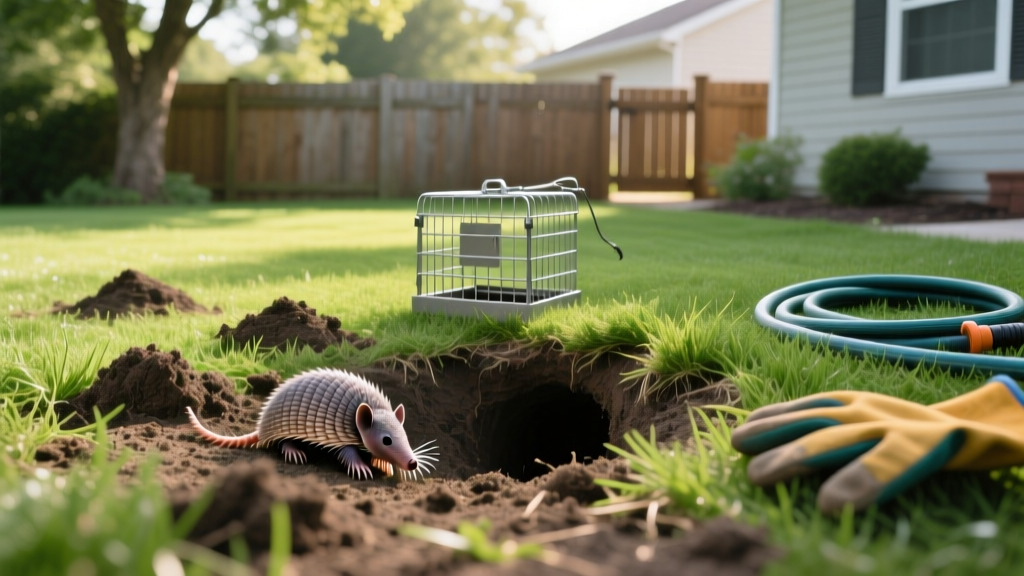
How to Get Rid of Armadillos: Traps & Yard Exclusion
The nine-banded armadillo (Dasypus novemcinctus) is a relentless forager. When you wake up to find your pristine lawn dotted with 3-to-4-inch deep conical holes and your garden beds uprooted, you are dealing with an animal that can consume up to 40,000 insects in a single year. Armadillos do not chew on your plants or structural wood; they are excavators hunting for soil-dwelling invertebrates. Learning how to get rid of armadillos requires a multi-pronged strategy focused on habitat modification, physical exclusion, and strategic trapping.
The Root Cause: Soil Moisture and Grub Populations
Armadillos have poor eyesight but an exceptional sense of smell, capable of detecting insect larvae up to 8 inches beneath the soil surface. They prefer loose, moist soil because it is easier to dig and harbors higher concentrations of earthworms and white grubs. If your yard retains heavy moisture or has an active grub infestation, it acts as a biological magnet.
Expert Insight: Simply filling in armadillo holes is a futile exercise. An adult armadillo can dig a new 12-inch burrow in under 15 minutes. You must eliminate the food source to force them to relocate.
Targeted Biological Grub Control
Chemical insecticides like imidacloprid can harm beneficial pollinators and earthworms. Instead, utilize targeted biological controls that specifically eradicate the armadillo's food supply without destroying your soil ecology:
- Heterorhabditis bacteriophora (Hb Nematodes): Apply these beneficial nematodes at a rate of 1 billion per acre when soil temperatures consistently reach 60°F. They actively hunt and destroy white grubs in the root zone.
- Bacillus thuringiensis galleriae (Btg): Sold under brand names like grubGONE!, this bacterial strain specifically targets beetle grubs. Apply at a rate of 3 lbs per 1,000 square feet in early summer when grubs are in their early larval instars.
Physical Exclusion: Fencing Protocols That Work
Because armadillos are burrowers, standard above-ground fencing is entirely ineffective. To exclude them from specific garden beds or compost areas, you must construct an L-shaped or angled subterranean barrier.
Material Comparison for Armadillo Exclusion
| Material | Gauge / Mesh Size | Effectiveness | Estimated Cost (per 50 ft) |
|---|---|---|---|
| 1/2' Galvanized Hardware Cloth | 19-Gauge, 1/2-inch mesh | High. Prevents digging and entry. Must be buried 12 inches deep with a 6-inch outward 45-degree bend at the top. | $85 - $110 |
| Chicken Wire (Poultry Netting) | 20-Gauge, 1-inch mesh | Low. Armadillos can easily crush or dig under standard chicken wire unless heavily reinforced with stakes every 2 feet. | $30 - $45 |
| Electric Polywire (Low Impedance) | N/A (Single strand) | Medium. A single wire placed 4 inches above the soil line shocks the armadillo's sensitive snout. Requires a 0.5-joule minimum energizer. | $60 - $90 (incl. energizer) |
For permanent exclusion, the Internet Center for Wildlife Damage Management recommends using 19-gauge hardware cloth. Dig a trench 12 inches deep and 6 inches wide along the perimeter. Place the hardware cloth in the trench, ensuring the bottom 6 inches bend outward (away from the garden) at a 90-degree angle to create an underground apron that stops digging attempts.
Live Trapping: Equipment, Bait, and Funneling
When habitat modification and exclusion are impractical for large properties, live trapping becomes necessary. Armadillos are trap-shy and rely heavily on tactile and olfactory cues, requiring specific trap setups.
Recommended Trap Specifications
The standard gravity-door trap fails because armadillos do not understand how to push through a swinging door. You must use a long, single-door live trap with a sensitive trigger pan.
- Model: Havahart 1085 or Tomahawk 108.
- Dimensions: 32' L x 10' W x 12' H. (Anything shorter will not accommodate their full body length, causing them to back out before triggering the pan).
- Placement: Position the trap directly over an active, primary burrow entrance or along a well-worn fence-line trail.
The Funnel Technique
Armadillos follow physical barriers rather than crossing open spaces. Construct 'wings' using 1-inch poultry netting, extending 8 to 10 feet outward from the trap entrance at a 45-degree angle. This forces the foraging armadillo to funnel directly into the trap opening.
Baiting Strategy: Do not use peanut butter or standard mammal baits. Armadillos prefer overripe, fermented fruit or live insects. Place a pile of overripe bananas mixed with live mealworms behind the trigger pan. The animal must fully enter and step on the pan to reach the food.
Zoonotic Risks and Relocation Laws
Before setting a trap, you must understand the legal and biological implications of capturing an armadillo. According to the Centers for Disease Control and Prevention (CDC), nine-banded armadillos are one of the only known wildlife reservoirs for Mycobacterium leprae, the bacterium that causes Hansen's disease (leprosy) in humans.
Furthermore, most state Departments of Natural Resources (DNR) strictly prohibit the relocation of armadillos. In states like Florida and Texas, trapped armadillos must either be released on the exact same property where they were caught or humanely euthanized. Relocating them to public lands or other counties is a misdemeanor offense designed to prevent the spread of zoonotic diseases and protect uninfected ecosystems.
Cost Breakdown: DIY Management vs. Professional Removal
Deciding whether to handle the infestation yourself or hire a wildlife control operator depends on the severity of the property damage and your comfort level with handling trapped animals.
| Service Level | Scope of Work | Average 2026 Cost |
|---|---|---|
| DIY Grub Treatment | Applying Hb nematodes and Btg to a 5,000 sq ft lawn. | $65 - $120 |
| DIY Trapping | Purchasing a Havahart 1085 trap, bait, and poultry netting wings. | $110 - $140 |
| Professional Exclusion | Wildlife operator installing subterranean hardware cloth around a 50x50 ft garden. | $800 - $1,500 |
| Professional Trapping & Removal | Operator sets traps, monitors daily, and legally disposes of the animal (per animal fee). | $250 - $450 per animal |
Frequently Asked Questions
Do castor oil repellents work on armadillos?
Castor oil-based repellents (like Nature's Mole & Gopher) can provide temporary relief by making the soil taste and smell unappealing, which disrupts their foraging. However, they wash out after heavy rainfall and require reapplication every 3 weeks. They are a deterrent, not a permanent solution.
Will mothballs keep armadillos out of my yard?
No. Mothballs (naphthalene or paradichlorobenzene) are entirely ineffective against armadillos and are illegal to use outdoors as a pesticide. They contaminate groundwater and pose severe toxicity risks to pets and children without deterring the armadillo's deep-digging behavior.
How deep do armadillo burrows go?
While their foraging holes are only 3 to 4 inches deep, their primary nesting burrows can extend 15 feet horizontally and up to 5 feet deep, often featuring multiple secondary entrances hidden under brush or root systems.

