
Pest Control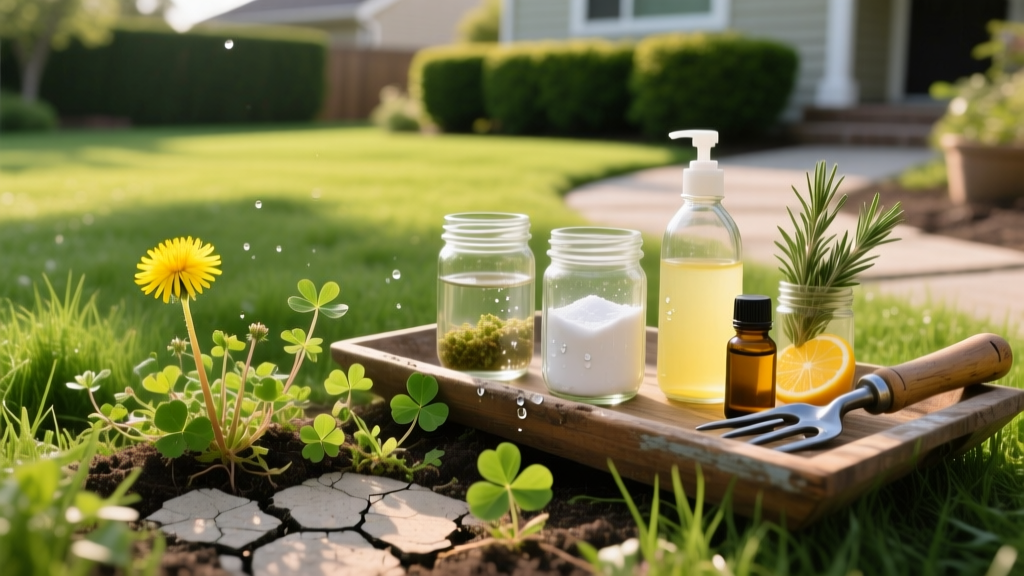
Best At Home Weed Killer Mixes for Targeted Spot Treatment
The Chemistry of Household Herbicides
Formulating an effective at home weed killer requires understanding plant anatomy and the chemical mechanics of desiccation. Most DIY weed control relies on contact herbicides—substances that destroy the tissue they touch but do not translocate through the plant's vascular system. When you spray a household mixture onto a weed, the goal is to dissolve the waxy cuticle of the leaf, rupture the cell membranes, and cause rapid water loss.
Standard 5% kitchen vinegar is largely ineffective on mature weeds because the acetic acid concentration is too low to penetrate thick cuticles. To achieve reliable spot-treatment results, you must use horticultural vinegar (20% to 30% acetic acid). As of 2026, horticultural vinegar costs between $28 and $35 per gallon, making it highly cost-effective for targeted applications compared to commercial non-selective herbicides. However, because these at home weed killer solutions are non-selective, they will burn any desirable turfgrass they contact, necessitating precise spot-treatment techniques.
⚠️ CRITICAL SOIL WARNING: Never use sodium chloride (table salt) or borax in your at home weed killer mixes for lawn application. While they kill weeds, they cause severe soil sterilization, destroying soil microbiology and preventing future grass growth. Reserve salt-based treatments exclusively for hardscape cracks and gravel driveways.
Target-Specific At Home Weed Killer Recipes
Different weed species require different chemical approaches based on their root structures and leaf morphology. Use these precise formulations for targeted spot treatment.
Broadleaf Taproot Weeds (Dandelion, Plantain, Thistle)
Broadleaf weeds possess a thick, waxy cuticle that repels water-based solutions. To penetrate this barrier, you must add a surfactant. Household liquid dish soap (such as Dawn Ultra) contains sodium lauryl sulfate, an anionic surfactant that breaks surface tension.
- The Mix: 1 gallon of 20% horticultural vinegar, 1 ounce of pure citrus oil (d-limonene), and 1 teaspoon of liquid dish soap.
- The Mechanism: The acetic acid desiccates the foliage, while the d-limonene strips the waxy cuticle. The dish soap ensures the mixture adheres to the leaf surface rather than beading up and rolling off.
- Application Note: This mixture will burn the top growth of dandelions within 24 hours. Because it is a contact herbicide, the taproot may survive and resprout. Plan for a secondary spot-treatment 10 to 14 days after the initial application when new foliage emerges.
Shallow Annual Grasses (Crabgrass, Spurge, Goosegrass)
Annual grassy weeds have fibrous, shallow root systems and thinner foliage than broadleaf weeds. They are highly susceptible to thermal shock and rapid desiccation.
- The Mix: Boiling water (212°F / 100°C) applied directly from a specialized thermal weed wand, or a 50/50 mix of 20% vinegar and water for cooler days.
- The Mechanism: Boiling water instantly coagulates plant proteins and ruptures cell walls. It is 100% effective on shallow-rooted annuals and leaves zero chemical residue in the soil.
- Application Note: Pouring boiling water requires extreme caution to avoid scalding. For the vinegar alternative, apply during the hottest part of the day (between 12:00 PM and 3:00 PM) when ambient temperatures exceed 80°F to maximize the volatilization of the acetic acid.
Household Herbicide Ingredient Comparison Matrix
Choosing the right active ingredient for your at home weed killer depends on the target environment and the specific weed species. Review this matrix before mixing your solution.
| Active Ingredient | Efficacy on Mature Weeds | Soil Impact | Best Target Scenario |
|---|---|---|---|
| 20% Acetic Acid (Vinegar) | High (with surfactant) | Temporary pH drop; rapidly buffered | Broadleaf weeds in lawn edges |
| d-Limonene (Citrus Oil) | Moderate to High | Negligible; breaks down quickly | Young seedlings and soft-tissue weeds |
| Boiling Water | Extreme (thermal kill) | None (kills surface microbes temporarily) | Crabgrass in driveway cracks |
| Sodium Chloride (Salt) | High (systemic toxicity) | Severe; causes permanent sodic soil | Hardscape joints and gravel paths ONLY |
Application Protocols for Maximum Efficacy
The success of an at home weed killer relies heavily on application mechanics. According to Penn State Extension turfgrass weed management guidelines, contact herbicides fail most often due to poor coverage and unfavorable environmental conditions.
Equipment Calibration and Nozzle Selection
Do not use a fan-spray nozzle for spot treatments. A fan nozzle creates a wide mist that drifts onto desirable turfgrass, causing collateral damage. Instead, equip your pump sprayer with a pin-stream or cone nozzle. A pin-stream delivers a concentrated, low-drift liquid stream directly into the center of a dandelion rosette, minimizing overspray. Adjust your pump pressure to 20-25 PSI; higher pressures atomize the liquid and increase wind drift.
Environmental Timing
Horticultural vinegar requires heat and ultraviolet light to maximize tissue destruction. Apply your at home weed killer between 10:00 AM and 2:00 PM on clear, sunny days when temperatures are above 75°F. Avoid applying if rain is forecasted within 24 hours, as the solution requires at least 4 hours of dry contact time to fully desiccate the foliage. Furthermore, never apply DIY acid-based mixtures when wind speeds exceed 5 MPH to prevent drift onto ornamental shrubs or neighboring lawns.
When to Abandon DIY and Use Commercial Spot Treatments
While an at home weed killer is excellent for annual weeds and broadleaf rosettes, it has severe limitations against perennial weeds with complex rhizome or tuber systems. If you are battling Yellow Nutsedge or Field Bindweed, DIY contact herbicides will only burn the top growth, causing the plant to trigger dormant basal buds and return more aggressively within weeks.
For these species, the EPA guidelines on lawn and garden pesticides recommend using systemic commercial herbicides containing Halosulfuron-methyl (for nutsedge) or Quinclorac (for bindweed). These synthetic molecules translocate through the phloem down to the tubers and rhizomes, providing a permanent kill that household acids simply cannot achieve. Use DIY mixes for routine maintenance and spot-treating isolated lawn invaders, but rely on targeted commercial systemics for deep-rooted perennial infestations.
Post-Treatment Lawn Recovery
Because spot-treating with a non-selective at home weed killer will leave small brown patches in your turf, immediate recovery protocols are necessary. Once the weed has completely desiccated and turned brown (usually 3 to 5 days), use a hand trowel to remove the dead organic matter. Loosen the top two inches of soil, apply a handful of compost, and overseed with a grass blend matching your existing lawn. Keep the spot moist for 14 days to ensure seed germination and prevent new weed seeds from colonizing the bare soil.

