
Pest Control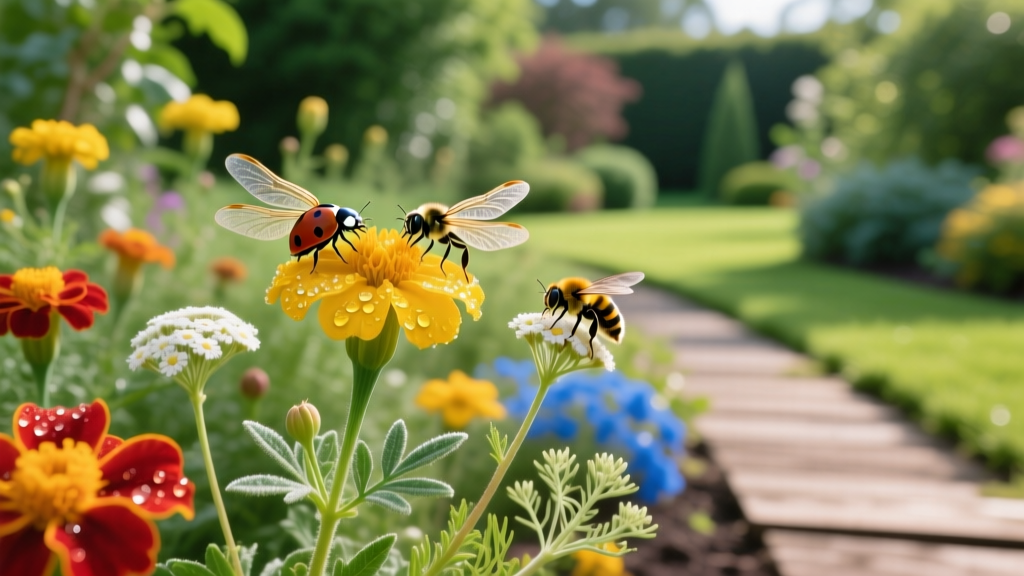
How to Attract Good Garden Insects for Natural Pest Control
The Core Biocontrol Squad: Identifying Good Garden Insects
Relying on broad-spectrum chemical pesticides creates a biological vacuum in your garden, inevitably leading to worse pest resurgences. True integrated pest management (IPM) leverages biological pest control by establishing a permanent resident population of predatory and parasitic insects. Before engineering your habitat, you must understand the specific functional roles of the insects you are trying to recruit.
| Beneficial Insect | Target Pests | Primary Attractant Plants | Garden Release Rate (if buying) |
|---|---|---|---|
| Green Lacewing (Chrysoperla carnea) | Aphids, thrips, spider mites, whiteflies | Sweet alyssum, dill, fennel | 1,000 eggs per 1,000 sq. ft. |
| Convergent Lady Beetle (Hippodamia convergens) | Soft-bodied insects, scale, mealybugs | Yarrow, cilantro, dandelion | 1,500 adults per 1,000 sq. ft. |
| Parasitic Wasps (Trichogramma spp.) | Caterpillars, tomato hornworms, borers | Buckwheat, Queen Anne's lace | 5,000 to 10,000 per 1,000 sq. ft. |
| Hoverflies (Syrphidae family) | Aphids (larvae consume up to 400/month) | Cosmos, zinnias, sunflowers | Attract only (not commercially sold) |
| Ground Beetles (Carabidae) | Slugs, snails, cutworms, root maggots | Perennial clover, amaranth | Attract only (provide bare soil) |
Step-by-Step Habitat Engineering for Beneficials
Attracting good garden insects requires more than scattering a few marigolds. You must engineer an 'insectary strip' that provides continuous nectar, pollen, and alternate prey throughout the growing season. According to guidelines from the Xerces Society for Invertebrate Conservation, beneficial insect habitats must occupy at least 5% to 15% of your total garden square footage to maintain stable predator populations.
Step 1: Plant Apiaceae for Short-Mouthpart Parasitoids
Many crucial parasitic wasps, such as Trichogramma and Aphidius colemani, have exceptionally short mouthparts. They cannot access nectar from deep, tubular flowers. You must plant members of the Apiaceae (carrot) family. Allow dill (Anethum graveolens), fennel (Foeniculum vulgare), and cilantro (Coriandrum sativum) to bolt and flower. The flat, exposed umbels of these plants provide the exact floral architecture these micro-wasps require for daily carbohydrate fueling.
Step 2: Install Shallow Hydration Stations
Predatory insects dehydrate rapidly while hunting in the summer sun. Standard birdbaths are lethal drowning traps for lacewings and lady beetles. Construct dedicated insect hydration stations using terracotta saucers filled with clean, uniform pea gravel. Add just enough water so the surface tension rests exactly at the top of the gravel. Place these stations every 15 feet along your insectary strips.
Step 3: Manage Mulch for Ground-Dwelling Predators
While heavy woodchip mulch suppresses weeds, it also blocks ground beetles and predatory rove beetles from accessing the soil surface to hunt cutworms and slugs. Maintain a 70/30 ratio: mulch 70% of your garden beds to retain moisture, but leave 30% as bare, undisturbed soil. This bare ground is non-negotiable for ground-nesting solitary bees and soil-dwelling predators.
The Pesticide Paradox: Navigating Organic Sprays
A common failure mode in organic gardening is the assumption that 'natural' pesticides are harmless to good garden insects. This is biologically false. Even OMRI-listed organic sprays can devastate your biocontrol squad if applied incorrectly.
WARNING: The Spinosad Hazard
Spinosad is highly effective against caterpillars and thrips, but it is acutely toxic to green lacewings and pollinators when wet. While it degrades in sunlight within 24 to 48 hours, spraying it broadly will wipe out your resident predator larvae. Protocol: Only apply Spinosad as a targeted spot-treatment on the underside of heavily infested leaves, and strictly during late evening hours when beneficials are inactive and the spray can dry before morning foraging begins.
Spinosad is highly effective against caterpillars and thrips, but it is acutely toxic to green lacewings and pollinators when wet. While it degrades in sunlight within 24 to 48 hours, spraying it broadly will wipe out your resident predator larvae. Protocol: Only apply Spinosad as a targeted spot-treatment on the underside of heavily infested leaves, and strictly during late evening hours when beneficials are inactive and the spray can dry before morning foraging begins.
Neem Oil (Azadirachtin): While neem oil is relatively safe for adult lady beetles, it acts as a severe growth regulator that disrupts the molting process of lacewing and hoverfly larvae. If you must use neem for a severe fungal or pest outbreak, restrict application to early spring before your insectary plants have bloomed and attracted the first generation of beneficials.
Overwintering Architecture: Keeping Them Around
Recruiting good garden insects in the spring is useless if they have nowhere to overwinter. Most predatory insects do not migrate; they enter diapause in garden debris. The University of California Statewide IPM Program emphasizes that 'clean' gardens are biologically dead gardens. Implement these specific overwintering structures:
- Hollow Stem Bundles: Cut back perennial flower stalks (like coneflower and bee balm) leaving exactly 12 to 18 inches of stem above the soil line. Solitary wasps and lady beetles will bore into the pith to survive freezing temperatures.
- Engineered Brush Piles: Construct a 4x4x3 foot brush pile in a shaded corner of your property. Use 4-inch diameter logs for the base to prevent rot-compaction, and layer 1-inch twigs on top. This specific architecture provides thermal mass while allowing ground beetles to enter and exit freely.
- Leaf Litter Retention: Leave a 3-inch layer of dry oak or maple leaves under shrubs. This is the primary overwintering habitat for adult lady beetles and predatory mantises.
Troubleshooting: Why Aren't the Good Insects Showing Up?
If you have planted the correct attractants but still suffer from aphid or mite outbreaks, diagnose the issue using this decision framework:
Symptom: Purchased Ladybugs Flew Away Immediately
Cause: Commercially sold convergent lady beetles are typically wild-harvested from mountain overwintering sites and possess a strong biological drive to disperse. Furthermore, if you release them into a garden without an existing, dense prey population, they will leave to find food.
Fix: Never release ladybugs during the heat of the day. Water the release area heavily first (they are dehydrated from shipping). Release them at dusk directly onto plants that already have visible aphid colonies. Alternatively, abandon buying adults and instead purchase green lacewing eggs, which hatch into immobile, ravenous larvae that cannot fly away.
Symptom: Insectary Plants are Blooming, But No Parasitoids
Cause: High-nitrogen fertilizers push rapid, sappy vegetative growth in plants, which attracts aphids but drastically reduces the production of nectar and extrafloral nectaries required by parasitic wasps.
Fix: Stop applying synthetic nitrogen to your insectary strips. Switch to a low-nitrogen, high-phosphorus organic fertilizer (like a 2-14-2 bat guano blend) to stimulate prolific flowering and nectar secretion.
Expert Insight on Insectary Strips
'The biggest mistake home gardeners make is planting insectary flowers in isolated, single clumps. Beneficial insects forage along linear corridors. Plant your sweet alyssum and yarrow in continuous 12-inch wide borders along the edges of your vegetable beds, rather than as isolated island plantings. This reduces the energy expenditure for predators moving between prey patches.' — Entomological IPM Field Guidelines
Establishing a robust population of good garden insects is a multi-season investment. By engineering specific floral architectures, eliminating broad-spray organic pesticides, and providing precise overwintering habitats, you transition your garden from a chemical-dependent battleground into a self-regulating ecosystem. Monitor your plant leaves weekly for the presence of lacewing eggs (tiny white ovals on the ends of hair-thin stalks) and mummified aphids (swollen, tan-colored shells) to confirm your biocontrol squad has successfully moved in.

