
Pest Control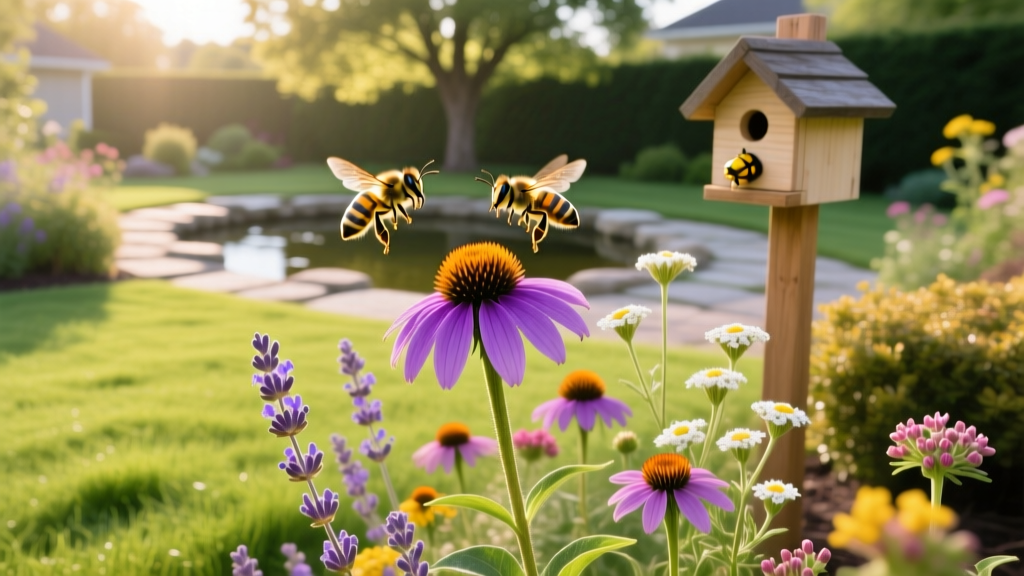
How to Attract Bees for Natural Garden Pest Defense
Most conventional pest control strategies focus entirely on eradication, relying on broad-spectrum chemicals that wipe out both harmful invaders and beneficial insects. However, modern Integrated Pest Management (IPM) recognizes that a sterile yard is a vulnerable yard. Learning how to attract bees—specifically gentle, solitary species—is a foundational strategy for building a biodiverse ecosystem that naturally suppresses pest populations and fortifies plant immunity.
While bees themselves do not hunt garden pests like aphids or grubs, the habitat requirements that attract native pollinators simultaneously draw in predatory insects like hoverflies and parasitic wasps. Furthermore, robust pollination leads to stronger plant cell walls and higher yields, making your lawn and garden inherently more resistant to fungal diseases and sap-sucking insects. This guide details exactly how to attract bees to your property while strategically zoning them away from high-traffic areas to ensure a safe, thriving landscape.
The IPM Connection: Why Pollinators Are Your First Line of Defense
According to the EPA's Pollinator Protection guidelines, maintaining a diverse insect population is critical for sustainable yard management. When you establish a habitat for native bees, you trigger a cascading ecological effect:
The Biodiversity Multiplier Effect: A single patch of native wildflowers designed to attract mason bees will also provide nectar for adult Syrphid flies (hoverflies). While the adult hoverfly mimics a bee, its larvae are voracious predators, capable of consuming up to 400 aphids per week during their development.
By focusing on native solitary bees—such as the Blue Orchard Mason Bee (Osmia lignaria) and the Alfalfa Leafcutter Bee (Megachile rotundata)—you avoid the defensive swarming behaviors associated with honeybees or the aggressive stinging of yellowjackets. Solitary bees are notoriously docile, rarely stinging even when handled, making them the ideal candidates for residential pest-defense ecosystems.
Strategic Zoning: Where to Place Bee Habitats
A common mistake homeowners make is placing pollinator habitats too close to patios, playsets, or entryways. To maximize garden health while minimizing human-insect conflicts, implement a strict zoning strategy.
The 20-Foot Buffer Rule
Always position bee hotels and high-density pollinator plantings at least 20 feet away from high-traffic zones, outdoor dining areas, and pet enclosures. Place them along the sunniest perimeter fences or near vegetable garden borders where their foraging activity directly benefits crop yields and draws predators away from your core living spaces.
Dual-Purpose Plantings: Flora That Attracts Bees and Repels Pests
Not all pollen sources are created equal. To optimize your yard for defense, select plant species that serve a dual purpose: providing essential forage for native bees while emitting volatile organic compounds (VOCs) that confuse or repel common landscape pests. The Xerces Society's Pollinator Conservation hub emphasizes the use of regionally native plants, but the following dual-purpose species perform exceptionally well across most North American hardiness zones.
| Plant Species | Target Bee Species | Pest Repelled / Suppressed | Placement Strategy |
|---|---|---|---|
| Borage (Borago officinalis) | Honeybees, Bumblebees | Tomato Hornworms, Cabbage Worms | Interplant directly within tomato and brassica beds. |
| Globe Allium (Allium cristophii) | Leafcutter Bees, Sweat Bees | Aphids, Japanese Beetles, Deer | Border plantings around rose bushes and ornamental shrubs. |
| Yarrow (Achillea millefolium) | Hoverflies (Bee Mimics), Mining Bees | Aphids (via hoverfly larvae predation) | Sunny perimeter zones; highly drought tolerant. |
| Anise Hyssop (Agastache foeniculum) | Mason Bees, Bumblebees | Mosquitoes, Flea Beetles | Near seating area buffers (repels mosquitoes while feeding bees). |
Constructing the Ideal Solitary Bee Hotel (Exact Specs)
Buying a mass-produced bamboo bee house from a generic garden center often leads to poor occupancy rates and the spread of chalkbrood fungus. To effectively attract and sustain a local population of mason bees, you must meet their precise biological requirements. According to the US Forest Service Pollinator Hub, proper cavity dimensions are non-negotiable for successful nesting.
Materials and Dimensions
- Wood Selection: Use untreated, kiln-dried cedar or pine. Never use pressure-treated lumber, as the copper and arsenic compounds are lethal to developing larvae.
- Hole Diameter: Exactly 5/16 inch (8mm). This specific diameter encourages female mason bees to lay eggs. Holes that are too large will result in predominantly male offspring, crashing your local population.
- Hole Depth: Exactly 6 inches deep. Critical: Do not drill all the way through the wood. The back of the hole must be completely sealed to protect against wind and parasites.
- Spacing: Space holes at least 3/4 inch apart from center to center to prevent structural weakening and fungal cross-contamination.
Alternative: The Paper Tube Insert Method
For easier maintenance, purchase a wooden block with 6-inch deep holes and line them with 5/16-inch kraft paper nesting tubes (typically $12 for a pack of 50). This allows you to pull out and replace the tubes every February, destroying overwintering parasites and fungal spores without having to drill a new block every year.
Mounting and Orientation Protocol
Mount the bee house securely to a fence post or wall at eye level (3 to 5 feet off the ground). It must face South or Southeast to catch the early morning sun. Solitary bees are cold-blooded and require solar radiation to reach flight temperature. Ensure the house has a sloped roof overhang of at least 2 inches to prevent driving rain from soaking the nesting cavities.
The Yellowjacket Trap: What NOT to Do
When researching how to attract bees, many homeowners stumble upon DIY 'sugar water' feeders or leave out rotting fruit. Do not do this. Sugar water and fermenting fruit do not attract native solitary bees; they attract yellowjackets, European hornets, and nuisance ants. Yellowjackets are aggressive, colony-dwelling pests that will monopolize your yard, sting homeowners, and predate upon the very caterpillars and aphids you are trying to manage naturally.
Furthermore, never use systemic neonicotinoid pesticides (such as imidacloprid) on your lawn or flowering beds. Even trace amounts in the nectar will cause neurological failure in foraging bees, collapsing the local pollinator network and leaving your plants entirely defenseless against the next aphid or grub invasion.
Frequently Asked Questions
Will attracting solitary bees increase the risk of my pets getting stung?
No. Solitary bees like mason and leafcutter bees lack the aggressive hive-defense instinct of honeybees or yellowjackets. They are focused entirely on foraging and nesting. A pet would have to actively crush a female bee against its skin to provoke a sting, and even then, the venom is mild and rarely causes a reaction compared to social wasps.
How long does it take for a bee hotel to show results?
If placed correctly in early spring (March to April, depending on your hardiness zone) near blooming native flora, you should see mason bees investigating and capping tubes within 2 to 3 weeks. Ensure you have a mud source within 300 feet, as mason bees require wet clay to cap their nesting chambers.
Do I need to provide water for the bees?
Bees require water, but deep birdbaths are drowning hazards. Create a 'puddling station' by filling a shallow terracotta saucer with pebbles and keeping it filled with water. The pebbles give the bees a safe landing pad to drink without falling in, while also providing essential dissolved minerals they need for larval development.

