
Pest Control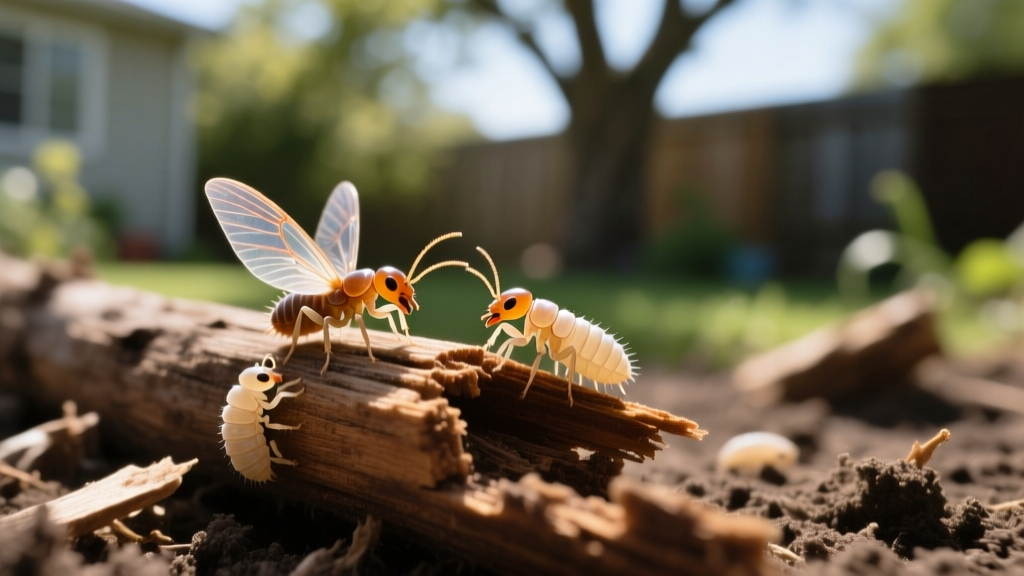
What Are Baby Termites With Wings? Identification & Yard Defense
When homeowners spot small, winged insects near their foundation, garden beds, or patio lights, a frequent reaction is to search for "baby termites with wings." However, from an entomological standpoint, this is a biological impossibility. Termites undergo incomplete metamorphosis, meaning they do not have a "baby" stage that possesses fully formed wings. If you are seeing small winged insects in your yard, you are likely looking at mature reproductive termites (alates), termite nymphs developing wing buds, or flying ants. Misidentifying these pests can lead to ineffective treatments and severe structural damage to your home.
This guide breaks down the biology of winged termites, provides a definitive identification matrix, and outlines exact yard defense protocols to stop colony expansion before it reaches your home's wooden framing.
The Biological Truth: Do "Baby" Termites Have Wings?
Termite colonies are divided into distinct castes: workers, soldiers, and reproductives. The insects that people commonly mistake for "babies with wings" fall into two specific biological categories:
- Alates (Swarmers): These are fully mature, reproductive adult termites. Their sole purpose is to leave the parent colony, mate, and establish new colonies. They are often small (about 1/4 to 3/8 inch long), which leads homeowners to incorrectly assume they are juveniles.
- Nymphs with Wing Buds: In the reproductive caste, older nymphs develop small, hardened pads on their thorax called "wing buds." These are not functional wings, but rather the precursors that will become wings after their final molt. You will rarely see these outside the subterranean galleries unless a nest has been physically disturbed.
According to the University of Kentucky Entomology Department, seeing alates swarming in your yard is a definitive indicator that a mature, 3-to-5-year-old termite colony is located within 100 feet of your property.
What You Are Actually Seeing: Identification Matrix
Because termite swarmers and flying ants are similar in size and both swarm in the spring, accurate identification is critical. Use the comparison table below to determine exactly what is invading your yard.
| Anatomical Feature | Termite Swarmers (Alates) | Flying Carpenter Ants | Termite Nymphs (Wing Buds) |
|---|---|---|---|
| Antennae | Straight, bead-like | Elbowed (bent at 90 degrees) | Straight, bead-like |
| Waist | Thick, uniform width | Pinched, narrow hourglass | Thick, uniform width |
| Wings | Equal length, milky/translucent, easily shed | Front wings longer than hind wings, clear/veined | No wings (small hardened pads) |
| Color | Dark brown to black body | Black, red, or brown body | Creamy white to pale brown |
| Behavior | Poor fliers, crawl on ground, shed wings | Strong fliers, do not shed wings | Hidden in soil/wood, avoid light |
Why Winged Termites in the Yard Signal a Major Threat
Finding discarded, translucent wings on your patio or windowsills means the swarmers have successfully mated and are now burrowing into the soil to start a new colony. The National Pest Management Association (NPMA) notes that subterranean termites cause over $5 billion in property damage annually in the United States. A single mature colony can house up to 2 million workers, consuming roughly 15 pounds of wood per week.
Critical Warning: Do not spray swarming termites with over-the-counter aerosol insecticides like Raid or Ortho Home Defense. Killing the visible swarmers does nothing to the subterranean colony hiding beneath your lawn. Furthermore, repellent sprays can cause the colony to "bud" and split into multiple satellite colonies, making professional eradication significantly more difficult and expensive.
Actionable Yard Defense: Stop the Swarm Before They Reach Your Home
Defending your yard requires a two-pronged approach: eliminating the environmental conditions that attract new queens, and establishing a chemical or bait barrier to kill the foraging workers.
1. Moisture and Grading Corrections
Termites require high moisture levels to survive. Inspect your yard's grading. The soil must slope away from your foundation at a minimum rate of 6 inches of drop over the first 10 feet. Extend all downspouts at least 5 feet away from the house using corrugated PVC piping. Fix any leaking irrigation heads near the foundation, as damp soil acts as a magnet for alates looking to establish a new nest.
2. Trenching and Liquid Termiticide Application
For immediate, long-lasting yard defense, apply a non-repellent liquid termiticide. The industry gold standard is Fipronil 9.1% (sold under brand names like Termidor SC or Taurus SC). Because it is non-repellent, termites cannot detect it; they tunnel through it, pick up the active ingredient, and transfer it to the rest of the colony via grooming (the "transfer effect").
Exact Application Protocol:
- Dig a trench 6 inches wide and 6 inches deep around the entire perimeter of your home's foundation, as well as around detached wooden structures like sheds or pergolas.
- Mix the Fipronil concentrate at a rate of 0.8 fluid ounces per gallon of water.
- Apply 4 gallons of the finished solution per 10 linear feet of trench. Pour it evenly using a watering can or a pump sprayer modified with a trenching nozzle.
- Backfill the trench with the treated soil. This creates a continuous chemical barrier that remains active in the soil for up to 10 years.
3. Installing a Perimeter Bait System
If you prefer not to trench or have environmental concerns regarding liquid chemicals near a well or water feature, install an in-ground bait system like the Advance Termite Bait System. Place bait stations every 10 feet around the perimeter of the structure. The stations contain a wood monitoring base. Once termites are detected feeding on the wood, replace it with a cartridge containing Diflubenzuron, an insect growth regulator that prevents termites from molting, ultimately collapsing the colony.
Wood-to-Soil Contact Elimination
Even with chemical barriers, physical vulnerabilities in your landscaping can bypass your defenses. Conduct a thorough yard audit to eliminate wood-to-soil contact:
- Fence Posts: Ensure wooden fence posts are set in concrete or elevated on galvanized steel post bases. Do not let soil or mulch touch the wood.
- Mulch Management: Keep wood mulch at least 6 inches away from your foundation siding. Consider switching to inorganic mulches like crushed stone or rubber mulch in high-risk zones near the house.
- Firewood Storage: Never stack firewood directly on the lawn or against the side of your house. Store it on an elevated metal rack at least 20 feet away from any structures.
DIY Treatment vs. Professional Extermination: Cost & Efficacy
Deciding whether to handle a termite swarm yourself or hire a licensed pest control operator depends on the severity of the infestation and your property's layout.
| Factor | DIY Liquid Trenching | Professional Extermination |
|---|---|---|
| Estimated Cost | $350 - $600 (Materials & Tools) | $1,500 - $3,500 (Depending on linear footage) |
| Time Investment | 1 to 2 full weekends of heavy labor | 1 to 2 days (Handled by a crew) |
| Warranty | None (Self-monitored) | 1 to 5-year renewable warranty with retreatment guarantees |
| Best For | Preventative yard defense, detached sheds, new construction | Active infestations inside the home, complex foundations, slab homes |
If you are only seeing swarmers in the yard and have no evidence of mud tubes or damaged wood inside your home's crawlspace or basement, a DIY perimeter trench using Fipronil is a highly effective, cost-saving preventative measure. However, if you find mud tubes on your foundation walls or hollow-sounding baseboards inside the house, bypass DIY methods and immediately contract a licensed professional for an interior and exterior treatment plan.

