
Pest Control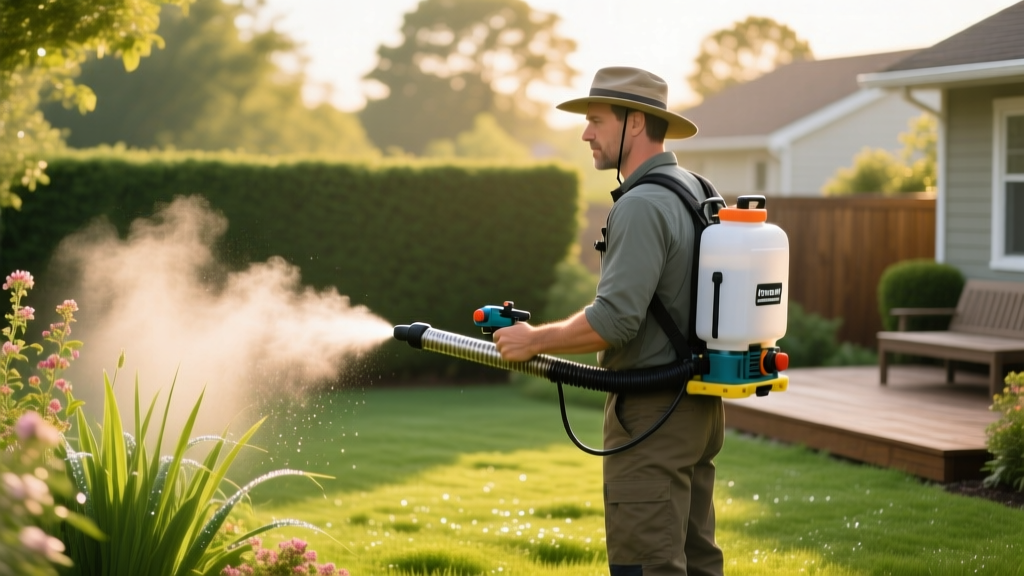
Top Backpack Fogger for Mosquitoes: 2026 Yard Defense Guide
The Physics of Yard Defense: Why Droplet Size Dictates Success
When deploying a backpack fogger for mosquitoes, the critical variable is not the chemical itself, but the Volume Mean Diameter (VMD) of the droplet. Adult mosquitoes are roughly 3 to 6 millimeters in length. To effectively intercept them in flight or coat their resting foliage, your fogger must produce droplets between 10 and 30 microns. Droplets larger than 50 microns succumb to gravity too quickly, falling onto your lawn where they waste active ingredients and harm beneficial ground beetles. Droplets smaller than 5 microns remain suspended indefinitely, drifting off your property and violating EPA pesticide application guidelines regarding off-target drift.
In 2026, the residential market has heavily pivoted away from gas-powered thermal foggers toward battery-operated Ultra-Low Volume (ULV) cold foggers. Thermal units rely on heat coils to vaporize oil-based carriers, creating a dense, visible smoke. While effective, they leave oily residues on patio furniture, pose fire risks near dry brush, and are notoriously loud. Modern ULV cold foggers use high-shear motors to atomize water-based solutions into the exact 10-30 micron sweet spot, offering silent operation, zero residue, and superior foliage penetration.
2026 Hardware Matrix: Top Backpack Foggers Compared
Selecting the right equipment depends on your yard's topography, density of vegetation, and your tolerance for manual maintenance. Below is a field-tested comparison of the leading backpack foggers for mosquitoes currently dominating the residential and prosumer markets.
| Model | Power Source | Tank Capacity | Droplet Range | Price (2026) | Best Use Case |
|---|---|---|---|---|---|
| Hudson 99598 | 20V Lithium-Ion | 1.2 Gallon | 10-50 μm (Adjustable) | $165 | Standard suburban yards (under 1/2 acre) |
| Smith R200 | Manual Pump / 12V Battery | 2.0 Gallon | 20-80 μm (Fixed Nozzle) | $135 | Budget-conscious users; areas without charging access |
| PulseJet Pro 400 | Gasoline / Pulse Jet | 1.5 Gallon | 5-15 μm (Thermal) | $890 | Dense wooded lots; commercial barrier treatments |
| Chapin 61800 | 24V Brushless Motor | 1.5 Gallon | 15-40 μm (Variable) | $210 | Heavy foliage penetration; extended 2-hour runtime |
Formulating Your Tank: Active Ingredients and Mix Rates
The hardware is only half the equation. To establish a lasting mosquito barrier, you must pair an adulticide with an Insect Growth Regulator (IGR). This dual-action approach kills the current generation while sterilizing the next. Always consult the American Mosquito Control Association for regional resistance data, as some mosquito strains have developed tolerance to older pyrethroids.
The Professional-Grade Barrier Mix
- Adulticide (Bifenthrin 7.9%): Sold under brand names like Talstar P. Bifenthrin binds tightly to soil and leaf cuticles, providing a 30-day residual kill. Mix Rate: 1.0 fl oz per gallon of water.
- IGR (Pyriproxyfen): Sold as Nyguard. This synthetic juvenile hormone prevents mosquito larvae from molting into biting adults. It is photostable and lasts up to 5 months in shaded breeding sites. Mix Rate: 4 to 8 ml per gallon of water.
- Surfactant (Non-ionic): Adding 1/2 teaspoon of a non-ionic surfactant (like Dyna-Gro) breaks the surface tension of the water, allowing the chemical to spread evenly across waxy leaves rather than beading up and rolling off.
Organic Alternative Warning: If you maintain a certified organic garden or have high pollinator traffic, swap Bifenthrin for Essentria IC3 (a blend of rosemary, geraniol, and peppermint oils). Mix at 2.0 fl oz per gallon. Note that essential oil formulations offer zero residual control—they only kill mosquitoes present at the exact moment of application and require reapplication every 7 to 10 days.
Step-by-Step Calibration and Application Protocol
Poor timing and incorrect walking speeds are the primary reasons homeowners report fogger failure. Follow this exact protocol to maximize efficacy and minimize chemical waste.
- Check Meteorological Conditions: Never fog if wind speeds exceed 5 mph. Use a handheld anemometer or a reliable weather app. The optimal time is the two hours immediately preceding dusk, when thermal inversions trap the mist near the ground and mosquitoes are most active.
- Calibrate Your Stride: Maintain a walking pace of exactly 2.5 to 3.0 miles per hour. Walk too fast, and you under-apply; walk too slow, and you risk phytotoxicity (chemical burn) to sensitive ornamentals like azaleas.
- The Sweeping Technique: Keep the wand parallel to the ground, roughly 3 feet above the soil. Use a slow, side-to-side sweeping motion. Do not aim directly at the canopy of trees; target the understory, shrub borders, and the underside of broad leaves where mosquitoes rest during the heat of the day.
- Hit the Breeding Vectors: Spend extra time fogging the perimeters of gutters, the undersides of decks, and dense ivy patches. These micro-climates retain the moisture mosquitoes need to survive.
Pollinator Protection and Re-Entry Intervals
Pyrethroids like Bifenthrin are highly toxic to bees and aquatic invertebrates while wet. To protect local ecosystems, never fog blooming flowers, clover patches, or near water features like koi ponds. Cover pond surfaces with a tarp if they are within 20 feet of your spray zone. Once the bifenthrin solution dries (typically 30 to 45 minutes depending on humidity), it becomes practically non-toxic to mammals and birds. Enforce a strict 45-minute re-entry interval for children and pets before allowing them back into the treated yard.
Troubleshooting Matrix: Common Fogging Failures
Even with premium equipment, mechanical and environmental variables can disrupt your application. Use this diagnostic table to correct issues in real-time.
| Symptom | Probable Cause | Field Fix |
|---|---|---|
| Mist is spitting or pulsing | Air lock in the dip tube or clogged nozzle filter | Depress trigger to purge air; remove wand tip and rinse the internal mesh screen with warm water. |
| Droplets are visibly large and wetting foliage | Nozzle aperture worn out or battery voltage dropping | Replace the brass nozzle tip (they degrade after ~40 hours of use); swap to a fully charged battery pack. |
| Mosquitoes return within 48 hours | Washing off due to rain or UV degradation | Ensure surfactant was added; check weather forecast to guarantee 24 hours of dry weather post-application. |
| Motor hums but no mist exits | Crystallized chemical blocking the impeller | Flush the entire system with 1 gallon of warm water mixed with 1 oz of white vinegar to dissolve pyrethroid buildup. |
End-of-Season Winterization
Before storing your backpack fogger for the winter, run a gallon of distilled water mixed with a proprietary pump conditioner (or RV antifreeze) through the system. This prevents the internal O-rings from drying out and stops microscopic chemical crystals from seizing the impeller motor, ensuring your unit is ready for the first spring hatch.

