
Pest Control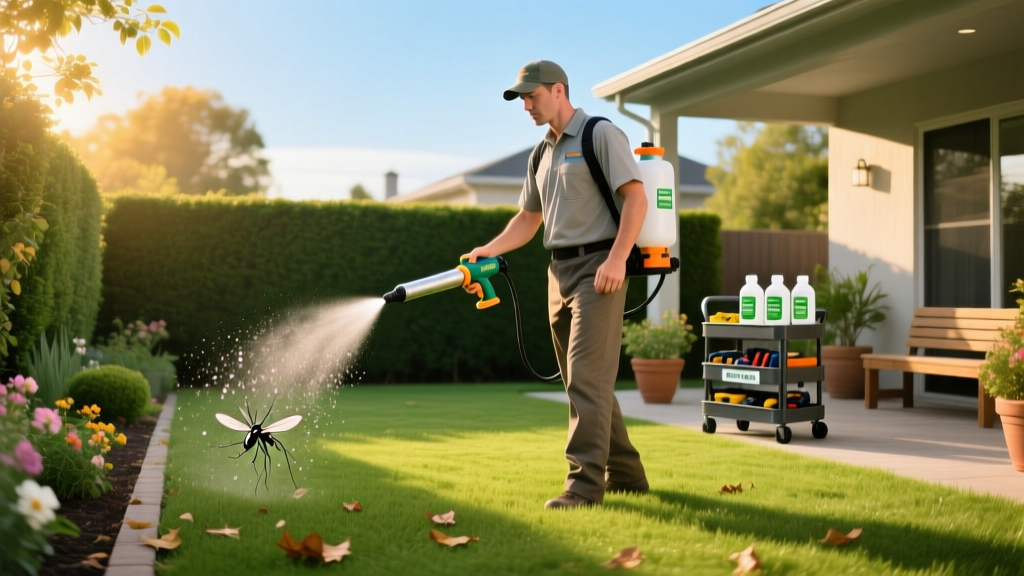
Backyard Mosquito Treatment: Pro Yard Defense Strategies & Sprays
Effective backyard mosquito treatment requires moving beyond temporary repellents and establishing a permanent perimeter defense. Mosquitoes are weak fliers and highly sensitive to desiccation, meaning they spend the majority of daylight hours resting in cool, shaded, and humid microclimates within your landscaping. By targeting these specific resting zones with residual barrier sprays and eliminating hidden breeding sites, you can reduce local mosquito populations by up to 90%. This guide details the exact chemical formulations, application protocols, and biological controls required to build a robust yard defense system.
The Science of Perimeter Yard Defense
Most homeowners mistakenly believe mosquitoes only breed in large bodies of water and fly long distances to bite. In reality, the most aggressive nuisance species—such as the Aedes albopictus (Asian tiger mosquito)—are container breeders that rarely travel more than 300 feet from their hatching site. A comprehensive backyard mosquito treatment focuses on creating a chemical and biological 'buffer zone' around the property lines.
Barrier treatments work by depositing micro-encapsulated or suspension concentrate active ingredients onto the waxy cuticle of leaves and shrubs. When a mosquito lands on the treated foliage to rest, the pesticide transfers to its tarsi (feet) and abdomen, causing fatal neurological disruption within minutes. For this to work, the spray must be applied to the undersides of leaves in shaded areas, as UV radiation and rain will rapidly degrade chemicals applied to sun-exposed top surfaces.
Myth Buster: Bug zappers and ultrasonic repellers are entirely ineffective for yard defense. Studies consistently show that zappers kill less than 1% mosquitoes, while decimating beneficial pollinators and predatory insects that naturally control pest populations.
Chemical Selection: Active Ingredients That Actually Work
Not all insecticides are formulated for outdoor residual mosquito control. When selecting a concentrate for a pump sprayer, look for these specific active ingredients:
- Bifenthrin (7.9% Suspension Concentrate): The industry standard for DIY barrier sprays. It provides a rapid knockdown effect and binds well to organic matter, offering a 21 to 30-day residual control. Products like Talstar P are widely used by professionals and homeowners alike.
- Lambda-cyhalothrin (9.8% Micro-encapsulated): Found in products like Demand CS, this formulation traps the active ingredient in microscopic polymer capsules. These capsules protect the chemical from UV degradation and wash-off, extending the residual life to 45–60 days even in high-heat environments.
- Garlic Extract / Essential Oils: While heavily marketed as 'natural' backyard mosquito treatments, these only act as contact killers and spatial repellents. They possess zero residual killing power and must be reapplied every 24 to 48 hours, making them impractical for serious yard defense.
Professional vs. DIY Backyard Mosquito Treatment Matrix
Deciding whether to hire a licensed pest control operator or manage the treatment yourself depends on your budget, property size, and comfort level handling concentrated pesticides. Below is a cost and efficacy breakdown for a standard 1/2-acre residential lot.
| Feature | Professional Service (e.g., Mosquito Joe, Orkin) | DIY Barrier Spray (Bifenthrin SC) |
|---|---|---|
| Initial Cost | $90 - $140 per visit | $45 - $65 (16 oz concentrate + sprayer) |
| Cost Per Season | $1,200 - $1,800 (bi-weekly visits) | $60 - $90 (one bottle lasts 2 years) |
| Equipment Used | Motorized mist blowers (ULV droplets) | 2-gallon pump sprayer (coarse droplets) |
| Residual Duration | 21 days (requires strict schedule) | 21 - 30 days (user dependent) |
| Application Time | 15 - 20 minutes | 45 - 60 minutes |
Step-by-Step DIY Barrier Spray Application
If you opt for the DIY route, precision is more important than volume. You are not trying to drench the yard; you are coating the resting surfaces.
- Equipment Setup: Use a 2-gallon or 3-gallon pump sprayer (e.g., Chapin ProSeries) equipped with an adjustable cone nozzle. Set the nozzle to a fine mist, but avoid creating an aerosolized fog that will drift into neighboring properties.
- Mixing Ratios: For a 7.9% Bifenthrin concentrate, mix exactly 1 fluid ounce of chemical per 1 gallon of water. This ratio will treat approximately 1,000 square feet of dense foliage. Always add water to the tank first, then the chemical, to prevent excessive foaming.
- Targeting the 'Hot Zones': Spray the undersides of leaves on dense shrubs, hedges, and the lower branches of trees. Focus heavily on the perimeter of your property, creating a 10-to-15-foot buffer zone extending into any adjacent wooded areas or tall grass.
- Secondary Targets: Apply a light mist to the underside of decks, porches, patio furniture umbrellas, and the interior walls of sheds where mosquitoes hide during peak afternoon heat.
- Drying and Re-entry: Keep all children and pets off the treated foliage until the spray has completely dried. Under standard conditions (75°F and moderate humidity), this takes 30 to 45 minutes. Once dry, the chemical binds to the plant tissue and poses minimal risk to mammals.
Pro Tip: Never spray blooming flowers or active pollinator zones. To protect bees and butterflies, restrict your barrier spray strictly to non-flowering foliage, shaded perimeters, and turf edges. For more on protecting pollinators while managing pests, review the EPA guidelines on safe pesticide application.
Biological Warfare: Bti for Un-drainable Water
Chemical barrier sprays do not kill mosquito larvae in standing water. For water features, rain barrels, or low-lying yard depressions that cannot be drained, you must use Bacillus thuringiensis israelensis (Bti). Bti is a naturally occurring soil bacterium that produces proteins toxic only to the digestive systems of mosquito and black fly larvae. It is entirely harmless to pets, fish, birds, and humans.
Purchase Bti in the form of 'Mosquito Dunks' (for long-term water features) or 'Mosquito Bits' (for rapid knockdown in muddy ruts). Break a dunk into quarters and place one quarter in any water feature holding more than a gallon of water. The dunks release the bacteria continuously for 30 days. According to the American Mosquito Control Association, integrating Bti with perimeter sprays is the gold standard for comprehensive municipal and residential mosquito management.
Troubleshooting Common Treatment Failures
If you have applied a barrier spray but are still experiencing heavy mosquito pressure, you are likely falling victim to one of these three common yard defense failures:
- The Corrugated Downspout Trap: The most common breeding site in suburban yards is the flexible, corrugated black tubing used to extend gutter downspouts. The ridges inside these tubes hold exactly 1/2 inch of water—enough to hatch hundreds of Aedes mosquitoes. Fix: Replace corrugated extensions with smooth PVC pipe, or drill a 1/4-inch weep hole at the lowest trough of the existing tubing to allow complete drainage.
- Rain Wash-Off Before Curing: Bifenthrin and Lambda-cyhalothrin require approximately 2 to 4 hours of dry weather to fully bind to the leaf cuticle. If you spray in the morning and a thunderstorm hits in the afternoon, the treatment will be washed into the soil, rendering it useless. Fix: Check the radar and only apply treatments when you have a guaranteed 24-hour dry window.
- Ignoring the Neighbor's Overgrowth: Mosquitoes will easily fly 100 feet from an overgrown, untreated neighboring yard into yours. Fix: If your neighbor refuses to treat their property, increase your perimeter buffer zone. Spray 15 feet into their property line (if legally permissible in your municipality) or plant dense, wind-breaking hedges like Arborvitae along the property line to physically block weak-flying mosquitoes from drifting into your yard.
Frequently Asked Questions
Will backyard mosquito treatments kill my lawn or garden plants?
No. Pyrethroid-based insecticides like Bifenthrin and Lambda-cyhalothrin are specifically formulated to be safe for ornamental plants, turfgrass, and shrubs when applied at the labeled dilution rates. However, they are highly toxic to aquatic life, so never spray directly into koi ponds or natural streams.
How often should I reapply the DIY barrier spray?
For a 7.9% Bifenthrin suspension concentrate, reapply every 21 to 28 days during peak summer months. If you are using a micro-encapsulated Lambda-cyhalothrin product, you can extend the interval to 45 days. Always reapply immediately if the yard experiences heavy, prolonged rainfall after the initial curing period.
Are there any mosquito-repelling plants that actually work?
While plants like citronella grass, lavender, and marigolds contain compounds that mosquitoes dislike, simply growing them in your yard provides zero measurable defense. The essential oils must be crushed and applied directly to the skin to act as a spatial repellent. Rely on chemical barriers and source reduction rather than companion planting for yard-wide control.

