
Pest Control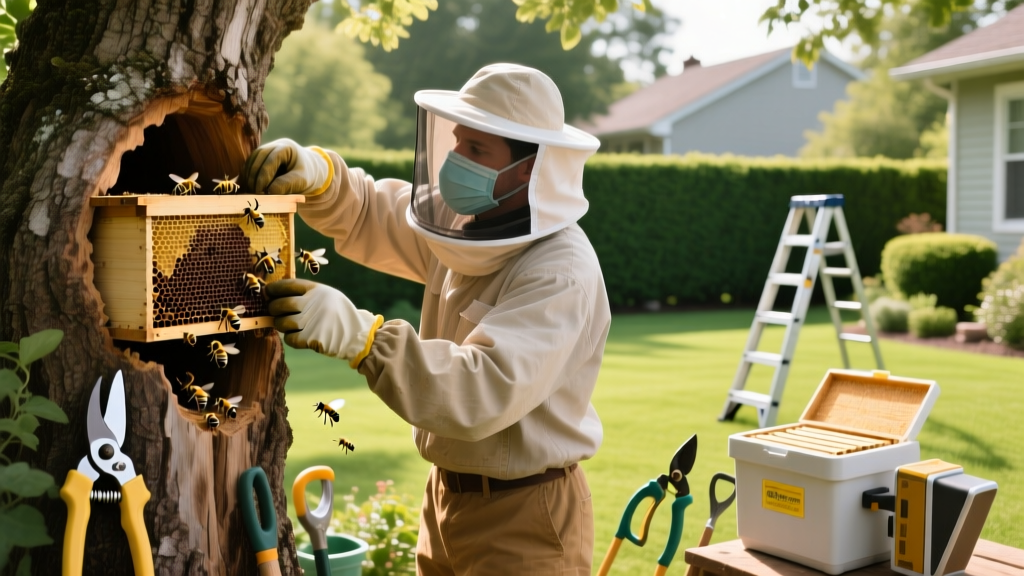
2026 Bee Removal Prices: Cost Guide & Hive Relocation Factors
The True Cost of Bee Relocation vs. Extermination
When a colony establishes itself inside a structural void, homeowners face a complex intersection of pest management, construction, and conservation. In 2026, bee removal prices reflect a growing industry mandate for live relocation over chemical extermination, driven by local pollinator protection ordinances and severe colony collapse awareness. According to the EPA's pollinator protection guidelines, preserving managed and wild bee populations is critical for agricultural stability, which has pushed the pest control industry toward specialized, non-lethal extraction techniques.
However, live removal is inherently more labor-intensive than standard pest extermination. You are not just paying for the eradication of a nuisance; you are paying for the surgical extraction of a biological superorganism, the removal of up to 60 pounds of raw honeycomb, and the subsequent structural remediation of your home.
Average Bee Removal Prices by Species & Location
Costs fluctuate wildly based on the species of bee, the accessibility of the nest, and whether the colony is a transient swarm or an established, comb-building hive. Below is the 2026 national pricing matrix for professional bee management.
| Bee Species | Nest Location | Average Cost Range | Primary Method |
|---|---|---|---|
| Honeybees (Swarm) | Tree limbs, fences, exposed eaves | Free - $250 | Live capture (shake into box) |
| Honeybees (Established) | Soffits, shed roofs, ground cavities | $400 - $900 | Trap-out or minor cut-out |
| Honeybees (In-Wall) | Interior drywall, chimney, brick voids | $900 - $2,500+ | Structural cut-out & comb transfer |
| Carpenter Bees | Fascia boards, wooden decks, pergolas | $150 - $350 | Insecticidal dusting & wood sealing |
| Bumblebees | Underground burrows, thick grass clumps | $200 - $500 | Live relocation (night extraction) |
⚠️ Warning: The Africanized Honey Bee (AHB) Premium
If you reside in the Southern United States (Texas, Florida, Arizona, California), you must account for Africanized honey bees. The University of Florida Bee Lab notes that AHB colonies are hyper-defensive and require specialized hazmat-level extraction protocols. Expect a 30% to 50% surcharge on standard removal prices due to the required heavier PPE, larger public safety buffer zones, and higher liability insurance premiums carried by the technicians. In many municipalities, AHB colonies inside structures must be legally exterminated rather than relocated.
Structural Cut-Out vs. Trap-Out: Methodology & Pricing
When dealing with an established honeybee colony inside your walls or chimney, professionals generally offer two distinct extraction methodologies. Understanding the difference is crucial for budgeting and managing your property's structural integrity.
The Structural Cut-Out ($900 - $2,500)
A cut-out is an invasive, single-day procedure. The technician uses thermal imaging cameras (often an added $150 fee, but highly recommended to pinpoint the exact margins of the hive and avoid unnecessary demolition) to locate the colony. They then open the drywall, siding, or soffit to expose the comb.
- The Bee-Vac: Foragers are gently suctioned into a modified HEPA bee-vacuum with adjustable airflow to prevent wing damage.
- Comb Transfer: Brood comb (where the queen lays eggs) is carefully cut out, rubber-banded into standard Langstroth wooden frames, and placed into a transport hive box.
- Honey Removal: All honeycomb must be scraped away. Left behind, it will melt in summer heat, ruin your insulation, and attract secondary pests like hive beetles, wax moths, and rodents.
The Trap-Out ($400 - $800)
A trap-out is a non-invasive but time-consuming method. The technician seals all secondary entry points to the void and installs a one-way exclusion cone over the primary entrance. Bees can leave to forage but cannot re-enter. Over 4 to 8 weeks, the colony's population inside the wall dwindles as foragers are forced to join a bait hive placed nearby.
The Catch: Trap-outs do not remove the honeycomb inside your wall. If the queen does not exit the void (which happens frequently), the colony will eventually chew through the drywall into your living space. Trap-outs are only recommended for inaccessible locations like deep brick chimneys or mature tree cavities where demolition is impossible.
The Hidden Cost: Pheromone Eradication & Exclusion
Many homeowners make the critical mistake of hiring a cheap exterminator to spray a wall void, killing the bees but leaving the biological material behind. This creates a severe long-term liability.
Honeybees use Nasonov pheromones to mark their territory and guide returning foragers. This pheromone is highly resilient and permeates wood and drywall. If you do not chemically degrade the pheromone and remove the wax, a new swarm will detect the scent and claim the exact same void within 6 to 12 months. Professional remediation requires:
- Scraping all residual wax and propolis from the framing.
- Washing the cavity with a citrus-based enzymatic degreaser to break down the pheromone oils.
- Sealing the interior wood with an odor-blocking, shellac-based primer (such as B-I-N or Kilz Original) to trap any remaining scent molecules.
- Excluding the exterior entry point using stainless steel wire mesh and expanding polyurethane foam.
Expect to pay an additional $200 to $400 for this vital pheromone cleanup and exclusion phase if it is not explicitly included in the contractor's initial quote.
Carpenter Bees: Wood Damage & Treatment Costs
Unlike honeybees, carpenter bees (Xylocopa) do not live in large colonies or produce honey. Instead, solitary females bore perfectly round, half-inch holes into unpainted, weathered softwoods (like cedar and pine fascia) to create nesting galleries.
Treating carpenter bees is a traditional pest control service rather than a conservation effort. The standard protocol involves:
- Dusting: Pumping an insecticidal dust (such as Drione or DeltaDust) directly into each gallery hole. The bees track the dust deep into the tunnels, eliminating the larvae.
- Timing: Treatment must occur at dusk when the bees are inactive and inside the galleries.
- Sealing: 48 hours after dusting, the holes must be plugged with wooden dowels and exterior-grade caulk, followed by painting or staining the wood. Carpenter bees strongly prefer bare, unpainted wood.
Because this requires working on ladders and treating dozens of individual holes, labor makes up the bulk of the $150 to $350 cost. If the structural damage to your fascia or eaves is severe, you will need to budget separately for a carpenter to replace the rotted, hollowed-out timber.
Frequently Asked Questions
Will my homeowners insurance cover bee removal?
In almost all cases, no. Homeowners insurance policies classify bee infestations as a 'preventable maintenance issue' rather than a sudden, covered peril (like a windstorm or fire). You will be responsible for the removal and the subsequent drywall repair. However, if a massive, neglected hive causes a ceiling collapse due to the sheer weight of stored honey (which can exceed 80 pounds), the resulting structural damage might be covered, though the pest removal itself will still be excluded.
Can I just spray the hive myself with store-bought wasp killer?
Spraying an in-wall honeybee colony with aerosol wasp freeze is highly dangerous and counterproductive. It will only kill the foragers on the outside. The queen and thousands of workers deep inside the comb will survive, become agitated, and often chew through the drywall into your home to escape the fumes. Furthermore, the unharvested honey will ferment, leak through your walls, and cause severe mold and structural rot.
How do I verify a beekeeper is actually relocating the bees?
Unfortunately, some unscrupulous operators charge 'live removal' fees but simply vacuum the bees into a container and drown them or spray them with soapy water off-site. To verify legitimate relocation, ask the technician to show you their Langstroth transport boxes, request that they leave the extracted brood comb with you as proof of a full cut-out, and ask for the name and location of the apiary where the colony will be rehomed. Legitimate beekeepers are usually proud to share their apiary locations and conservation efforts.

