
Pest Control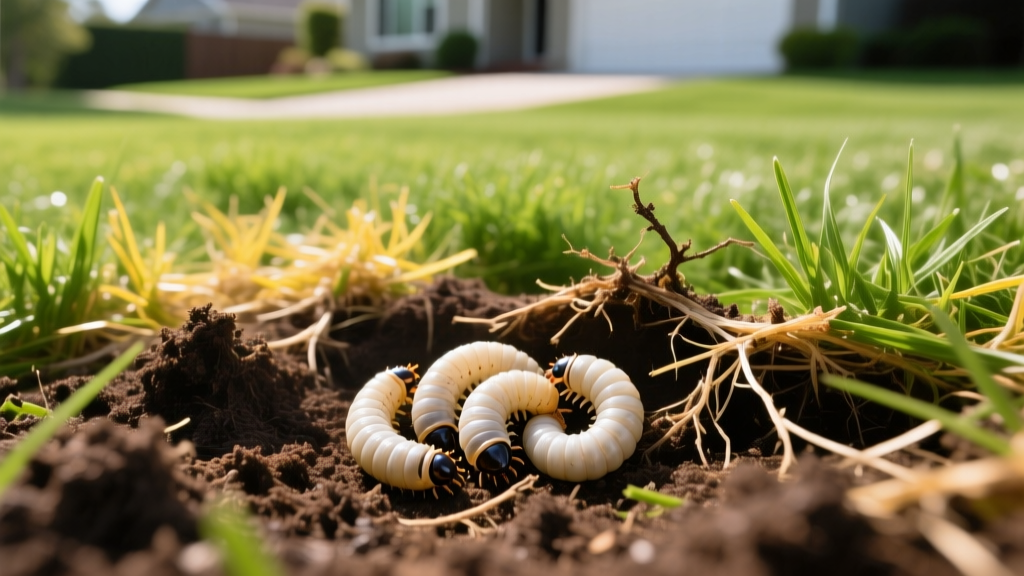
How to Identify and Eradicate Beetle Grubs in Your Lawn
The Hidden Threat Beneath Your Turf
White grubs—the larval stage of scarab beetles such as the Japanese beetle, European chafer, and June bug—feed exclusively on the root systems of turfgrass. By severing the roots at the soil line, they cut off the grass's water and nutrient supply, leading to rapid desiccation and death. A severe infestation can destroy a 5,000-square-foot lawn in under three weeks if left unchecked. Effective defense requires understanding the pest's lifecycle, accurately diagnosing the damage, and deploying targeted chemical or biological controls at the exact right time.
The Grub Lifecycle: Timing Your Defense
Treating beetle grubs blindly leads to wasted chemicals and continued turf damage. Scarab beetles follow a strict annual cycle in most North American climates (USDA Zones 4-7). Aligning your treatment protocol with their developmental stages is mandatory for success.
- June - July (Adult Mating & Egg Laying): Adult beetles emerge, mate, and lay eggs in the top 2 inches of soil. Action: Monitor adult beetle populations to predict late-summer grub pressure.
- August - September (Early Larval Instars): Eggs hatch into small, highly active grubs. They feed aggressively near the surface. Action: Prime window for preventative chemical controls and beneficial nematodes.
- October - November (Late Instars & Overwintering): Grubs grow to their maximum size (up to 1 inch) and migrate 4-8 inches deep into the soil to avoid frost. Action: Surface treatments become ineffective as grubs move below the root zone.
- April - May (Spring Feeding): Grubs return to the surface to feed briefly before pupating into adults. Action: Curative treatments can work here, but damage is already done and spring pupation is imminent.
Diagnosing Grub Damage vs. Drought Stress
Homeowners frequently misidentify grub damage as drought stress or fungal disease. Applying fertilizer or fungicides to a grub-infested lawn will only accelerate turf death. Use the diagnostic matrix below to confirm the presence of beetle grubs before purchasing treatments.
| Diagnostic Indicator | Grub Damage | Drought / Heat Stress | Fungal Disease (e.g., Brown Patch) |
|---|---|---|---|
| Turf Texture | Spongy or loose when walked on | Brittle, dry, and crunchy | Slimy, matted, or blighted blades |
| The Tug Test | Grass pulls up easily like loose carpet | Grass resists pulling; roots hold firm | Grass breaks at the blade or crown |
| Root Inspection | Roots are severed, missing, or stubby | Roots are intact but dry/shriveled | Roots intact; lesions visible on blades |
| Secondary Signs | Skunks, raccoons, or crows tearing up sod | Uniform browning across sun-exposed zones | Distinct circular patches with smoke rings |
The 12x12 Sod Peel Test
To confirm an infestation and calculate the exact population density, use a spade to cut three sides of a 12-inch by 12-inch square of turf. Peel it back like a hinge. Count the number of C-shaped, white grubs in the top 3 inches of exposed soil. According to Penn State Extension, a threshold of 5 to 10 grubs per square foot warrants immediate treatment. If you count fewer than 5, your turf's root system can usually outgrow the feeding damage without chemical intervention.
Curative vs. Preventative Treatment Protocols
Grub control products are not interchangeable. They fall into two distinct categories based on their active ingredients and target larval stages. Choosing the wrong product for the current season is the most common point of failure in DIY lawn care.
Preventative Controls (The Long Game)
Preventatives must be applied in late June through early August, before eggs hatch or while grubs are in their early, vulnerable instars. These chemicals move slowly through the soil profile and remain active for months.
- Chlorantraniliprole (e.g., Scotts GrubEx, Acelepryn): The industry standard for safety and efficacy. It targets early instars and has a low toxicity profile for non-target organisms. Cost: $25-$35 per 5,000 sq ft. Apply in May/June and water in with 0.5 inches of irrigation.
- Imidacloprid / Clothianidin (e.g., Bayer Advanced, Arena): Neonicotinoids that act as systemic nerve poisons. Highly effective against young grubs but carries higher risks for pollinators if applied during bloom periods. Cost: $20-$30 per 5,000 sq ft.
Curative Controls (The Emergency Fix)
If you discover an active infestation in September or October, preventatives will not work fast enough to save the turf. You must use a fast-acting curative insecticide.
- Trichlorfon (e.g., Dylox 6.2): A contact and stomach poison that paralyzes large, late-stage grubs within 24 to 48 hours. It has a short residual life (degrades in 7-10 days) and will not protect against future hatches. Cost: $30-$45 per 5,000 sq ft.
Critical Application Rule for Dylox: Trichlorfon degrades rapidly in high-pH soils (above 7.2) and in the presence of UV light. You must water Dylox into the soil immediately after spreading—apply at least 0.25 inches of water within 30 minutes of application to push the active ingredient past the thatch layer before it breaks down.
Biological Warfare: Nematodes and Milky Spore
For homeowners managing organic lawns or protecting sensitive watersheds, biological controls offer a highly effective, non-chemical alternative. However, they require strict environmental management to succeed.
Beneficial Nematodes (Heterorhabditis bacteriophora)
The Hb strain of entomopathogenic nematodes actively hunts down grubs in the soil, entering their bodies and releasing bacteria that kill the host within 48 hours.
- Application Rate: 1 to 2 billion nematodes per acre (approx. 50 million per 1,000 sq ft).
- Timing: Late August to early September when soil temperatures are between 60°F and 85°F.
- Moisture Requirement: Nematodes will die if the soil dries out. You must irrigate the lawn before application and maintain consistent moisture for 10 days post-application.
- Cost: $35-$50 per 10,000 sq ft. Must be purchased from specialized biological suppliers and kept refrigerated until use.
Milky Spore (Paenibacillus popilliae)
Milky spore is a naturally occurring bacterium that causes a fatal disease in Japanese beetle grubs. While heavily marketed, it has significant limitations that Michigan State University Extension notes in their turf management guidelines.
- Limitation 1: It only affects Japanese beetle grubs. It will not control European chafers or June bugs, which are often more destructive.
- Limitation 2: It takes 2 to 5 years to build up sufficient spore counts in the soil to provide meaningful control.
- Cost: $40-$60 for a 2,500 sq ft coverage area (applied via grid inoculation).
The Secondary Damage Factor: Animal Diggers
Often, the most visible damage to a lawn is not caused by the beetle grubs themselves, but by the predators that eat them. Skunks, raccoons, armadillos, and flocks of crows will aggressively tear up turf to reach the protein-rich larvae beneath the surface. A single raccoon can roll back hundreds of square feet of sod in one night.
Trapping or repelling these animals is a temporary band-aid. The only permanent solution to animal digging is to eliminate the food source by executing the curative Trichlorfon protocol or applying Hb nematodes immediately. Once the grub population drops below the foraging threshold, the wildlife will move on to other yards.

