
Pest Control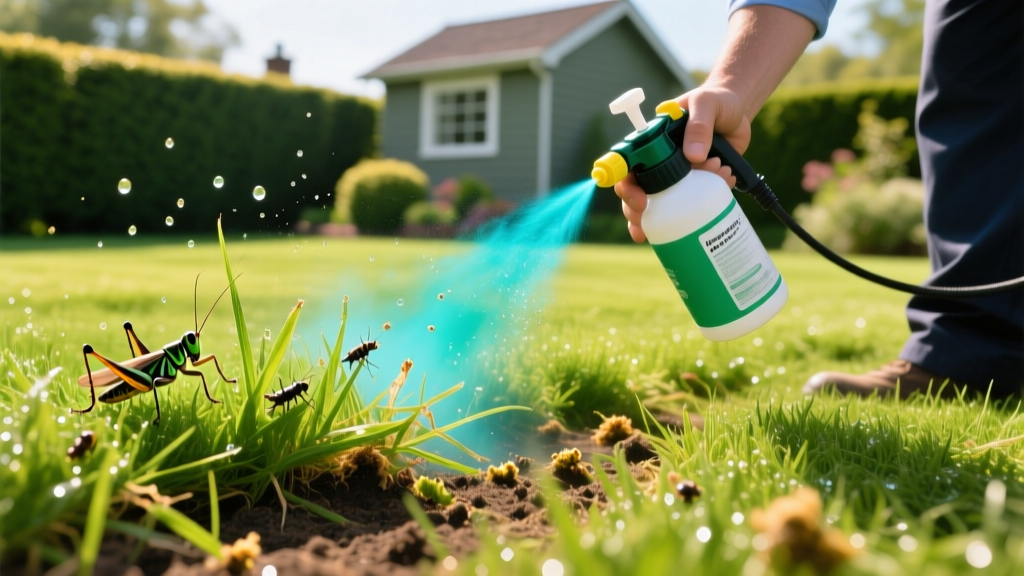
How to Choose the Right Grasshopper Insecticide for Your Lawn
The Hidden Threat: Why Grasshoppers Destroy Lawns
Grasshoppers are among the most destructive chewing insects a homeowner can face. Species like the differential grasshopper (Melanoplus differentialis) and the migratory grasshopper (Melanoplus sanguinipes) can consume up to 50% of their body weight in plant matter daily. When populations surge, they move from weedy ditches into manicured lawns, stripping turfgrass blades down to the crown in a matter of days. For beginners, the sheer speed of this damage is often shocking. The key to stopping an infestation is not just buying any grasshopper insecticide off the shelf; it is understanding the pest's life cycle, selecting the correct active ingredient, and applying it at the precise moment the insects are most vulnerable.
The Nymph vs. Adult Dilemma: Timing Your Treatment
The single biggest mistake beginners make is waiting until late summer to spray. By August, you are dealing with adult grasshoppers that are over an inch long, possess hardened exoskeletons, and can fly into your yard from miles away. At this stage, even the strongest chemical grasshopper insecticide will struggle to provide complete control, and the damage is already done.
The optimal window for treatment is late spring to early summer (typically May through mid-June, depending on your hardiness zone). During this period, grasshoppers are in their nymph stage. Nymphs are wingless, measure less than 1/2 inch, and have soft bodies that easily absorb both contact and ingested insecticides. Targeting the nymphs in their breeding grounds—usually the overgrown, weedy borders of your property or adjacent ditches—prevents them from ever migrating into your lawn.
Pollinator Warning: Never apply broad-spectrum liquid insecticides to blooming weeds or flowering turfgrass. Grasshoppers often hide in weedy borders, but spraying flowers will decimate local bee and butterfly populations. Mow down weedy borders before applying your grasshopper insecticide to the remaining low vegetation.
Active Ingredients Decoded: What Actually Works?
Not all bug sprays kill grasshoppers. Many common household insecticides lack the residual power or the specific mode of action required to penetrate a grasshopper's biology. Below is a comparison of the most effective active ingredients available to homeowners.
| Active Ingredient | Common Brand Example | Est. Cost (2026) | Speed of Kill | Best Use Case |
|---|---|---|---|---|
| Bifenthrin | Talstar P | $45 / 32 oz | 24-48 hours | Heavy infestations, perimeter defense |
| Carbaryl | Sevin SL | $25 / 32 oz | 12-24 hours | Rapid knockdown of nymphs |
| Permethrin | Martin's Permethrin | $30 / 16 oz | 24 hours | General lawn and garden borders |
| Nosema locustae | Semaspore (Bait) | $30 / 5 lbs | 1-3 weeks | Organic gardens, early season baiting |
Bifenthrin is a synthetic pyrethroid that provides excellent residual control, continuing to kill grasshoppers that walk across treated soil and grass for up to 30 days. According to the National Pesticide Information Center (NPIC), bifenthrin binds tightly to soil, making it highly effective for perimeter treatments. However, it is highly toxic to aquatic life and bees when wet, so strict adherence to application guidelines is mandatory.
For organic gardeners, Nosema locustae is a naturally occurring protozoan parasite applied via grain bait (like Semaspore). When young nymphs eat the bait, they become infected, die, and their corpses infect other grasshoppers. It is incredibly safe for pets and pollinators but requires patience and must be applied when nymphs are actively feeding in spring.
Step-by-Step Application: The 'Ditch-to-Yard' Strategy
Applying a grasshopper insecticide is not as simple as spraying your green grass. Grasshoppers breed in dry, undisturbed, weedy areas and migrate inward. Follow this beginner-friendly protocol for maximum effectiveness:
- Mow the Perimeter: Mow down tall weeds, brush, and overgrown grass in ditches, fence lines, and property borders where grasshoppers lay eggs and hatch.
- Mix the Solution: For a standard bifenthrin concentrate (like Talstar P), mix 1 fluid ounce of insecticide per 1 gallon of water in a pump spraker. This rate treats approximately 1,000 square feet.
- Spray the Breeding Grounds: Thoroughly coat the mowed perimeter vegetation and the soil surface. Focus on the sunny, south-facing edges of your property where soil warms fastest in spring.
- Create a Chemical Barrier: Spray a 5-foot band along the outer edge of your actual lawn to intercept any nymphs attempting to migrate inward.
- Water In (If Required): Check your specific product label. Some granular insecticides require immediate watering to activate, while liquid pyrethroids should be left to dry completely on the foliage.
Decision Matrix: Which Grasshopper Insecticide Should You Buy?
Use this quick framework to select the right product for your specific lawn scenario:
- IF you have a severe, active infestation destroying your turf right now → BUY a liquid Carbaryl or Bifenthrin concentrate for immediate knockdown and residual protection.
- IF you are treating in early spring (May) and see tiny, wingless nymphs in nearby ditches → BUY Nosema locustae grain bait and scatter it in the weedy borders.
- IF you have pets that roam the yard freely and want a lower-toxicity synthetic option → BUY a Permethrin-based granular insecticide, water it in, and keep pets off until the grass is completely dry.
Common Beginner Mistakes to Avoid
Even with the best grasshopper insecticide, poor execution leads to failure. Avoid these pitfalls:
Mistake 1: Ignoring the Neighbors. Grasshoppers do not respect property lines. If adjacent fields or empty lots are heavily infested, you must maintain a continuous, heavy chemical barrier on your side of the property line, reapplying every 14 to 21 days during peak summer migration.
Mistake 2: Spraying Adults. If large, winged adults are already flying into your yard in late August, liquid sprays will only kill the ones you directly hit. At this stage, focus on protecting high-value garden plants with row covers rather than wasting expensive chemicals on the entire lawn.
Mistake 3: Violating the Re-Entry Interval (REI). The Environmental Protection Agency (EPA) mandates strict safety protocols for pesticide use. Always read the label for the REI—the time you must wait before allowing children and pets back onto the treated grass. For many liquid pyrethroids, this is until the application has completely dried.
Frequently Asked Questions
Will neem oil kill grasshoppers?
Neem oil acts primarily as an antifeedant and growth disruptor. While it may deter grasshoppers from eating treated plants, it is rarely effective at killing a large, active population. For a true infestation, rely on proven synthetic pyrethroids or biological baits.
How do I know if my lawn damage is from grasshoppers or grubs?
Grasshoppers chew the above-ground blades of grass, leaving ragged, torn edges and sometimes clipping the entire blade off at the soil line. Grubs feed below ground on the roots, causing the turf to peel back like a loose carpet. If you see chewed blades and spot the insects jumping away as you walk, you are dealing with grasshoppers.
Can I apply grasshopper insecticide and fertilizer at the same time?
Yes, liquid insecticides like bifenthrin can often be tank-mixed with liquid fertilizers, provided the product labels do not explicitly forbid it. However, avoid mixing them with highly alkaline substances or fungicides, as this can degrade the active ingredient. Always perform a small 'jar test' to check for clumping before mixing a full tank.

