
Pest Control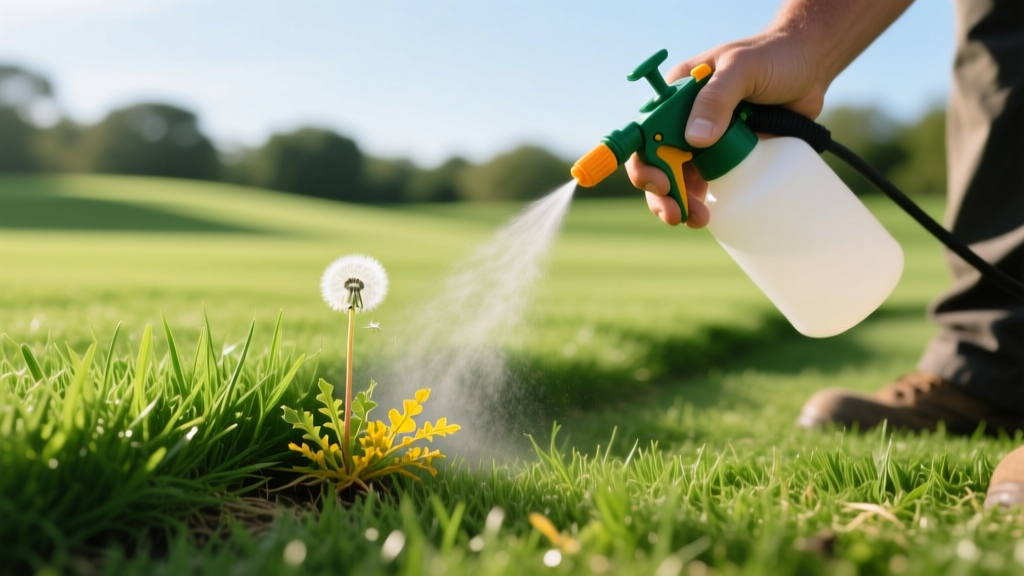
Selective Weed Killer for Bermuda Grass: Spot-Treatment Guide
The Bermuda Herbicide Sensitivity Matrix
Bermuda grass (Cynodon dactylon) is an aggressive, warm-season turf that recovers quickly from damage, but it is highly sensitive to specific herbicide active ingredients—especially when applied during summer heat. Historically, homeowners relied on MSMA (monosodium methanearsonate) for weed control in Bermuda lawns. However, the EPA has phased out residential MSMA use due to arsenic toxicity concerns. Modern turf management requires a targeted, selective approach to spot-treat weeds without inducing phytotoxicity (chemical burn or stunting) in the surrounding Bermuda.
Before selecting a weed killer for Bermuda grass, review the sensitivity matrix below to understand which active ingredients are safe for spot-treatments and which carry severe risks.
| Active Ingredient | Target Weeds | Bermuda Safety Rating | Temperature Limit |
|---|---|---|---|
| 2,4-D | Broadleaf (Dandelion, Clover) | Moderate (Stunts growth) | < 85°F |
| Dicamba | Broadleaf (Chickweed, Plantain) | Moderate | < 85°F |
| Quinclorac | Crabgrass, Foxtail | High | < 90°F |
| Sulfosulfuron (Certainty) | Nutsedge, Dallisgrass | Very High | No strict limit |
| Thiencarbazone + Iodosulfuron + Dicamba (Celsius) | Broadleaf, Sedge, Grasses | Very High | < 90°F |
| Sulfentrazone | Nutsedge, Morning Glory | High | < 90°F |
According to Texas A&M AgriLife Extension, applying 2,4-D or dicamba-based products when ambient temperatures exceed 85°F causes the chemicals to volatilize (turn into a gas), drifting onto and severely stunting Bermuda grass. For mid-summer spot treatments, you must transition to sulfonylurea-based herbicides like Celsius WG or Certainty.
Top Selective Herbicides for Spot-Treating Bermuda
Spot-treating requires precise calibration. Unlike broadcast spraying, where you treat the entire lawn, spot-treating uses a 1-gallon or 2-gallon pump sprayer to target individual weeds or small patches. Below are the three most effective selective herbicides for Bermuda grass, complete with exact mixing rates for a standard 1-gallon sprayer covering approximately 1,000 square feet.
Cost-Per-Acre Insight: Professional-grade sulfonylurea herbicides have high upfront costs but incredibly low application rates. A $150 bottle of Celsius WG (10 oz) treats up to 10 acres. For a 5,000 sq. ft. Bermuda lawn, your annual chemical cost for spot-treating broadleaf weeds and sedges will be under $2.00.
1. Celsius WG (The Broad-Spectrum Workhorse)
Celsius WG combines thiencarbazone-methyl, iodosulfuron-methyl-sodium, and dicamba. It is widely considered the safest and most effective broad-spectrum weed killer for Bermuda grass. It controls over 150 broadleaf and grassy weeds, including dollarweed, clover, and nutsedge, without causing the yellowing associated with older herbicides.
- Mixing Rate (1-Gallon Sprayer): 0.057 oz (approx. 1.6 grams or 1/2 teaspoon) per 1,000 sq. ft.
- Surfactant Requirement: 0.5 oz (1 tablespoon) of Non-Ionic Surfactant (NIS) per gallon.
- Best For: General broadleaf weeds, lespedeza, and yellow nutsedge.
2. Certainty Herbicide (The Sedge & Dallisgrass Specialist)
Certainty (active ingredient: sulfosulfuron 75%) is the undisputed champion for eradicating dallisgrass and purple/yellow nutsedge in Bermuda lawns. Dallisgrass is notoriously difficult to kill because it reproduces from deep rhizomes and tubers. Certainty is systemic, traveling down into the root system to prevent regrowth.
- Mixing Rate (1-Gallon Sprayer): 1/8 teaspoon (approx. 0.75 grams) per gallon.
- Surfactant Requirement: 0.5 oz NIS per gallon.
- Best For: Dallisgrass, nutsedge, and rescuegrass.
3. Quinclorac 75 DF (The Crabgrass Eradicator)
If your Bermuda lawn is invaded by crabgrass, Celsius and Certainty will not suffice. Quinclorac is highly selective and safe for Bermuda grass, effectively disrupting the cell growth of crabgrass and foxtail. Research from NC State Turfgrass Weed Science confirms quinclorac's efficacy on mature crabgrass tillers when paired with the correct adjuvant.
- Mixing Rate (1-Gallon Sprayer): 1 tablespoon (approx. 0.375 oz) per gallon.
- Surfactant Requirement: 0.5 oz Methylated Seed Oil (MSO) per gallon. Do not use standard NIS with Quinclorac; MSO is required for leaf cuticle penetration.
- Best For: Smooth crabgrass, large crabgrass, and foxtail.
Weed-Specific Spot-Treatment Protocols
Identifying the weed dictates the chemical, the adjuvant, and the follow-up schedule. Follow these exact protocols for the three most common Bermuda grass invaders.
Protocol A: Eradicating Dallisgrass
- Identify: Dallisgrass has a distinct seed head that looks like a turkey foot and a thick, white, fibrous root base.
- Mow: Mow the Bermuda lawn to 1.5 inches two days before application to expose the dallisgrass foliage.
- Apply Certainty: Spot-spray the dallisgrass clump until the leaves are visibly wet but not dripping. Use a pin-stream nozzle to avoid overlapping onto healthy Bermuda.
- Wait 14 Days: Sulfosulfuron is slow-acting. The dallisgrass will turn yellow and necrotic over two weeks.
- Second Application: Apply a second dose of Certainty 14 to 21 days after the first to kill any surviving rhizomes.
Protocol B: Eliminating Mature Crabgrass
- Identify: Crabgrass grows in a prostrate, star-like pattern with wide, pale green leaves.
- Apply Quinclorac + MSO: Spray the crabgrass patch thoroughly. The MSO will break down the waxy cuticle on the mature crabgrass leaves.
- Irrigation: Do not water the lawn for 24 hours post-application to allow maximum foliar absorption.
- Follow-up: Quinclorac often requires a second application 21 days later for crabgrass that has reached the 4-tiller stage.
Protocol C: Broadleaf Weeds (Clover, Dollarweed)
- Apply Celsius WG: Spray the center of the weed rosette. Celsius WG is highly systemic; you do not need to drench the entire leaf surface.
- Monitor: Broadleaf weeds will show twisting and cupping (epinasty) within 48 hours and die within 10-14 days.
Critical Warning: The Surfactant Trap
Never use a surfactant containing alkyl aryl polyoxyethylene ether (a cheap, harsh detergent) on Bermuda grass in the summer. It will strip the protective wax layer off the Bermuda blades, leading to severe chemical burn. Always invest in a high-quality, crop-safe Non-Ionic Surfactant (NIS) or Methylated Seed Oil (MSO) specifically labeled for turfgrass.
Never use a surfactant containing alkyl aryl polyoxyethylene ether (a cheap, harsh detergent) on Bermuda grass in the summer. It will strip the protective wax layer off the Bermuda blades, leading to severe chemical burn. Always invest in a high-quality, crop-safe Non-Ionic Surfactant (NIS) or Methylated Seed Oil (MSO) specifically labeled for turfgrass.
Calibration and Application Rules to Prevent Phytotoxicity
The most common failure mode in spot-treating Bermuda grass is herbicide overlap. When you spray a weed, the chemical inevitably lands on the surrounding Bermuda. While selective herbicides are safe at the labeled rate, overlapping your spray pattern doubles or triples the dose, causing localized stunting.
1. Nozzle Selection
Do not use a wide-fan nozzle (like a TeeJet 110-04) for spot treatments. Wide fans create a large swath, increasing the risk of overlap. Instead, use an adjustable cone nozzle tightened to a narrow stream, or a specialized spot-spraying nozzle like the TeeJet FloodJet. This concentrates the chemical directly on the target weed.
2. Walking Speed and Pressure
Maintain a consistent pump sprayer pressure of 30-40 PSI. Pumping the sprayer to 60+ PSI forces the liquid out faster, altering your application rate and creating fine droplets that drift onto adjacent Bermuda grass.
3. The Mowing Window
Never mow your Bermuda grass 48 hours before or 48 hours after applying a selective herbicide. Mowing removes the leaf tissue required to absorb the chemical, and the open cut on the Bermuda stolon can absorb excess herbicide, leading to systemic stunting.
Frequently Asked Questions
- Can I use Roundup (Glyphosate) to spot-treat weeds in my Bermuda lawn?
- No. Glyphosate is non-selective. If you spot-spray glyphosate, you will kill the weed and the surrounding Bermuda grass, leaving a dead brown circle that takes weeks to fill in. The only exception is applying glyphosate to fully dormant, brown Bermuda grass in the dead of winter to kill winter annual weeds like poa annua.
- Why did my Bermuda grass turn yellow after applying weed killer?
- Yellowing (chlorosis) usually occurs for three reasons: applying 2,4-D or dicamba when temperatures exceed 85°F, using an incorrect or harsh surfactant that burned the leaf cuticle, or overlapping your spray pattern and applying a toxic dose of the herbicide to the turf.
- How long should I wait to water my lawn after spot-treating?
- Wait a minimum of 24 hours. Most systemic herbicides require 12 to 24 hours to translocate from the leaf tissue into the weed's root system. Watering or experiencing rainfall within 4 hours of application will wash the chemical off the leaf, resulting in treatment failure.
- Is it safe to mix Celsius WG and Quinclorac together in one sprayer?
- While both are safe for Bermuda grass, tank-mixing them is generally unnecessary and increases the chemical load on the turf. Spot-treat grassy weeds (crabgrass) with Quinclorac on one day, and broadleaf/sedge weeds with Celsius WG a week later to minimize turf stress.

