
Pest Control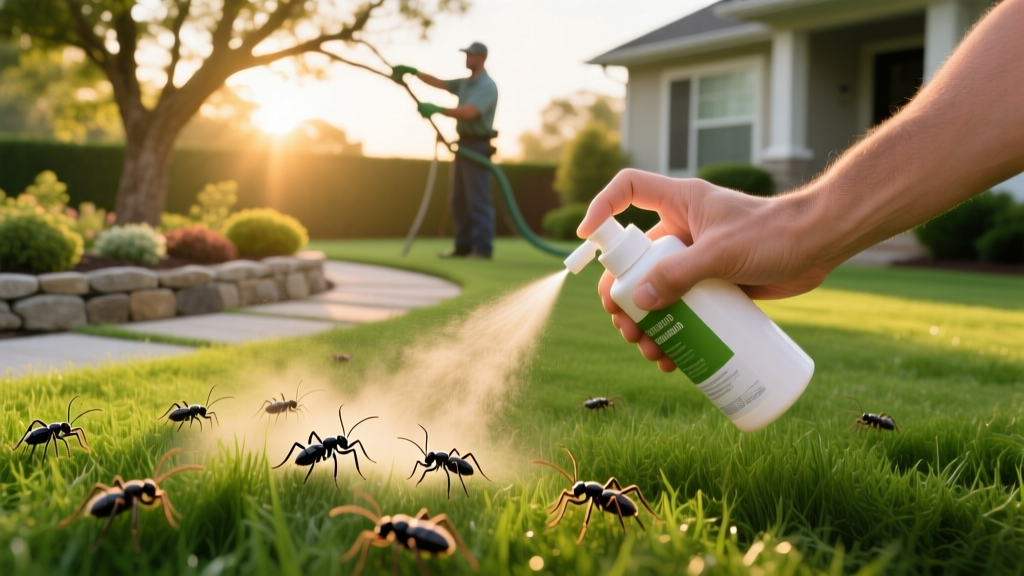
Best Insecticide for Chiggers: Complete Yard Defense
The Biology of a Bite: Why Most Sprays Fail
Before selecting an insecticide for chiggers, it is critical to understand what you are actually targeting. Chiggers (Trombiculidae) are not insects; they are arachnids, closely related to ticks and spiders. Furthermore, it is only the six-legged larval stage that feeds on humans and pets. These microscopic larvae do not burrow into your skin, nor do they drink blood. Instead, they attach to hair follicles, inject digestive enzymes that liquefy skin cells, and feed on the resulting slurry. This enzymatic reaction is what causes the intense, localized itching that peaks 24 to 48 hours after exposure.
Most DIY yard treatments fail because homeowners broadcast granular insecticides over the entire lawn. Chiggers do not live in the hot, dry center of a manicured turfgrass lawn. They require high humidity and dense vegetation to prevent desiccation. They cluster in 'transition zones'—the shaded borders where your lawn meets woods, fences, or overgrown garden beds. Targeting the wrong micro-habitat with the wrong chemical formulation is the primary reason for recurring infestations.
⚠️ The Shoe-Line Rule: Chiggers typically climb no higher than 8 to 10 inches up a grass blade or weed stem. If your spray coverage does not penetrate the lower thatch layer and the base of the vegetation, the larvae will simply wait out the chemical residual and re-emerge.
Active Ingredient Matrix: Choosing the Right Acaricide
Because chiggers are arachnids, broad-spectrum pyrethroids and specific miticides (acaricides) yield the highest mortality rates. Below is a comparison of the most effective active ingredients available to homeowners and lawn care professionals for perimeter and transition-zone defense.
| Active Ingredient | Product Example | Residual Control | Mix Rate (per 1 gal) | Est. Cost / 1k sq ft |
|---|---|---|---|---|
| Bifenthrin (7.9%) | Talstar P Professional | 4 - 6 Weeks | 1.0 fl oz | $0.31 |
| Permethrin (36.8%) | Martin's Viper Insecticide | 2 - 3 Weeks | 1.67 fl oz | $0.45 |
| Cyfluthrin (24.3%) | Tempo SC Ultra | 3 - 4 Weeks | 0.14 fl oz (4 mL) | $0.85 |
| Carbaryl (5%) | Sevin Liquid Concentrate | 1 - 2 Weeks | 1.5 fl oz | $0.60 |
According to entomological research from the University of Kentucky Extension, pyrethroids like bifenthrin and permethrin are highly effective against chigger larvae due to their rapid knockdown and strong binding affinity to soil organic matter, which prevents rapid UV degradation.
The 4-Step Professional Application Protocol
Buying the best insecticide for chiggers is only half the battle. Application technique dictates whether the chemical reaches the micro-habitat where the larvae reside. Follow this exact protocol for maximum kill rates.
- Habitat Modification (Pre-Spray): Mow the transition zones down to 2.5 inches. Remove leaf litter, tall weeds, and brush piles along fence lines. Chiggers require a humidity level above 70% to survive; exposing the soil surface to direct sunlight naturally desiccates a large portion of the population before you even mix the chemical.
- Calibrate Your Sprayer: Mark out a 20x50 foot area (1,000 square feet). Fill your pump sprayer with plain water and spray that exact area at your normal walking pace. Measure how much water was used. If you used 2 gallons to cover 1,000 sq ft, you must mix your chemical dose per 2 gallons, not the standard 1 gallon, to ensure accurate distribution.
- Add a Non-Ionic Surfactant: This is the most frequently skipped step. Chiggers climb to the very tips of grass blades to wait for a host. Liquid insecticides naturally bead up and roll off waxy grass blades. Adding 0.5 ounces of a non-ionic surfactant (like Southern Ag Surfactant) per gallon of mixed solution breaks the water's surface tension, forcing the insecticide to coat and stick to the vertical vegetation where chiggers hunt.
- Targeted Perimeter Spraying: Use a fan-nozzle tip. Spray a 5-foot wide band along all shaded borders, wooded edges, and around the base of shrubs. Do not waste product or chemical exposure spraying the open, sunny center of your turfgrass.
Biological Warfare: Nematodes and Organic Defense
For homeowners managing organic lawns, or those with sensitive koi ponds and pollinator gardens where pyrethroids are prohibited, biological controls offer a highly effective alternative. The Environmental Protection Agency (EPA) recognizes beneficial nematodes as a safe, non-toxic pest management strategy that poses zero risk to humans, pets, or earthworms.
The specific species required for chigger control is Steinernema feltiae or Steinernema carpocapsae. These microscopic worms actively hunt soil-dwelling pests, entering the host's body and releasing bacteria that kills the pest within 48 hours.
- Application Rate: Apply at a rate of roughly 23,000 nematodes per 1,000 square feet (or 1 billion per acre).
- Timing: Soil temperatures must be consistently above 55°F. Apply in the early evening or on an overcast day to prevent UV radiation from killing the nematodes before they penetrate the soil.
- Moisture Requirement: You must water the area with 1/4 inch of irrigation immediately before and immediately after application. Nematodes travel exclusively through the water film in soil pores; dry soil renders them immobile and useless.
The Rodent Connection: Closing the Lifecycle Loop
A critical, often overlooked component of chigger yard defense is rodent management. While the larval stage feeds on humans and pets, the nymph and adult stages of the chigger lifecycle are strictly parasitic on small mammals—specifically field mice, voles, and rats. If your yard harbors a robust rodent population, adult chiggers will continually reproduce and lay eggs in your soil, rendering your insecticide applications merely temporary fixes.
Expert Insight: To achieve long-term eradication, integrate exterior rodent control with your chemical barrier. Place tamper-resistant bait stations (containing bromethalin or diphacinone) every 15 feet along the exterior of sheds, woodpiles, and fence lines. By severing the adult chigger's primary host source, you collapse the local population's reproductive cycle.
Frequently Asked Questions
How long after spraying insecticide for chiggers is it safe for dogs?
For liquid pyrethroids like bifenthrin or permethrin, the treated area is generally safe for pets and children once the application has completely dried to the touch. This typically takes 2 to 4 hours depending on humidity and airflow. Always keep pets indoors during the actual spraying process.
Does lime kill chiggers in the yard?
No. Agricultural lime (calcium carbonate) alters soil pH but has no acaricidal properties. While heavily liming an area might alter the vegetation growth enough to indirectly reduce humidity, it will not kill chigger larvae and can severely burn your turfgrass if over-applied.
Can I use the same insecticide for chiggers and ticks?
Yes. The active ingredients that are highly lethal to chiggers (bifenthrin, permethrin, cyfluthrin) are the exact same chemicals used for broad-spectrum tick control. Treating your perimeter for chiggers will simultaneously establish a defensive barrier against deer ticks and dog ticks.

