
Pest Control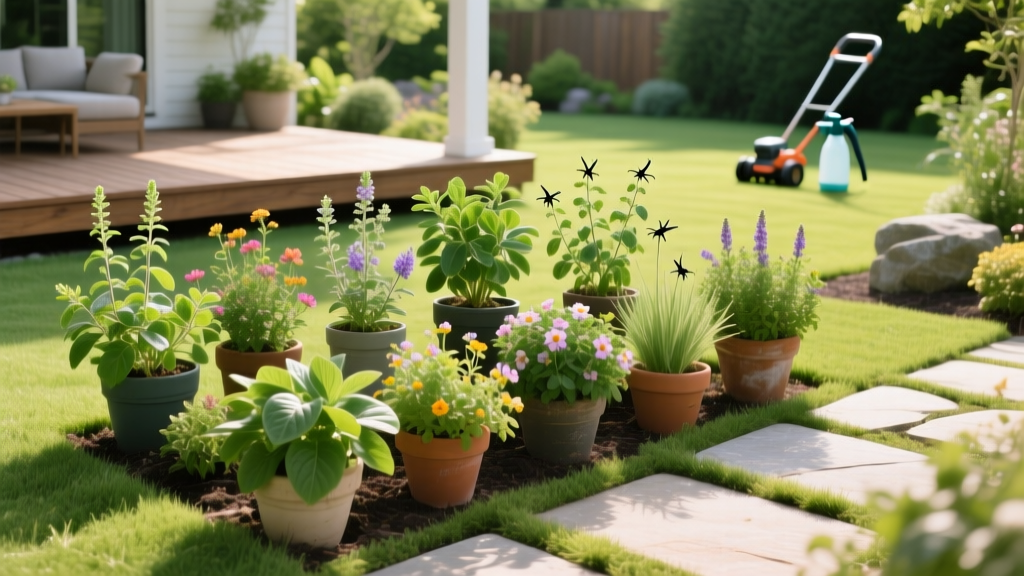
12 Natural Bug Repellent Plants That Actually Work in Gardens
The transition toward organic lawn and garden care has sparked massive interest in botanical pest management. However, the commercial nursery industry is saturated with misleading labels. Many homeowners purchase a "mosquito plant" expecting a chemical-free forcefield, only to find themselves covered in bites weeks later. To effectively utilize natural bug repellent plants, you must understand the biochemistry of volatile organic compounds (VOCs) and the physical agitation required to release them.
The "Fake" Mosquito Plant vs. True Botanical Repellents
The most common mistake in organic pest control is purchasing Pelargonium citrosum, widely marketed as the "Mosquito Plant" or "Citrosa Geranium." While it emits a faint lemony scent when crushed, laboratory analyses show it contains negligible amounts of citronellal—the primary terpene responsible for masking human kairomones (the CO2 and lactic acid that attract mosquitoes).
True citronella is derived from Cymbopogon nardus and Cymbopogon winterianus, which are tall, clumping perennial grasses native to tropical Asia. According to the Environmental Protection Agency (EPA), plant-derived essential oils like true citronellal, geraniol, and nepetalactone can provide localized spatial repellency, but only when the plant's cellular structure is broken to release the oils into the ambient air.
High-Efficacy Natural Bug Repellent Plants (Comparison Matrix)
Selecting the right plant depends on your target pest, local USDA Hardiness Zone, and soil conditions. Below is a structured breakdown of the most scientifically validated botanical deterrents for residential landscapes.
| Botanical Name | Common Name | Target Pests | Active Compound | USDA Zones | Sun / Soil Requirements |
|---|---|---|---|---|---|
| Cymbopogon nardus | True Citronella Grass | Mosquitoes, Black Flies | Citronellal, Geraniol | 9-11 (Grow as annual in colder zones) | Full sun; rich, well-draining loam (pH 6.0-7.0) |
| Nepeta cataria | Catnip | Mosquitoes, Ticks, Cockroaches | Nepetalactone | 3-9 | Full sun to partial shade; drought-tolerant loam |
| Tagetes patula | French Marigold | Root-knot Nematodes, Whiteflies | Alpha-terthienyl, Limonene | 2-11 (Annual) | Full sun; average soil, moderate moisture |
| Thymus citriodorus | Lemon Thyme | Mosquitoes, Fleas | Thymol, Citral | 5-9 | Full sun; sandy, alkaline soil (pH 7.0-8.0) |
| Allium giganteum | Ornamental Onion | Aphids, Japanese Beetles, Deer | Allicin, Sulfur compounds | 4-9 | Full sun; sharply draining soil |
| Lavandula angustifolia | English Lavender | Moths, Fleas, Flies, Mosquitoes | Linalool, Linalyl acetate | 5-8 | Full sun; poor, rocky, alkaline soil |
The "Crush and Release" Agitation Protocol
A common misconception is that simply planting a repellant species creates a pest-free perimeter. The American Mosquito Control Association (AMCA) notes that unagitated plants release VOCs at concentrations far too low to disrupt insect olfactory receptors. To achieve spatial repellency, you must employ the "Crush and Release" method.
Pro-Tip: The Agitation Technique
Before hosting an outdoor evening gathering, take a pair of clean gardening gloves or a soft-bristled broom and gently bruise the foliage of your citronella grass, lemon thyme, or lavender. Do not strip the leaves; simply bend and crush them slightly to rupture the epidermal oil glands. This will release a concentrated burst of terpenes that will linger in the immediate seating area for 2 to 4 hours.
Before hosting an outdoor evening gathering, take a pair of clean gardening gloves or a soft-bristled broom and gently bruise the foliage of your citronella grass, lemon thyme, or lavender. Do not strip the leaves; simply bend and crush them slightly to rupture the epidermal oil glands. This will release a concentrated burst of terpenes that will linger in the immediate seating area for 2 to 4 hours.
Strategic Placement for Maximum Perimeter Defense
Placement dictates efficacy. Wind disperses VOCs rapidly, so relying on a single plant at the edge of your property will yield zero results. Instead, utilize micro-climate clustering:
- Seating Perimeters: Plant lemon thyme and lavender in terracotta pots directly on the corners of your patio furniture. The updraft from human body heat will carry the heavier linalool and citral oils upward into the breathing zone.
- Entryway Flanking: Position tall true citronella grass (which can reach 4 to 6 feet in height) in heavy half-barrels on either side of high-traffic doors. Ensure the pots are at least 18 inches in diameter to support the massive root ball.
- Window Boxes: Use trailing Pelargonium varieties mixed with trailing rosemary (Salvia rosmarinus) under open windows to deter flies and moths from entering the home.
Companion Planting for Vegetable Garden Defense
Beyond human comfort, natural bug repellent plants are critical for organic crop protection. The most heavily researched application is the use of Tagetes (Marigolds) for nematode suppression.
Marigolds and Root-Knot Nematodes
Root-knot nematodes (Meloidogyne spp.) are microscopic soil worms that destroy tomato, pepper, and squash roots. French Marigolds (Tagetes patula) exude a biochemical called alpha-terthienyl from their roots. This compound is highly toxic to nematodes. For effective biological control:
- Plant a solid block of French Marigolds (spacing them 6 inches apart) in the exact bed where you plan to grow susceptible crops the following year.
- Allow the marigolds to grow for a full 3 to 4 months, ensuring they do not go to seed.
- Till the entire marigold plant—roots, stems, and foliage—into the top 6 inches of soil in late autumn.
- Research indicates this protocol can reduce nematode populations by up to 90% for the subsequent growing season.
Alliums as Aphid and Beetle Deterrents
Interspersing ornamental alliums or culinary chives (Allium schoenoprasum) among your brassicas and roses creates a sulfur-rich micro-environment. Aphids and Japanese beetles rely heavily on specific plant volatiles to locate host crops. The intense sulfur emissions from alliums mask these host scents, effectively rendering your prized crops "invisible" to foraging insects.
2026 Pricing & Sourcing Guide for Starter Plants
Sourcing authentic cultivars is critical. Big-box home improvement stores frequently mislabel scented geraniums as citronella. For verified genetics, source from specialized herb nurseries or regional native plant growers. Below are the current average retail costs for high-quality starter plants:
- True Citronella Grass (Cymbopogon nardus): Rarely sold in 4-inch pots due to its size. Expect to pay $18 to $28 for a well-established 1-gallon specimen. A 3-gallon nursery pot (ready for immediate patio deployment) averages $45 to $60.
- English Lavender (Lavandula angustifolia 'Hidcote' or 'Munstead'): 4-inch starter plugs range from $5 to $8. Mature 1-gallon plants cost $14 to $22.
- French Marigold (Tagetes patula): Highly economical. Cell packs (6 plants) cost $3 to $5. Buying in bulk seed packets (e.g., 500 seeds) costs around $12, offering the best ROI for large-scale nematode suppression.
- Catnip (Nepeta cataria): 1-gallon pots average $12 to $16. Warning: If you have outdoor cats, protect the plants with wire cloches until they are heavily established, or feline attraction will destroy the foliage before it can repel insects.
Three Critical Failure Modes to Avoid
Even with the correct species, organic pest management fails when horticultural requirements are ignored. Avoid these common mistakes:
Warning: Root Rot in Mediterranean Herbs
Lavender, Rosemary, and Lemon Thyme are adapted to arid, rocky environments. Planting them in heavy, unamended clay soil or overwatering them alongside moisture-loving vegetables will cause rapid Phytophthora root rot. Always amend their planting holes with 40% coarse horticultural sand or pumice, and never use moisture-retaining potting mixes.
Lavender, Rosemary, and Lemon Thyme are adapted to arid, rocky environments. Planting them in heavy, unamended clay soil or overwatering them alongside moisture-loving vegetables will cause rapid Phytophthora root rot. Always amend their planting holes with 40% coarse horticultural sand or pumice, and never use moisture-retaining potting mixes.
- Failure Mode 1: Expecting a 100% Forcefield. Botanical repellents reduce localized biting incidents by 40% to 70% when agitated. They do not replace the need for EPA-registered topical repellents (like Picaridin or Oil of Lemon Eucalyptus) during peak dusk mosquito hatches or in areas with high tick-borne disease prevalence.
- Failure Mode 2: Ignoring Standing Water. No amount of citronella grass will deter mosquitoes if you have a clogged gutter, an unmaintained birdbath, or a low-lying yard depression holding water for more than 48 hours. Source reduction is the mandatory first step in any integrated pest management (IPM) plan.
- Failure Mode 3: Winter Kill Mismanagement. True citronella grass is a tropical perennial that will die at the first frost in zones below 9. Homeowners must either treat it as an annual, or dig up the root ball, cut the foliage back by 75%, and overwinter it in a cool (45-55°F), dark basement.
Frequently Asked Questions
Does planting catnip attract neighborhood cats to my garden?
Yes. The same compound (nepetalactone) that repels mosquitoes acts as a powerful euphoric attractant for felines. If stray or neighborhood cats are a nuisance, substitute catnip with Monarda didyma (Bee Balm), which contains similar terpenes but lacks the feline attractant properties.
Can I burn dried marigold leaves to repel mosquitoes like citronella candles?
While burning dried botanical material creates a smoke barrier that physically deters insects, the combustion process destroys the delicate alpha-terthienyl and limonene compounds. You are left with standard wood smoke, which offers minimal targeted repellency compared to smoldering true citronella oil wax.
How close to my seating area should I place potted repellent plants?
For VOCs to reach effective concentrations in an open-air environment, potted plants should be placed within a 3 to 5-foot radius of the seating area, ideally elevated to waist height to intersect the prevailing breeze and human breathing zones.

