
Pest Control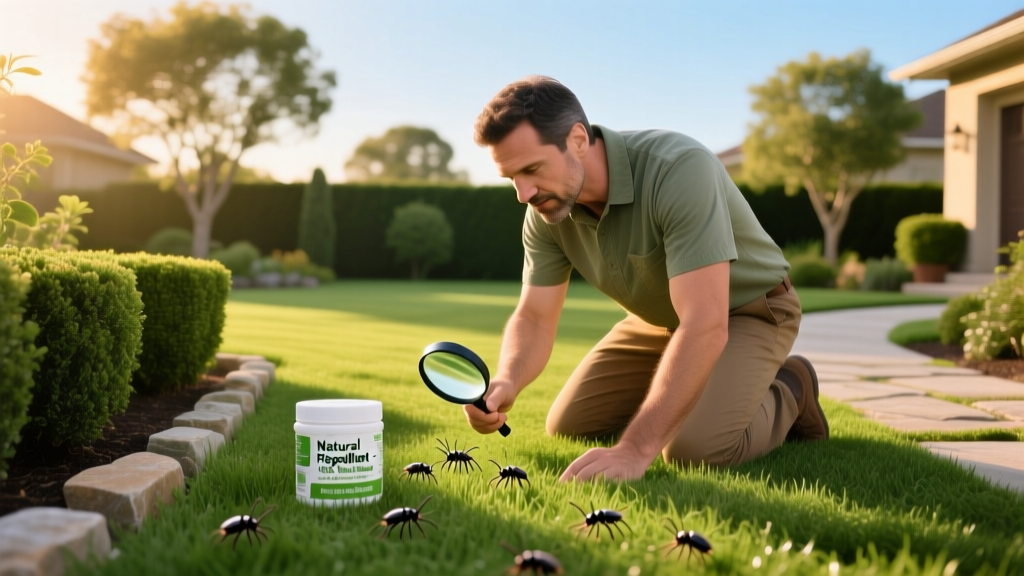
What's the Best Way to Get Rid of Fleas in Your Yard?
If you are asking what's the best way to get rid of fleas in your outdoor spaces, the answer is not a single miracle spray. Fleas are resilient parasites that thrive in the microclimates of your landscape. The most effective eradication strategy requires an Integrated Pest Management (IPM) approach that targets the flea at multiple life stages while altering the yard environment to make it inhospitable.
Treating your pets with topical preventatives is only half the battle. According to the University of Florida IFAS Extension, up to 95% of a flea population exists in the environment as eggs, larvae, and pupae, while only 5% are blood-feeding adults on your pets. To reclaim your lawn, you must break this life cycle outdoors.
The 95/5 Rule: Why Single-Spray Eradication Fails
Homeowners often purchase over-the-counter pyrethrin sprays, treat the lawn, and wonder why fleas return within two weeks. Adulticides only kill the 5% of adult fleas. The remaining 95%—hidden in soil, thatch, and leaf litter—are protected inside their pupal cocoons, which are highly resistant to chemical penetration. Once the adulticide degrades, the pupae hatch, and the infestation restarts. The best way to get rid of fleas permanently is to pair an adulticide with an Insect Growth Regulator (IGR).
Identifying Flea Hotspots: The White Sock Test
Fleas do not live in open, sun-baked lawns. Ultraviolet light and low humidity are lethal to flea larvae. They congregate in shaded, moist areas with high organic debris. Before treating, you must map the hotspots.
The White Sock Test Protocol
Pull white, knee-high cotton socks over your pant legs. Walk slowly through shaded areas, under decks, around dog runs, and near shrubbery. Fleas are attracted to the white color and the heat/vibration of your movement. If you see small, dark, fast-moving specks jump onto the socks, you have identified a primary hotspot that requires targeted treatment.
What's the Best Way to Get Rid of Fleas? A 3-Tier Protocol
For severe outdoor infestations, follow this sequenced, three-tier protocol to ensure total life-cycle disruption.
Tier 1: Microclimate Modification (Days 1-3)
You cannot spray your way out of a bad habitat. Flea larvae require humidity levels above 50% and temperatures between 70°F and 85°F to survive.
- Mow and Bag: Cut your grass to the lower end of its recommended height and bag the clippings to remove organic debris where larvae feed on adult flea feces (flea dirt).
- Prune for UV Penetration: Trim lower branches of trees and shrubs to allow direct sunlight to hit the soil. UV radiation naturally desiccates and kills flea eggs and larvae.
- Clear Thatch: If your lawn has more than 0.5 inches of thatch, dethatch it. Thatch acts as an insulated bunker for pupae.
Tier 2: Insect Growth Regulators (Day 4)
Apply an IGR containing Pyriproxyfen (e.g., NyGuard or Martin's I.G. Regulator). Pyriproxyfen mimics the juvenile hormone of insects, preventing eggs from hatching and stopping larvae from molting into adults. Unlike many chemicals, Pyriproxyfen is highly photostable and can remain effective outdoors for 3 to 7 months, providing long-term population suppression.
Tier 3: Adulticide Barrier Treatment (Day 5)
Apply a residual adulticide to knock out the current breeding adults. Bifenthrin (e.g., Talstar P or Bifen IT) is the industry standard for outdoor flea control. It binds well to soil and organic matter, providing a 4-to-8-week residual kill.
Active Ingredient Comparison Matrix
Selecting the right chemical or biological agent depends on your yard's specific conditions and your tolerance for synthetic pesticides.
| Active Ingredient | Type | Mode of Action | Outdoor Residual | Est. Cost per Acre |
|---|---|---|---|---|
| Pyriproxyfen | IGR | Hormone mimic; stops egg/larval development | 3 - 7 Months | $35 - $50 |
| Bifenthrin (7.9%) | Adulticide | Sodium channel modulator; rapid knockdown | 4 - 8 Weeks | $25 - $40 |
| Permethrin | Adulticide | Sodium channel modulator; fast kill | 2 - 4 Weeks | $20 - $30 |
| Steinernema carpocapsae | Biological | Entomopathogenic nematode; infects pupae | 2 - 3 Weeks (Living) | $150 - $200 |
The Organic Route: Beneficial Nematodes
If you prefer to avoid synthetic pyrethroids, beneficial nematodes are the most effective organic solution. Specifically, the species Steinernema carpocapsae actively seeks out and penetrates flea pupae and larvae in the soil, releasing bacteria that kill the host within 48 hours.
According to Texas A&M AgriLife Extension, nematodes can reduce flea populations by up to 90% when applied correctly. However, they are living organisms and require strict application parameters:
- Soil Temperature: Must be between 60°F and 90°F.
- Moisture: The soil must be damp before application and kept moist for 7 to 10 days afterward so the nematodes can swim through soil pores to find hosts.
- UV Protection: Apply at dusk or on heavily overcast days; direct sunlight will kill exposed nematodes within minutes.
- Dosage: Apply at a rate of 1 million nematodes per 3,000 square feet.
CRITICAL WARNING: Permethrin and Feline Toxicity
While Permethrin is a highly effective and affordable adulticide for yards and dogs, it is highly toxic to cats. If you have outdoor cats, or if neighborhood cats roam your yard, avoid Permethrin-based concentrates entirely. Opt for Bifenthrin or Pyriproxyfen, which have much higher safety margins for felines once the liquid application has fully dried.
Common Eradication Mistakes to Avoid
Even with the right products, poor execution will result in treatment failure. Avoid these frequent errors:
- Spraying the Entire Lawn: Fleas do not live in the middle of a sunny Bermuda grass lawn. Spraying open, sunlit areas wastes expensive chemicals and harms beneficial pollinators. Focus your hose-end or pump sprayer strictly on the shaded perimeters, under decks, and along fence lines identified in your White Sock Test.
- Ignoring the Pet: If your dog is not on a veterinarian-prescribed oral or topical flea preventative (like Fluralaner or Sarolaner), they will continually re-seed your yard with flea eggs every time they go outside. Yard treatment and pet treatment must happen simultaneously.
- Using Outdoor Foggers: 'Bug bombs' or flea foggers are entirely useless outdoors. The aerosol droplets dissipate in the wind and fail to penetrate the thatch layer where pupae are hiding. Always use a liquid spray applied with enough water volume (typically 1 to 2 gallons per 1,000 sq ft) to carry the active ingredient down into the soil and thatch.
- Watering Too Soon: After applying a liquid Bifenthrin or Pyriproxyfen barrier, allow the product to dry completely on the foliage and soil surface (usually 2 to 4 hours). Irrigating or experiencing heavy rain immediately after application will dilute the chemical before it binds to the organic matter.
Successfully eliminating fleas from your landscape requires patience. Because the pupal stage can remain dormant for weeks waiting for the vibration of a host, you may see occasional adult fleas emerge 10 to 14 days after your initial treatment. This is normal. The residual IGR and adulticide barrier will kill these late hatchers before they can lay a new generation of eggs, ultimately collapsing the colony.

