
Pest Control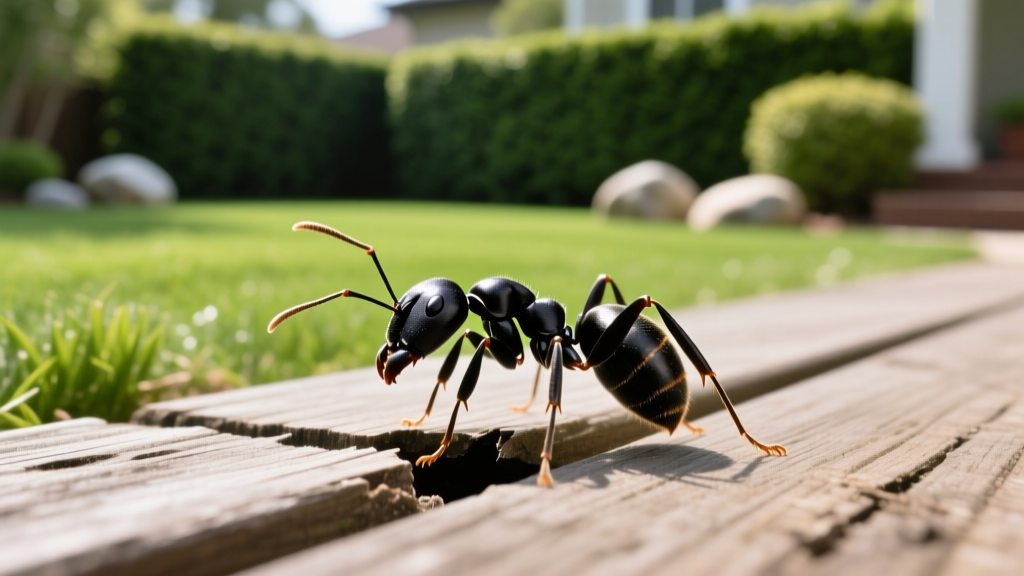
Are Big Black Ants in House Good or Bad? A Yard Defense Guide
The Verdict: Ecological Allies vs. Structural Liabilities
Finding big black ants in your home triggers an immediate question: are they beneficial predators that wandered inside, or a sign of severe property damage? The short answer is that big black ants in the house are universally bad. While their outdoor counterparts play a vital role in yard ecology, their presence indoors indicates a breach in your perimeter defense and, frequently, an underlying moisture or wood-decay issue. To protect your property, you must understand the biological divide between the yard and the foundation, and implement a targeted defense strategy.
Identification Matrix: Who Is Invading?
Not all large black ants are the same. Misidentifying the species leads to ineffective treatments. The two most common large black ants encountered in North American residential zones are Carpenter Ants (Camponotus pennsylvanicus) and Field Ants (Formica species).
| Feature | Carpenter Ants (Camponotus) | Field Ants (Formica) |
|---|---|---|
| Size | 1/4 to 1/2 inch (Workers vary greatly) | 1/8 to 1/4 inch |
| Thorax Profile | Smooth, evenly rounded | Uneven, often with spines or bumps |
| Yard Role | Nest in dead wood/stumps; aerate soil | Build soil mounds; prey on turf pests |
| Indoor Threat | High (Excavates structural timber) | Low (Nuisance only; cannot damage wood) |
| Frass Production | Yes (sawdust-like debris) | No |
The 'Good': Why They Belong in the Yard
If confined to the far reaches of your property, big black ants are highly beneficial. According to the University of California Statewide Integrated Pest Management Program, native ant populations are critical for soil aeration, nutrient cycling, and seed dispersal. Field ants and outdoor carpenter ant colonies aggressively hunt protein-rich pests, including termites, caterpillars, and flea larvae. Eradicating them from the deep yard disrupts the local food web and can inadvertently allow more destructive pests, like subterranean termites, to flourish unchecked.
The 'Bad': Structural Threats and Satellite Colonies
The danger arises when the yard population bridges the gap to your home. Carpenter ants do not consume wood like termites; they excavate it to build intricate gallery networks. When you see large black ants inside, you are likely witnessing foragers from a 'satellite colony' established within your home's walls, roof eaves, or crawl space.
⚠️ Warning: The Moisture Connection
Carpenter ants require high moisture levels to establish indoor satellite colonies. Their presence is often a secondary symptom of a primary plumbing leak, roof flashing failure, or improper yard grading that forces water against the foundation. Ignoring the ants without fixing the moisture source guarantees their return.
Signs of Indoor Excavation
- Frass Accumulation: Piles of coarse, sawdust-like material (often containing dead ant parts) beneath baseboards, window sills, or basement joists.
- Rustling Noises: Faint, crinkling sounds inside walls at night when the colony is most active.
- Swarmers: Winged reproductive ants emerging from indoor vents or light fixtures in early spring.
The 18-Inch Perimeter Defense Protocol
To keep the ecological benefits of big black ants in the yard while protecting your home, you must establish a chemical and physical buffer zone. The National Pest Management Association recommends a multi-tiered approach focusing on the foundation perimeter.
Step 1: Vegetation and Mulch Clearance
Ants use branches and mulch as highways to bypass foundation treatments. Trim all tree limbs and shrubs so they are at least 3 feet away from the roofline and siding. Pull mulch back to create a 12-inch bare soil or gravel gap directly against the foundation. Mulch retains the exact moisture levels carpenter ants need to survive near your siding.
Step 2: The Liquid Trench Barrier
For long-lasting exclusion, apply a non-repellent liquid termiticide/insecticide like Taurus SC (9.1% Fipronil). Because it is non-repellent, ants do not detect it, allowing them to cross the barrier, carry the active ingredient back to the yard colony, and trigger a transfer effect.
- Mixing Ratio: 0.8 fluid ounces of Taurus SC per 1 gallon of water.
- Application: Dig a trench 6 inches deep and 6 inches wide directly against the foundation.
- Volume: Apply 4 gallons of the mixed solution per 10 linear feet of trench.
- Surface Spray: Spray the foundation wall up to 18 inches high and 18 inches out from the trench.
Step 3: Targeted Baiting for Active Indoor Trails
If ants are already inside, do not use indoor contact sprays (like Raid), which will only cause the colony to bud and splinter into multiple satellite nests. Instead, use a slow-acting protein/sweet bait like Advance 375A (Abamectin 0.011%). Place dime-sized bait stations directly on the foraging trails. The workers will carry the toxicant back to the queen, collapsing the colony within 7 to 14 days.
Treatment Cost and Efficacy Matrix
Deciding between DIY yard defense and professional extermination depends on the severity of the infestation and your budget. Below is a breakdown of current market averages for 2026.
| Treatment Method | Estimated Cost | Time to Colony Collapse | Longevity of Barrier |
|---|---|---|---|
| DIY Liquid Trench (Taurus SC) | $80 - $120 (Materials) | 30 - 60 Days (Transfer effect) | 5 - 7 Years (Soil bound) |
| DIY Baiting (Advance 375A) | $25 - $40 (Materials) | 7 - 14 Days | None (Reactive only) |
| Professional Extermination | $250 - $450 (Service) | 14 - 30 Days | 1 Year (Warranty period) |
Moisture Mitigation: The Ultimate Deterrent
Chemical barriers fail if the environment remains highly attractive. Penn State Extension emphasizes that moisture control is the single most effective long-term deterrent for wood-destroying ants. Implement these structural fixes:
- Downspout Extensions: Route all gutter downspouts at least 4 feet away from the foundation to prevent soil saturation.
- Grading: Ensure the soil slopes away from the house at a minimum grade of 6 inches over the first 10 feet.
- Crawl Space Vapor Barriers: Install a continuous 6-mil polyethylene sheeting over exposed dirt in crawl spaces to reduce ambient humidity and wood moisture content below the 20% threshold ants require.
Summary: The Yard Defense Verdict
Big black ants are highly beneficial when confined to the deep yard, acting as natural pest control and soil aerators. However, their presence inside the house is unequivocally bad, signaling structural excavation and moisture intrusion. By maintaining an 18-inch vegetation-free perimeter, applying a non-repellent Fipronil trench barrier, and correcting foundation grading, you can harness their outdoor benefits while securing your home's structural integrity.

