
Pest Control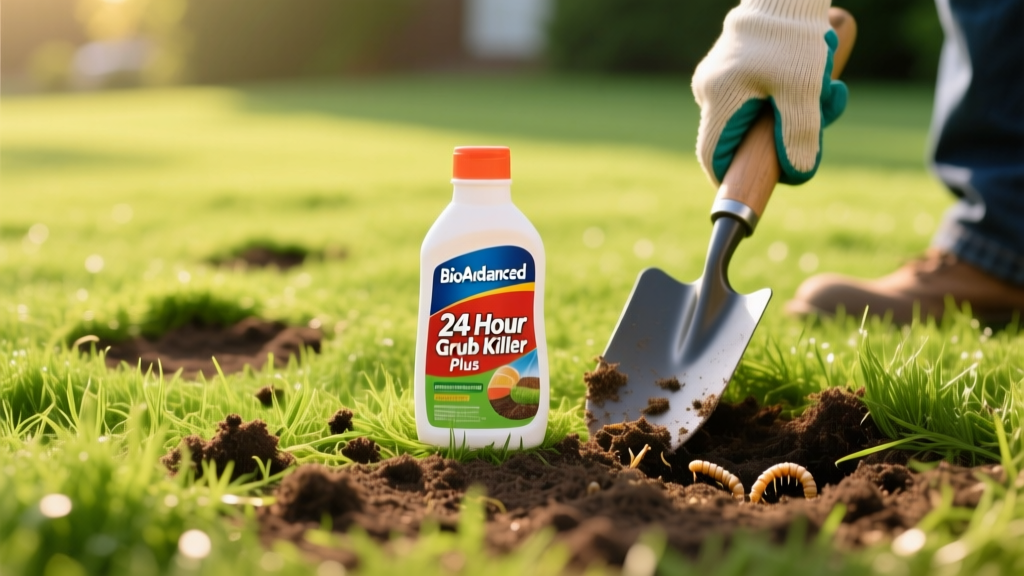
BioAdvanced 24 Hour Grub Killer Plus: Stop Mole & Skunk Damage
The Grub-Predator Connection: Why Your Yard is Being Torn Up
When homeowners discover trenches, mounds, and torn-up sod in their yards, the immediate instinct is to declare war on the moles, skunks, raccoons, or armadillos causing the mess. However, targeting the mammals is a tactical error. These animals are not eating your grass; they are foraging for the high-protein buffet hiding just beneath the soil surface: white grubs.
A single mole can consume 70% to 100% of its body weight in insects daily. If your soil is infested with Japanese beetle, June bug, or European chafer larvae, your lawn becomes a primary feeding ground. To reclaim your yard, you must sever the food supply chain. This is where BioAdvanced 24 Hour Grub Killer Plus transitions from a simple lawn care product to a critical structural defense mechanism for your property.
Active Ingredient Chemistry: How Trichlorfon Works
The active ingredient in BioAdvanced 24 Hour Grub Killer Plus is Trichlorfon (6.2%), widely known in the turf management industry by its legacy trade name, Dylox. Unlike systemic preventative treatments that take weeks to build up in the plant tissue, Trichlorfon is a fast-acting organophosphate contact and stomach poison.
⚠️ CRITICAL SOIL pH WARNING: Trichlorfon is highly susceptible to alkaline hydrolysis. If your soil pH is above 7.5, the active ingredient will chemically degrade into inactive compounds within 24 to 48 hours of application, rendering it useless. Always test your soil pH before applying this product. If your pH is high, apply elemental sulfur weeks in advance to lower it, or switch to a different active ingredient.
Once watered into the soil, Trichlorfon inhibits the acetylcholinesterase enzyme in the grubs' nervous systems, causing rapid paralysis and death. According to turfgrass entomologists at Michigan State University Extension, curative treatments like Trichlorfon are most effective when grubs are young and actively feeding near the surface, typically in late summer or early fall.
Step-by-Step Application Protocol for Maximum Efficacy
Applying granular insecticides requires precision. Failure to follow exact measurements and timing protocols is the primary reason homeowners report product failure. In 2026, a standard 10 lb bag of BioAdvanced 24 Hour Grub Killer Plus costs between $28 and $34 and covers 5,000 square feet.
Step 1: Calculate and Calibrate
Measure your lawn's exact square footage. The target application rate is 2 lbs per 1,000 square feet. Calibrate your broadcast spreader to deliver this exact rate. If using a Scotts Rotary Spreader, a setting of 6.5 is generally recommended for this specific granule size, but always verify with the spreader settings chart on the back of the bag.
Step 2: Apply to Dry Foliage
Apply the granules when the grass blades are completely dry. Wet grass will cause the granules to stick to the foliage rather than reaching the soil surface, which drastically reduces efficacy and increases the risk of leaf burn.
Step 3: Immediate Water-In (The Make-or-Break Step)
Trichlorfon degrades rapidly when exposed to UV sunlight. You must water the product into the thatch and soil layer immediately after application. Apply exactly 0.5 inches of water (use a tuna can to measure). This moves the chemical off the grass blades and into the top 2 inches of soil where the grubs are feeding.
Curative vs. Preventative: Where BioAdvanced Fits In
Understanding the difference between curative and preventative grub control is essential for long-term yard defense. BioAdvanced 24 Hour Grub Killer Plus is strictly a curative rescue treatment.
| Feature | BioAdvanced 24 Hr (Trichlorfon) | Preventative (Imidacloprid) | Preventative (Chlorantraniliprole) |
|---|---|---|---|
| Primary Use | Curative (Kills active grubs) | Preventative (Early season) | Preventative (Long residual) |
| Speed of Kill | 24 to 48 hours | 1 to 3 weeks | 2 to 4 weeks |
| Soil Residual | Short (1-2 weeks) | Medium (1-2 months) | Long (3-4 months) |
| Best Application Time | Late Summer / Early Fall | Late Spring / Early Summer | April to June |
As noted in the University of Kentucky's comprehensive white grub fact sheet, applying a fast-acting curative like Trichlorfon in the spring is largely a waste of money, as overwintering grubs are mature, feeding very little, and preparing to pupate. Save this product for late summer when the new generation of grubs is small, hungry, and close to the surface.
Troubleshooting Common Application Failures
If you applied BioAdvanced 24 Hour Grub Killer Plus and the moles are still tearing up your lawn, one of three specific failure modes has occurred:
- Thatch Barrier Interception: If your lawn has a thatch layer thicker than 0.5 inches, the granules and the subsequent water will get trapped in the thatch mat. The chemical never reaches the soil where the grubs live. Fix: Dethatch or perform core aeration before application.
- Alkaline Hydrolysis: As mentioned, high soil pH destroys Trichlorfon. Fix: Conduct a soil test. If pH is above 7.5, switch to a carbaryl-based product or a biological control like beneficial nematodes (Heterorhabditis bacteriophora), which are not affected by high pH.
- Misidentification of Pest Damage: Not all torn turf is caused by grubs. Skunks also dig for earthworms, and moles will eat soil-dwelling ants and earthworms even if grubs are entirely absent. Fix: Perform the "tug test." Grab a handful of dead grass and pull. If the roots are sheared off and the sod rolls back like a carpet, you have grubs. If the roots are intact but the soil is mounded, you have a mole tunneling issue unrelated to grubs.
Post-Treatment Yard Defense Strategy
Once the BioAdvanced treatment has eliminated the grub population, the predator response will not stop instantly. Moles and skunks have established foraging routes and will continue to patrol your yard for a few days out of habit, searching for earthworms or leftover insects.
Pro Tip for Rodent Deterrence: After the 48-hour grub kill window, apply a castor oil-based mole repellent along the perimeter of your property and directly over active tunnel entrances. Castor oil coats the earthworms and soil insects that remain, making them unpalatable to moles and forcing them to relocate to neighboring properties.
For long-term defense, transition to a preventative grub control program the following spring using Chlorantraniliprole (e.g., Scotts GrubEx). This will stop the next generation of eggs from hatching, permanently removing the caloric incentive for burrowing mammals to target your lawn. According to Ohio State University Extension, integrating cultural practices like proper mowing heights (3 to 4 inches) and deep, infrequent watering builds a robust root system that can tolerate minor grub feeding without showing surface damage, further reducing the visual impact of turf pests.
Frequently Asked Questions
Is BioAdvanced 24 Hour Grub Killer Plus safe for pets?
Keep pets and children off the lawn during application. Once the product has been watered in and the grass surface is completely dry, it is generally safe for pets to re-enter the area. The water-in process binds the granules to the soil particles, reducing surface exposure.
Will this product kill adult Japanese beetles on my ornamental plants?
No. This formulation is strictly designed for soil-dwelling larvae. Adult beetles feeding on foliage require a different contact spray or systemic treatment specifically labeled for ornamental plant pests.
Can I apply this product and grass seed at the same time?
Yes, Trichlorfon does not have pre-emergent herbicidal properties and will not prevent grass seed from germinating. However, the heavy watering required to activate the grub killer may wash away newly sown, lightweight grass seed. Apply seed after the grub treatment has been fully watered in and the soil has stabilized.

