
Pest Control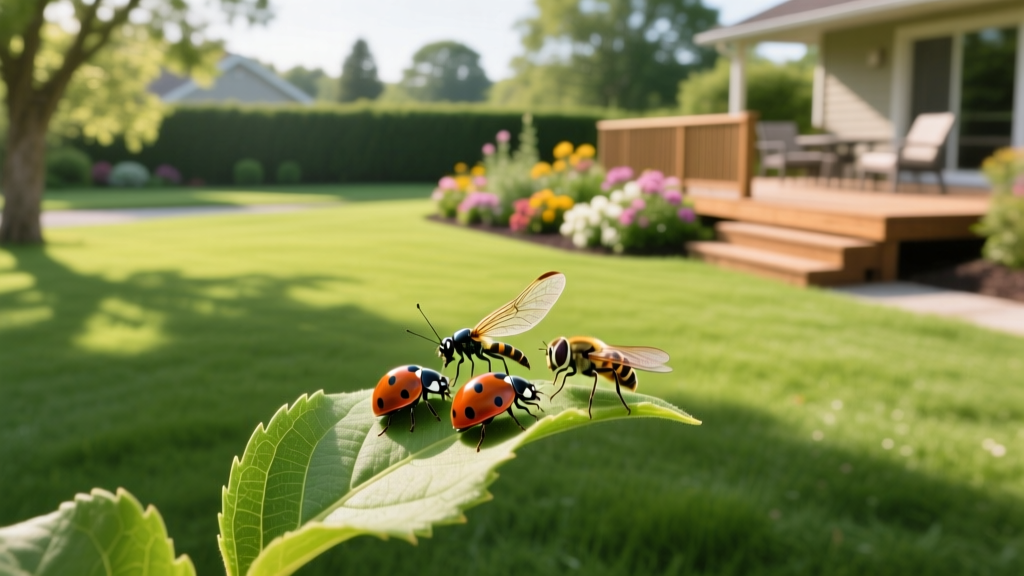
Biological Pest Control Beneficial Insects Lawn
Healthy lawns depend on balanced ecosystems, and biological pest control offers a proven, sustainable approach to managing destructive insects without relying solely on synthetic chemicals. By introducing or encouraging beneficial insects that prey on common turf pests, homeowners and lawn care professionals can reduce pesticide applications while maintaining dense, green turf. This strategy forms a core component of integrated pest management (IPM) programs used by universities and extension services across the United States.
Understanding Lawn Pest Thresholds and When to Act
Not every insect in your lawn is a problem. IPM relies on established economic and aesthetic thresholds to determine when intervention is necessary. Treating below these thresholds wastes resources and can disrupt beneficial insect populations that naturally suppress pests.
According to research published by Cornell University's Turfgrass Science Program in 2021, action thresholds vary significantly by pest species and turf use. A home lawn can tolerate higher pest densities than a golf course putting green, so context matters when deciding whether biological control agents need supplemental support from chemical applications.
Common Turf Pests and Their Thresholds
| Pest Species | Scientific Name | Action Threshold | Primary Damage |
|---|---|---|---|
| Japanese Beetle Grub | Popillia japonica | 8–10 grubs per sq ft | Root feeding, brown patches |
| Chinch Bug | Blissus leucopterus | 15–20 per sq ft | Sap feeding, yellowing turf |
| Sod Webworm | Crambus spp. | 12–15 larvae per sq ft | Leaf blade consumption |
| Black Cutworm | Agrotis ipsilon | 3–5 larvae per sq ft | Stem cutting at soil level |
| European Crane Fly | Tipula paludosa | 25–50 larvae per sq ft | Root and crown feeding |
These thresholds represent the point at which visible turf damage becomes likely in a well-maintained home lawn. Below these numbers, natural predators and parasitoids often keep populations in check without any intervention.
Key Beneficial Insects for Lawn Pest Suppression
Several predatory and parasitoid insects play critical roles in lawn ecosystems. Unlike broad-spectrum insecticides that eliminate both pests and their natural enemies, biological control targets specific pest populations while leaving the broader food web intact.
Ground Beetles (Family Carabidae)
Ground beetles are among the most effective predators in turfgrass systems. Adults and larvae feed on grubs, cutworms, sod webworms, and other soil-dwelling pests. A single adult ground beetle can consume over 50 caterpillars per week. Research from the Ohio State University Department of Entomology found that lawns with healthy ground beetle populations experienced 40% less grub damage compared to lawns where beetle habitat had been disrupted by excessive pesticide use.
Species such as Harpalus pennsylvanicus and Pterostichus melanarius thrive in lawns with minimal soil disturbance and some thatch layer for shelter. Reducing nighttime lighting near lawn areas also helps, as these nocturnal hunters are disoriented by artificial light.
Parasitoid Wasps
Several tiny, non-stinging wasp species parasitize common lawn pests. Tiphia vernalis and Tiphia popilliavora are specialist parasitoids of Japanese beetle grubs. Female wasps burrow into soil, locate grubs, and lay eggs directly on the host. The developing wasp larva consumes the grub from within. The USDA Agricultural Research Service introduced Tiphia vernalis from Asia in the early 20th century, and established populations now provide significant grub suppression across the Midwest region and Mid-Atlantic states.
Other parasitoid wasps, including species in the genus Steinernema (technically entomopathogenic nematodes, often grouped with biological control agents), attack multiple grub species in soil. Application rates of 250 million infective juveniles per acre have shown 60–80% grub mortality in university trials conducted at Michigan State University in 2022.
Integrating Beneficial Insects with Chemical Controls
Biological pest control does not mean abandoning all chemical tools. IPM programs rank interventions by selectivity and environmental impact, using the least disruptive effective option. When pest populations exceed thresholds and beneficial insects cannot provide sufficient control alone, targeted insecticide applications can supplement biological agents.
"The goal of IPM is not zero pesticide use but rather the intelligent integration of all available tools—biological, cultural, mechanical, and chemical—to manage pest populations below damaging levels with minimal ecological disruption." — University of California Statewide IPM Program, 2023
Selectivity is key. Broad-spectrum active ingredients like bifenthrin (a synthetic pyrethroid) and carbaryl (a carbamate) kill beneficial insects alongside target pests, undermining biological control for weeks or months after application. More selective options preserve beneficial populations while addressing specific problems.
Selective Active Ingredients Compatible with Beneficials
- Chlorantraniliprole — an anthranilic diamide that targets caterpillars and grubs with minimal toxicity to predatory beetles, parasitoid wasps, and pollinators. Applied at 0.2–0.4 lb active ingredient per acre for grub prevention.
- Bacillus thuringiensis var. kurstaki (Btk) — a microbial insecticide specific to caterpillar larvae, harmless to beetles and wasps. Effective against sod webworms and cutworms when applied at 1–2 lb per acre during early larval stages.
- Spinosad — derived from the soil bacterium Saccharopolyspora spinosa, effective against caterpillars and some fly larvae. Moderate selectivity; application timing should avoid periods when parasitoid wasps are active on the soil surface.
- Imidacloprid — a neonicotinoid effective as a preventive grub treatment at 0.3–0.6 lb per acre. While less disruptive to ground-dwelling predators than pyrethroids, neonicotinoids pose documented risks to pollinators visiting clover or other lawn flowers.
Timing applications for late evening or early morning, when beneficial insects are less active on the turf surface, further reduces non-target impacts. According to Texas A&M AgriLife Extension recommendations published in 2022, waiting 48–72 hours after mowing before applying any insecticide allows ground beetles to re-establish in the thatch layer where they are somewhat protected from spray contact.
Cultural Practices That Support Beneficial Insect Populations
Chemical selectivity alone does not sustain biological control. The lawn environment itself must support beneficial insects through habitat, food resources, and minimal disturbance. Several cultural practices directly influence beneficial insect abundance and diversity.
- Maintain a mowing height of 3–4 inches — Taller turf provides shelter for ground beetles and other predators, creates a cooler microclimate at soil level, and supports more diverse invertebrate communities.
- Reduce irrigation frequency — Deep, infrequent watering (1 inch per week) encourages deeper root growth and avoids saturating the soil surface where many beneficial insects shelter. Constant moisture favors some pest species, particularly crane fly larvae.
- Tolerate some clover and low-growing flowers — Parasitoid wasps require nectar and pollen as adults. A lawn containing 5–10% white clover (Trifolium repens) provides critical food resources for adult Tiphia wasps and other beneficial species.
- Limit broad-spectrum applications to spot treatments — Rather than blanket-spraying an entire lawn, treat only confirmed hot spots where pest thresholds are exceeded. This preserves refuge areas where beneficial insects survive and recolonize treated zones.
- Leave leaf litter at lawn edges in fall — Perimeter areas with light leaf cover provide overwintering habitat for ground beetles and rove beetles that colonize the lawn in spring.
A study by the University of Maryland's Department of Entomology demonstrated that lawns managed under these practices hosted 3.2 times more ground beetle individuals and 2.1 times more species richness compared to conventionally managed turf receiving calendar-based insecticide applications.
Monitoring and Scouting for Effective Biological Control
Biological control is not a set-and-forget strategy. Regular monitoring confirms that beneficial insect populations remain active, tracks pest population trends relative to thresholds, and identifies when supplemental intervention is needed.
Soap flush tests remain the standard scouting method for surface-active pests like chinch bugs. Mixing 2 tablespoons of liquid dish soap in 2 gallons of water and pouring it over a 2-square-foot area forces insects to the surface for counting. For grubs, cutting three sides of a 1-square-foot section of turf and peeling it back exposes the root zone where larvae feed. Counts from 4–5 locations across the lawn provide a representative average.
Pitfall traps—small cups buried flush with the soil surface—capture ground beetles and other beneficial predators, providing a rough index of their activity. Checking traps weekly during peak pest seasons (June through September in most northern temperate lawns) shows whether predator populations are tracking pest emergence.
Regional Considerations and Pest Complexes
Pest pressure and beneficial insect availability vary significantly by geography. Homeowners in the Pacific Northwest face different challenges than those in the Southeast. European crane fly (Tipula paludosa) dominates in western Oregon and Washington, while chinch bugs and tropical sod webworm (Herpetogramma phaeopteralis) create more problems in Florida and the Gulf Coast states.
Beneficial insect communities also shift regionally. Ground beetle diversity peaks in cooler, northern climates with moderate rainfall. In arid regions like the Desert Southwest, predatory ants (particularly Solenopsis xyloni, the southern fire ant) provide significant pest suppression in turf but are often viewed as pests themselves due to their stinging behavior.
University extension programs provide region-specific guidance on which beneficial insects are already present, which can be augmented through releases, and which cultural practices most effectively support them. State IPM coordinators—available through the land-grant university system in every U.S. state—offer free or low-cost diagnostic services that identify both pests and beneficials from submitted samples.
Biological pest control through beneficial insects represents a proven, science-backed approach that reduces chemical inputs, preserves ecosystem services, and maintains turf quality when integrated with sound cultural practices and selective interventions. The key is patience, monitoring, and a willingness to work with natural systems rather than against them.

