
Pest Control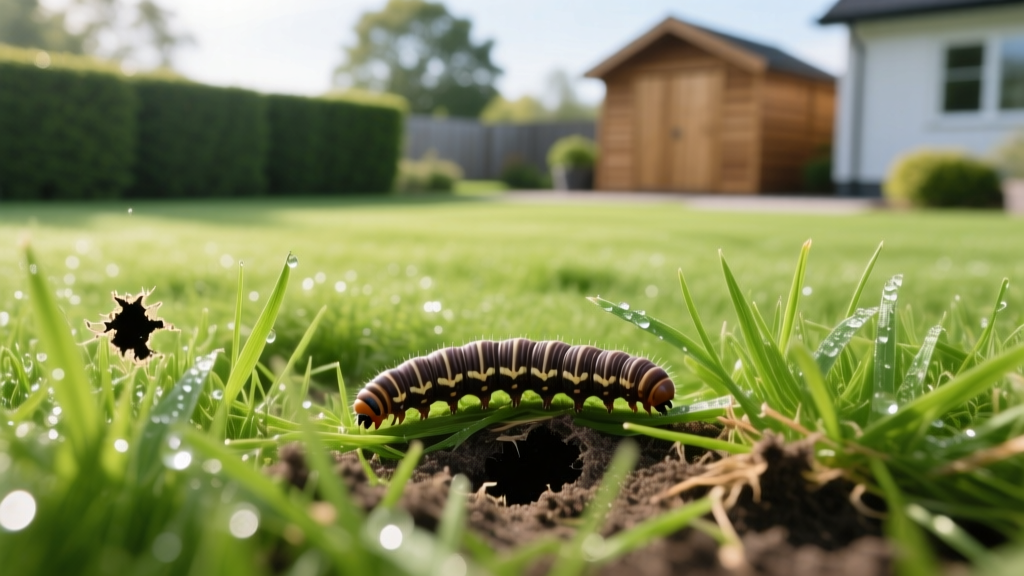
How to Stop Cutworm Caterpillar Damage in Your Lawn
The Anatomy of a Cutworm Attack
The cutworm caterpillar is not a single species, but rather the larval stage of various moths in the Noctuidae family. Unlike grubs that feed subterraneanly on roots, cutworms are surface-level assassins. They hide in the thatch layer or top inch of soil during the day and emerge at night to feed. Their signature damage is severe and unmistakable: they wrap their front legs around the base of a turfgrass blade or garden seedling and chew directly through the crown, severing the plant at the soil line.
A single mature black cutworm (Agrotis ipsilon) can sever up to 14 turfgrass plants in a single night. If you notice circular patches of dead grass, or young garden transplants toppled over as if sliced with scissors, you are likely dealing with a cutworm infestation. According to the University of Kentucky Entomology, cutworms are most destructive in early spring and late summer when larvae are actively feeding to reach pupation size.
⚠️ Diagnostic Warning: Don't Confuse with Grubs
Homeowners frequently misdiagnose cutworm damage as white grub activity. To confirm cutworms, inspect the soil within a 12-inch radius of the severed plant at dusk or dawn. Grub damage results in yellowing, wilting turf that pulls up like a carpet due to missing roots. Cutworm damage leaves the root system entirely intact, but the plant is detached at the crown.
Identifying the Culprit: Species Breakdown
Effective treatment requires knowing which species is invading your yard. While all cutworms share the defensive trait of curling into a tight "C-shape" when disturbed, their feeding habits and seasonal peaks vary. Below is a comparison of the three most common lawn-invading species.
| Species | Scientific Name | Primary Damage Window | Feeding Behavior |
|---|---|---|---|
| Black Cutworm | Agrotis ipsilon | Spring (April-June) | Surface feeder; severs stems at soil line. |
| Variegated Cutworm | Peridroma saucia | Late Spring & Fall | Climbing feeder; eats foliage and lower stems. |
| Army Cutworm | Euxoa auxiliaris | Early Spring | Surface feeder; moves in masses, defoliating large areas. |
Step-by-Step Eradication Protocol
Eradicating cutworms requires a phased approach, moving from cultural disruption to biological warfare, and finally to targeted chemical interventions if the infestation exceeds economic thresholds (typically more than 1-2 larvae per square foot).
Phase 1: Cultural Disruption and Habitat Modification
Female noctuid moths prefer to lay eggs in tall, weedy grass. Winter annual weeds like chickweed and henbit are primary oviposition sites. By maintaining a strict mowing height (2.5 to 3 inches for cool-season grasses) and applying a pre-emergent herbicide in early fall, you eliminate the egg-laying habitat. Additionally, dethatching your lawn in early spring removes the protective canopy that early-instar larvae use to hide from UV light and predators.
Phase 2: Biological Warfare (Organic Controls)
For homeowners seeking organic yard defense, two biological agents are highly lethal to cutworm caterpillars when applied correctly:
- Bacillus thuringiensis var. kurstaki (Bt): Products like Monterey B.t. or Dipel Dust contain bacteria that produce crystalline proteins. When the cutworm ingests treated foliage, the proteins rupture its alkaline gut lining, causing it to stop feeding within hours and die within 48 hours. Application Rate: Mix 1.5 to 2 ounces of liquid Bt per gallon of water. Apply in the late evening, as UV light degrades Bt rapidly.
- Beneficial Nematodes: The species Steinernema carpocapsae actively hunts cutworms in the top inch of soil. Products like BioLogic Scanmask provide live nematodes that enter the caterpillar through natural openings and release lethal bacteria. Application Rate: Apply at a rate of 1 million nematodes per 1,000 square feet. Soil temperature must be above 60°F, and the area must be watered heavily before and immediately after application to wash the nematodes into the soil profile.
Phase 3: Chemical Interventions
When biological controls fail or rapid knockdown is required to save a newly seeded lawn, synthetic pyrethroids and carbamates are the standard. According to Penn State Extension, contact insecticides must be applied in the evening when cutworms are actively foraging.
- Bifenthrin (e.g., Talstar P): A highly effective pyrethroid with a long residual. Apply at a rate of 0.5 to 1.0 fluid ounces per 1,000 square feet. Water it in lightly with 1/4 inch of irrigation to move the active ingredient into the thatch layer where cutworms hide during the day.
- Carbaryl (e.g., Sevin 5% Dust or Liquid): A carbamate insecticide that acts as a stomach poison. Liquid formulations are preferred over dust for lawns to ensure even coverage. Apply at 1.5 to 3.0 ounces per 1,000 square feet. Note: Carbaryl is highly toxic to earthworms and bees; avoid application near blooming clover or broadleaf weeds.
Preventative Yard Defense Strategies
Treating an active infestation is only half the battle. Long-term yard defense requires physical barriers and strategic planting to deter future generations.
💡 Pro-Tip: The 2-Inch Collar Method
For high-value garden transplants and isolated lawn plugs, physical barriers are 100% effective. Cut a 3-inch wide strip of cardboard, aluminum foil, or a plastic solo cup (with the bottom removed). Place it around the stem of the plant, pressing it exactly 1 inch into the soil and leaving 2 inches above ground. Cutworms cannot bypass this physical barrier to reach the stem.
- Tilling and Soil Disruption: If you are preparing a new garden bed or overseeding a lawn, shallow tilling (2-3 inches deep) in late fall exposes overwintering pupae to freezing temperatures and avian predators like starlings and crows.
- Planting Repellent Companions: While not a standalone cure, interplanting highly aromatic herbs like tansy, sage, and lavender around the perimeter of your garden beds can confuse the olfactory receptors of egg-laying female moths, reducing localized egg deposition.
Troubleshooting Matrix: When Treatments Fail
If you have applied treatments and are still finding severed plants the next morning, consult this diagnostic matrix to identify the failure point.
| Symptom | Probable Cause | Corrective Action |
|---|---|---|
| Bt applied, but plants still severed. | UV degradation or rain wash-off. | Reapply Bt strictly at dusk; ensure no rain is forecast for 12 hours. |
| Nematodes applied, no reduction in pests. | Soil too dry or cold; nematodes died. | Verify soil temp is >60°F. Pre-water soil and water in immediately after. |
| Chemical spray failed to kill larvae. | Applied at midday; cutworms were deep in soil. | Switch to evening application. Increase water volume to penetrate thatch. |
| Damage continues despite all treatments. | Misdiagnosis; damage is from birds or voles. | Inspect for vole runways or bird pecking marks. Adjust pest target. |
Frequently Asked Questions
Do cutworms eat grass roots?
No. Cutworms are primarily stem and foliage feeders. If your grass roots are being consumed and the turf rolls back like a carpet, you are likely dealing with white grubs (Japanese beetle or June beetle larvae), not cutworms.
Will Sevin dust kill cutworms?
Yes, Sevin (Carbaryl) is highly effective against cutworms. However, for lawn applications, liquid formulations are vastly superior to dust. Dust blows away in the wind, fails to penetrate the thatch layer, and poses a higher inhalation risk during application.
How deep do cutworms burrow in the soil?
During the day, cutworms typically burrow only 1 to 2 inches below the soil surface or hide within the thatch layer. They do not burrow deeply like earthworms or cicada killer wasps, which is why shallow soil disruption and thatch management are effective cultural controls.

