
Pest Control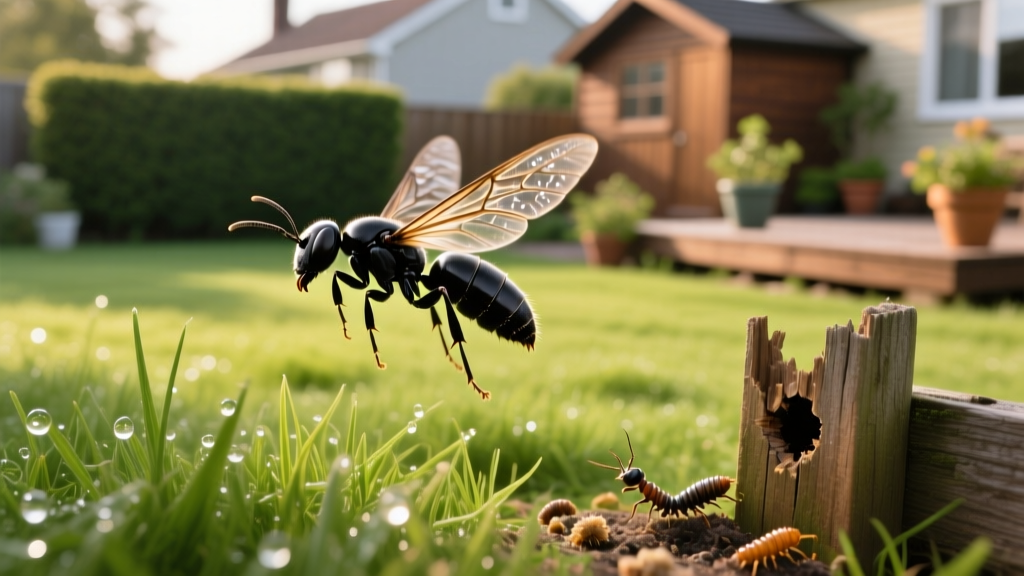
Black Flying Termites: Yard Defense and Swarm Prevention Guide
The Biological Reality of Black Flying Termites (Alates)
When homeowners spot dark, winged insects emerging from the soil or mulch beds in early spring, they are witnessing a critical reproductive event. "Black flying termites" are not a distinct species; rather, they are the dark brown to black alates (swarmers) of the Eastern Subterranean Termite (Reticulitermes flavipes). Unlike the pale yellowish-brown swarmers of the Formosan termite, Eastern subterranean alates feature deeply pigmented bodies designed to protect them from UV radiation during their brief nuptial flights.
A swarm indicates the presence of a mature colony—typically three to five years old—located somewhere within 100 feet of your property. According to the Environmental Protection Agency (EPA), subterranean termites cause billions of dollars in structural damage annually, and the emergence of black flying termites is the most visible warning sign that your yard's perimeter defenses have been compromised. Swarming is triggered when soil temperatures at a 2-inch depth consistently reach 70°F, usually immediately following a heavy spring rain event that softens the earth for emergence.
Termite Swarmers vs. Carpenter Ants: The Identification Matrix
The most common mistake in yard pest defense is misidentifying black flying termites as carpenter ants. While both are dark and winged, their anatomical differences dictate entirely different treatment protocols. Carpenter ants excavate wood to build nests but do not consume it, whereas termites digest cellulose, destroying the structural integrity of the wood.
| Anatomical Feature | Black Flying Termites (Alates) | Carpenter Ant Swarmers |
|---|---|---|
| Waist | Broad, uniform "cigar" shape with no constriction between thorax and abdomen. | Pinched, narrow "hourglass" waist between thorax and abdomen. |
| Wings | Two pairs of equal-length, translucent wings that extend far past the body. Easily shed. | Two pairs of unequal-length wings (front wings longer than hind wings). Darker tint. |
| Antennae | Straight, bead-like (moniliform) antennae. | Elbowed (geniculate) antennae with a distinct bend. |
| Body Length | Typically 3/8 to 1/2 inch long (including wings). | Typically 1/2 to 5/8 inch long (including wings). |
Proactive Yard Defense: Creating a Termite-Hostile Perimeter
Preventing black flying termites from establishing a satellite colony in your yard requires manipulating the microenvironment to make it inhospitable to subterranean survival. Termites require three things: cellulose (food), moisture, and shelter from predators.
Moisture Control and Grading Specifications
Subterranean termites construct mud tubes to maintain high humidity while traveling above ground. You can disrupt this by engineering water away from your foundation.
- Positive Grading: Ensure the soil slopes away from the foundation at a minimum 5% grade (a 6-inch drop over the first 10 feet). This prevents soil saturation near the sill plate.
- Downspout Extensions: Route gutter discharge at least 10 feet away from the house. Splash blocks are insufficient; use solid corrugated drainage pipes.
- AC Condensate Lines: Route air conditioning drip lines into the yard or a French drain. A constantly dripping AC line creates a localized moisture oasis that attracts foraging termites.
Wood-to-Soil Clearance and Mulch Management
Research from Penn State Extension highlights that cellulose mulch placed directly against siding provides both a food source and a concealed bridge over chemical soil treatments.
- The 18-Inch Rule: Maintain a strict 18-inch gap between any organic mulch (wood chips, bark, pine straw) and the foundation. Fill this gap with inorganic materials like crushed gravel or river rock, which drain rapidly and offer no nutritional value.
- Siding Clearance: Ensure there is a minimum 6-inch visual inspection zone between the top of the soil/mulch and the bottom of your wood or vinyl siding. This prevents termites from bypassing your soil treatment via the siding.
- Fence Posts and Stumps: Remove all buried wood debris, tree stumps, and wooden form boards left behind by contractors. Use galvanized steel post anchors for wooden fence posts rather than burying treated lumber directly in the soil.
Chemical and Baiting Interventions for Active Swarms
If black flying termites are actively swarming in your yard, environmental modifications alone are insufficient. You must deploy targeted interventions to eliminate the foraging workers and reproductive alates.
Warning: Avoid Over-The-Counter Repellents
Do not use bifenthrin or permethrin-based sprays (commonly found in hardware stores) around your foundation. These are repellents that will cause the termite colony to "bud" and split into multiple sub-colonies, worsening the infestation. Always use non-repellent termiticides or bait systems.
Do not use bifenthrin or permethrin-based sprays (commonly found in hardware stores) around your foundation. These are repellents that will cause the termite colony to "bud" and split into multiple sub-colonies, worsening the infestation. Always use non-repellent termiticides or bait systems.
Liquid Termiticide Trenching (Non-Repellent)
The gold standard for immediate yard defense is a continuous chemical barrier using a non-repellent active ingredient like Fipronil (9.1%). Products such as Taurus SC cost approximately $90 to $110 per 20-ounce bottle in 2026, which is sufficient to treat 60 linear feet of perimeter.
- Trenching: Dig a trench 6 inches wide and 6 inches deep immediately adjacent to the foundation.
- Mixing: Mix 0.8 fluid ounces of Fipronil concentrate per gallon of water.
- Application: Apply 4 gallons of the finished solution per 10 linear feet of trench. Because Fipronil is non-repellent, termites cannot detect it. They tunnel through the treated soil, ingest the chemical, and transfer it to the rest of the colony via trophallaxis (grooming and food sharing), resulting in total colony collapse within 60 to 90 days.
In-Ground Bait Station Deployment
For properties with extensive hardscaping, wells, or environmental concerns regarding soil chemicals, bait stations are the superior alternative. Systems utilizing Noviflumuron (such as the Advance Termite Bait System) disrupt the termite's molting process.
- Placement: Install stations 2 to 4 feet from the foundation, spaced exactly 10 feet apart around the entire perimeter.
- Cost: A 10-station DIY kit costs between $180 and $220, with annual replacement bait cartridges costing roughly $80.
- Monitoring: Inspect stations every 90 days. When wood monitoring bases show active feeding, replace them with the active Noviflumuron bait matrix.
Post-Swarm Protocol: What to Do When They Land
The National Pest Management Association (NPMA) advises homeowners to remain calm during a swarm. The alates themselves are poor fliers, highly vulnerable to predators, and incapable of causing structural damage. Their sole purpose is to mate and find soil.
If swarmers enter your home, do not use aerosol bug bombs. Simply use a vacuum cleaner to remove them and immediately empty the canister outside. If you find piles of discarded, translucent wings on your windowsills or patio, it confirms a swarm has occurred. Document the location of the discarded wings, as this pinpoints the exact area of your yard where the soil treatment or bait station deployment should be concentrated.
Frequently Asked Questions
Can black flying termites bite humans or pets?
No. Termite alates possess mandibles designed for chewing wood and soil, not for biting skin. They pose zero direct health or medical threat to humans or pets. The danger is strictly structural and financial.
How long does a black flying termite swarm last?
A single swarm event is remarkably brief, typically lasting only 30 to 45 minutes during the mid-morning hours. However, a mature colony may release multiple smaller swarms over a period of three to four weeks during the spring season.
Will turning off my outdoor lights prevent swarms?
Unlike moths or beetles, subterranean termite alates are not strongly phototactic (attracted to light). They swarm in response to soil temperature and humidity. While turning off exterior lights during a swarm may prevent them from clustering on your porch, it will not stop the biological emergence from the soil in your yard.

