
Pest Control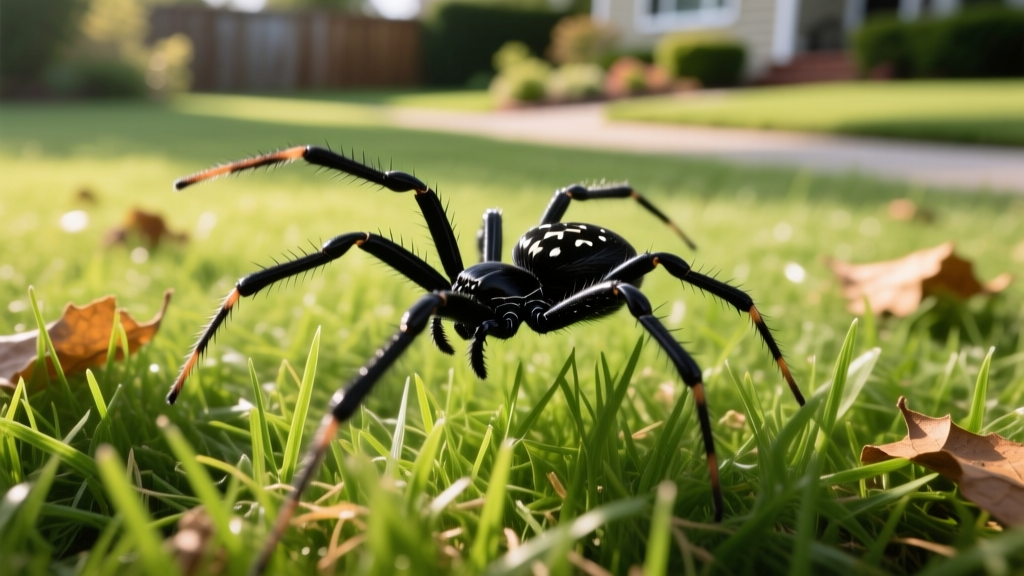
Black Grass Spider Identification and Yard Defense Guide
When homeowners search for a "black grass spider," they are rarely looking at a single, distinct species. In entomology, the common grass spider (Agelenopsis) is typically brown or grey. However, dark morphs, poor lighting, and the presence of other ground-dwelling arachnids lead to frequent misidentification. If you are spotting black or very dark spiders in your turf, you are likely dealing with one of three culprits: a dark variant of the funnel-weaving grass spider, a roaming wolf spider, or the highly venomous black widow hiding in overgrown lawn edges.
Effective yard defense requires accurate identification, habitat modification, and targeted barrier treatments. This guide breaks down the exact identification markers, cultural lawn care practices, and chemical application rates required to reclaim your turf from dark, ground-dwelling arachnids.
The "Black Grass Spider" Identity Matrix
Before applying any treatments, you must determine which spider is inhabiting your lawn. Misidentifying a harmless grass spider as a dangerous black widow leads to unnecessary chemical use, while ignoring a black widow poses a severe medical risk.
| Species | Visual Markers | Web/Habitat Type | Danger Level | Primary Turf Zone |
|---|---|---|---|---|
| Dark Grass Spider (Agelenopsis) | 1/2 to 3/4 inch; dark brown/black carapace; two distinct lines on back | Flat, sheet-like funnel webs; visible in morning dew | Harmless (rarely bites) | Dense thatch layers, low-lying shrubs |
| Wolf Spider (Lycosidae) | 1/2 to 1.5 inches; robust, hairy, dark black/grey; reflective eyes at night | No web; active ground hunters; burrows in soil | Low (painful but mild bite) | Tall grass, leaf litter, garden borders |
| Black Widow (Latrodectus) | 1.5 inches (leg span); glossy black body; red/orange hourglass on abdomen | Messy, irregular tangle webs; ground-level debris | High (neurotoxic venom) | Woodpiles, unmowed edges, retaining walls |
Turf Conditions That Attract Dark Spiders
Spiders do not feed on grass; they feed on the insects that damage your grass. A high spider population is often a secondary indicator of a primary pest issue, combined with poor turf maintenance.
Thatch Accumulation and Moisture
Thatch is the layer of living and dead organic matter between the green vegetation and the soil surface. When thatch exceeds 0.5 inches, it creates a humid, temperature-stable microclimate. Dark grass spiders and wolf spiders use this spongy layer to hide from avian predators during the day. Furthermore, excessive thatch harbors lawn grubs and aphids, providing a steady food source that anchors the spider population to your yard.
Overgrown Perimeters and Hardscape Edges
Black widows and wolf spiders thrive in the transitional zones where turf meets hardscaping. Retaining walls, fence lines, and overgrown ornamental grasses provide the structural complexity these spiders need to build tangle webs or dig burrows. If your mower cannot reach the final 3 inches of grass along a fence line, you are actively cultivating a spider nursery.
Cultural Controls: Modifying the Habitat
Chemical sprays will fail if the underlying habitat remains inviting. Implement these specific lawn care protocols to make your yard inhospitable to ground-dwelling spiders.
- Precision Mowing: Maintain Kentucky Bluegrass and Fescue at 2.5 to 3.5 inches. Keep Bermuda and Zoysia at 1 to 1.5 inches. Never remove more than 1/3 of the grass blade in a single mowing. This keeps the lower turf dry and exposes spiders to natural predators.
- Mechanical Dethatching: Use a power dethatcher (such as the Sun Joe 14-amp electric model, approx. $150) in early fall or spring when the grass is actively growing. Set the blades to penetrate 1/4 inch into the soil to physically rip out the thatch layer where grass spiders build their funnels.
- String Trimming Edges: Use a high-torque string trimmer to cut grass flush against retaining walls and fences every time you mow. Eliminate the "shadow zone" where black widows anchor their tangle webs.
- Core Aeration: If your soil is compacted, water pools on the surface, creating the damp environment wolf spiders prefer. Aerate using a plug-pulling machine to improve drainage and dry out the topsoil.
Targeted Treatments: Organic vs. Synthetic
When cultural controls are insufficient, or when dangerous species like black widows are confirmed, targeted barrier treatments are necessary. Choose your approach based on your household's tolerance for synthetic chemicals and the severity of the infestation.
Organic Deterrents and Desiccants
For mild infestations of harmless grass spiders, or in yards with high pet and pollinator traffic, organic options provide a strong deterrent without environmental toxicity.
- Peppermint Oil Sprays: Spiders possess chemoreceptors on their legs that are highly sensitive to strong essential oils. Products like Mighty Mint Peppermint Insect Spray (approx. $20 for 16 oz) disrupt their ability to navigate. Apply heavily to fence lines and hardscape borders every 7-10 days, as UV light degrades the oil rapidly.
- Diatomaceous Earth (DE): Use food-grade DE (e.g., Harris Food Grade Diatomaceous Earth) in dry, sheltered areas like under decks or along the base of retaining walls. DE acts as a desiccant, slicing the waxy exoskeleton of crawling spiders. Note: DE becomes completely ineffective when wet; reapply after irrigation or rain.
Synthetic Barrier Sprays
For severe infestations or the presence of venomous black widows, synthetic pyrethroids provide a long-lasting, lethal barrier. Bifenthrin is the industry standard for outdoor spider control due to its low mammalian toxicity and high efficacy against arachnids.
- Product Recommendation: Talstar P Professional Insecticide (7.9% Bifenthrin). A 3/4 gallon jug costs approximately $45 and treats up to 96,000 square feet.
- Mixing Rate: Mix 1 fluid ounce of Talstar P per 1 gallon of water to treat 1,000 square feet of lawn and perimeter.
- Application Technique: Use a pump sprayer equipped with a flat fan nozzle (such as the TeeJet 8002VS) to ensure an even, wide swath of coverage. Spray the lawn, but focus heavily on the lower 2 feet of your home's foundation, fence posts, and ornamental shrub bases.
- Residual Life: Bifenthrin binds to soil particles and organic matter, providing up to 90 days of residual control outdoors.
⚠️ Pollinator & Pet Safety Warning: Bifenthrin is highly toxic to bees and aquatic invertebrates. Never apply synthetic pyrethroids to blooming weeds (like clover or dandelions) in your lawn. Keep all pets and children off the treated grass until the spray has completely dried to the touch, which typically takes 2 to 4 hours depending on humidity. For deeper regulatory data, consult the EPA Bifenthrin Profile.
The Yard Defense Decision Framework
Use this step-by-step logic tree to determine your next action when encountering dark spiders in your yard.
- Step 1: Identify the Threat. Capture a clear photo from a safe distance. If the spider is glossy black with a red hourglass, skip to Step 4. If it is a dark, hairy roamer or a funnel-builder, proceed to Step 2. (For comprehensive regional identification, refer to the UC IPM Spider Guidelines).
- Step 2: Assess the Habitat. Measure your thatch layer with a trowel. If it is thicker than 0.5 inches, or if your perimeter grass is over 4 inches tall, schedule dethatching and edging immediately.
- Step 3: Apply Cultural Controls. Fix the moisture and harborage issues. In 80% of cases, modifying the mowing height and removing thatch will cause harmless grass and wolf spider populations to relocate naturally within 14 days.
- Step 4: Deploy Targeted Barriers. If the spiders remain, or if venomous species are confirmed, apply a Bifenthrin perimeter barrier spray. Treat the foundation, hardscape edges, and lower shrubbery. Reapply every 90 days during the active spring-to-fall season.
Expert Insight: Eradicating every spider from your yard is neither possible nor ecologically sound. Grass spiders and wolf spiders consume thousands of mosquito, fly, and grub larvae annually. Your goal is not total eradication, but population management—pushing them out of high-traffic play areas and back into the peripheral garden beds where they serve as free, biological pest control.

