
Pest Control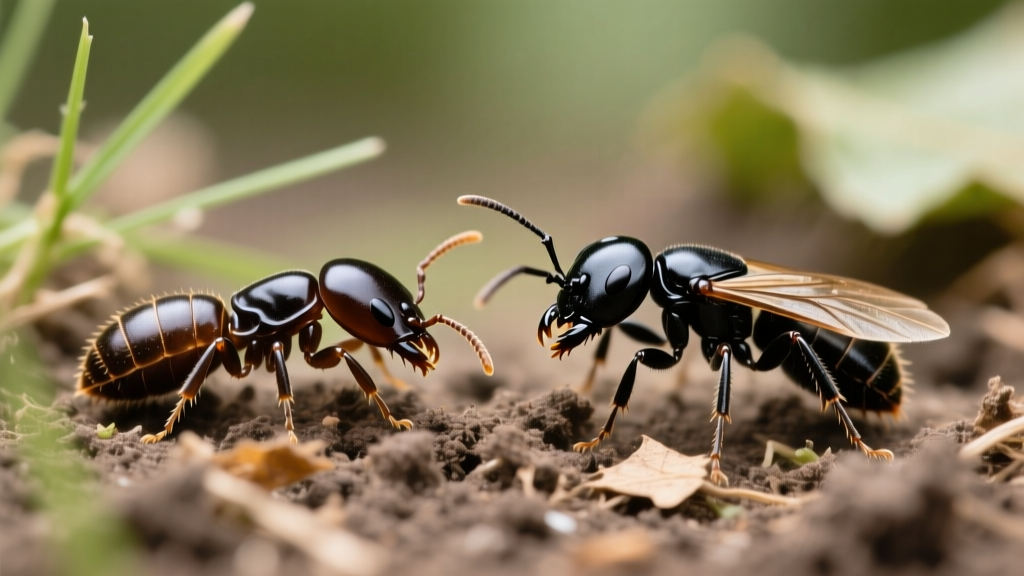
Black House Termites vs. Dark Swarmers: Yard Defense and Identification Guide
The "Black Termite" Identity Crisis: What Are You Actually Looking At?
When homeowners search for "black house termites," they are usually reacting to a sudden emergence of dark, winged insects near their foundation. However, true black house termites (Coptotermes frenchi) are native to Australia and rarely encountered in North America. In the US and Europe, the insects you are seeing are almost certainly one of three distinct pests, each requiring a radically different yard defense strategy.
Accurate identification is the first step in perimeter defense. Misidentifying a carpenter ant as a termite leads to wasted chemical treatments, while ignoring dark subterranean swarmers can result in catastrophic structural damage. According to the University of California Statewide IPM Program, subterranean termite swarmers (alates) are typically dark brown to black, while the workers that actually consume your wood are pale and translucent.
Visual Identification Matrix
| Feature | Subterranean Termite Swarmers | Carpenter Ants | Dampwood Termites |
|---|---|---|---|
| Body Color | Dark brown to black | Black or reddish-black | Dark brown to reddish |
| Waist | Thick, uniform (no pinch) | Narrow, pinched waist | Thick, uniform |
| Antennae | Straight, beaded | Elbowed (bent) | Straight, beaded |
| Wings | Two pairs, equal length | Two pairs, front longer | Two pairs, equal length |
| Yard Habitat | Soil, mulch, wood-to-ground | Decaying logs, stumps | High-moisture wood, stumps |
Yard Defense Perimeter: Starving the Colony Before They Reach the House
Subterranean termites forage blindly through soil, capable of traveling up to 300 feet from their central colony to find cellulose. Your yard is their highway. Disrupting this highway requires strict moisture and cellulose management.
The 18-Inch Mulch Exclusion Zone
Wood mulch retains moisture and provides a hidden bridge over your home's chemical barrier. To defend against dark-swarmer subterranean termites, enforce an 18-inch gap between any wood-based mulch and your foundation. Within this 18-inch zone, use inorganic materials like crushed gravel, river rock, or rubber mulch. If you must use wood mulch further out in the yard, restrict the depth to a maximum of 2 inches; deeper mulch layers maintain the high soil moisture levels that termites require to survive.
Wood-to-Ground Contact Elimination
Termites do not need to travel through soil if they have a continuous wood bridge. Audit your yard for the following high-risk contacts:
- Fence Posts: Ensure wooden fence posts are set in concrete with a 2-inch gap above the soil line, or use galvanized steel post anchors.
- Deck Stairs and Porches: Inspect the bottom of wooden stringers. If they rest directly on soil or concrete pads that wick moisture, cut the bottom 2 inches off and install composite or PVC blocking.
- Firewood Storage: Stack firewood at least 20 feet from the home's exterior and elevate it 6 inches off the ground on metal racks.
Liquid Trenching: Creating a Fipronil Barrier
If you have confirmed subterranean termite activity in your yard (e.g., mud tubes on exterior walls or swarmers emerging from landscape beds), a non-repellent liquid termiticide is the gold standard for perimeter defense. Fipronil-based products, such as Termidor SC (9.1% Fipronil) or Taurus SC, utilize a transfer effect. Termites cannot detect the chemical, walk through it, and spread it to the colony via grooming and trophallaxis.
Warning: Before digging any trenches around your home, you must call 811 to have underground utility lines marked. Hitting a gas or fiber-optic line during termite trenching is a severe hazard.
Exact Trenching and Mixing Protocol
- Mix the Solution: Mix 0.8 fluid ounces of Termidor SC per 1 gallon of water. This 0.06% active ingredient concentration is critical for the non-repellent transfer effect.
- Dig the Trench: Using a trenching shovel, dig a trench 6 inches deep and 6 inches wide directly against the foundation wall.
- Apply the Chemical: Apply 4 gallons of the finished solution per 10 linear feet of trench. For a standard 150-foot perimeter, you will need 60 gallons of solution (requiring about 48 fl oz, or roughly 2.5 bottles of Termidor SC, which costs approximately $80 per 20oz bottle).
- Backfill: As you apply the liquid, backfill the trench with the excavated soil, mixing the soil into the chemical slurry to create a continuous treated zone.
Always follow the Environmental Protection Agency (EPA) guidelines for pesticide application, ensuring no runoff enters storm drains or waterways.
Bait Station Deployment for Perimeter Defense
For homeowners who cannot trench due to hardscaping, concrete patios, or environmental concerns near wells, termite bait stations offer a highly effective alternative. Modern bait stations use chitin synthesis inhibitors (CSIs) that prevent termites from molting, eventually collapsing the colony.
Comparing Top Tier Bait Systems
| System | Active Ingredient | DIY Availability | Estimated Cost (15 Stations) | Inspection Frequency |
|---|---|---|---|---|
| Trelona HD | Novaluron (0.5%) | Available to DIYers | $2,200 - $2,500 | Every 60-90 days |
| Sentricon Always Active | Noviflumuron (0.5%) | Licensed Pros Only | $1,500 - $2,500 (Pro Install) | Annually |
| Advance Termite Bait | Diflubenzuron (0.25%) | Available to DIYers | $800 - $1,000 | Every 90 days |
Placement Strategy: Install stations 2 to 4 feet away from the foundation. Space them 10 to 20 feet apart. Do not place them directly under roof drip lines where heavy water runoff will drown the bait matrix. Drill through concrete patios using a rotary hammer with a 2-inch masonry bit if the patio abuts the foundation, inserting the station flush with the concrete surface.
Decision Matrix: DIY Yard Defense vs. Professional Eradication
Knowing when to handle yard defense yourself and when to hire a licensed structural pest control operator is critical for protecting your asset.
- DIY Yard Defense (Preventative): If you are managing mulch gaps, removing stumps, and installing preventative bait stations in the yard before any structural damage occurs, DIY methods using Trelona or Advance baits are highly effective and cost-efficient.
- Liquid Trenching (Intermediate): If you see swarmers in the yard or mud tubes on the exterior foundation, DIY liquid trenching with Termidor SC is viable if you are physically capable of digging 60+ gallons of trench and strictly adhering to safety protocols.
- Call a Professional (Active Infestation): If you find mud tubes inside the home, frass (droppings) in drywall, or hollow-sounding baseboards, the colony is already inside the structure. Yard defense is no longer sufficient. You need professional interior drilling, wall-void foaming, and structural warranties that DIY products cannot provide.

