
Pest Control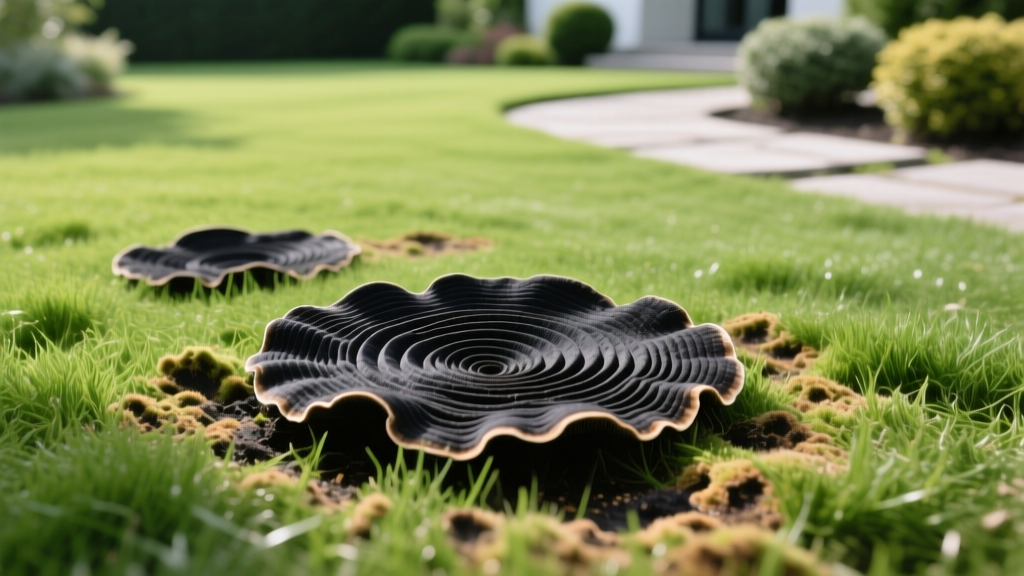
Black Lawn Fungus Identification Pictures: Visual Diagnosis & Fixes
When homeowners search for black lawn fungus identification pictures, they are usually confronted with alarming images of necrotic, soot-covered, or deeply blackened turf. Unlike standard brown patch disease, which presents as tan or light brown rings, black or deep purple lesions indicate specific pathogenic activity, advanced crown rot, or saprophytic organisms feeding on decaying organic matter. Accurately matching your lawn's symptoms to visual references is the critical first step before applying any chemical treatments.
Applying the wrong fungicide not only wastes money—premium turf chemicals cost between $80 and $150 per bottle—but can also exacerbate the problem by stressing the grass further. Below is a comprehensive diagnostic guide and rescue protocol based on the most common dark and black turf diseases.
The Visual Diagnostic Matrix: Matching Your Lawn to Fungus Pictures
Use this comparison matrix to cross-reference the black lawn fungus identification pictures you find online with the physical symptoms in your yard. Pay close attention to the exact location of the dark pigmentation (blade, root, or soil surface).
| Pathogen / Organism | Visual Cue in Pictures | Primary Grass Types Affected | Environmental Trigger |
|---|---|---|---|
| Slime Mold (Mucilago crustacea) | Black, soot-like powder or crusty dark patches resting on top of grass blades. | All turfgrasses (opportunistic) | Heavy thatch, prolonged morning dew, high humidity. |
| Leaf Spot / Melting Out (Bipolaris sorokiniana) | Dark purple to black oval lesions with tan centers on individual leaf blades. | Kentucky Bluegrass, Fescue, Bermudagrass | Cool, wet spring weather followed by sudden heat. |
| Take-All Root Rot (Gaeumannomyces graminis) | Blackened, necrotic stolons and roots; turf pulls up easily revealing dark rot. | St. Augustine, Bermudagrass, Zoysia | High soil pH (>6.5), heavy clay soils, spring/fall moisture. |
| Gray Snow Mold (Typhula incarnata) | Matted, dark grayish-black grass with tiny hard, reddish-black sclerotia (specks). | Cool-season grasses (Fescue, Rye, Bluegrass) | Prolonged snow cover on unfrozen ground, late fall nitrogen. |
Decoding the Pictures: 3 Common Black Lawn Fungi
1. Slime Mold: The "Black Vomit" or Soot
Despite its alarming appearance in black lawn fungus identification pictures, slime mold is not a true fungus; it is a myxomycete. It does not infect the grass tissue but rather uses the blades as a scaffold to fruit and release spores. According to NC State Extension TurfFiles, slime mold feeds on bacteria and organic matter in the thatch layer. While it looks like black soot or dog vomit, it causes no structural damage to the turf.
2. Leaf Spot and the "Melting Out" Phase
Early leaf spot presents as small dark purple or black flecks. However, when the disease progresses to the "melting out" phase, the fungus invades the crown and roots, causing the entire plant to turn dark brown to black and collapse. The visual hallmark in identification pictures is the distinct dark border around a lighter, necrotic center on the leaf blade. Research from NC State confirms that melting out is most severe when turf is stressed by low mowing heights and excessive nitrogen.
3. Take-All Root Rot (TARR)
TARR is a devastating soil-borne disease. Pictures of TARR rarely show black leaves; instead, they show blackened, rotting roots and stolons. The above-ground symptom is a yellowing, thinning canopy that eventually turns dark and dies in irregular patches up to 20 feet in diameter. The defining diagnostic test is the "pull test": if the grass pulls up effortlessly and the roots are short, black, and brittle, you are dealing with TARR.
Rescue Fixes: Step-by-Step Treatment Protocols
⚠️ Triage Warning: Never apply a contact fungicide to a systemic root disease like Take-All Root Rot, and never apply a systemic fungicide to a surface-dwelling organism like Slime Mold. Match the chemical mode of action to the pathogen's location.
Protocol A: Slime Mold Eradication (Mechanical)
Do not spend money on fungicides for slime mold. The rescue fix is entirely mechanical.
- Step 1: Wait for the morning dew to dry. Wet slime mold will smear and stain the blades.
- Step 2: Mow the lawn, dropping the bagger attachment to collect the spore masses.
- Step 3: Use a strong jet of water from a garden hose to blast remaining black crusts off the blades and into the soil.
- Step 4: Core aerate the lawn in the fall to reduce the thatch layer where the organism breeds.
Protocol B: Leaf Spot & Melting Out (Chemical Rescue)
If your grass matches the dark lesion pictures of Leaf Spot, you need a systemic DMI (Demethylation Inhibitor) fungicide to stop the crown infection.
- Active Ingredient: Propiconazole 14.3% (e.g., Banner MAXX II or Bonide Infuse).
- Application Rate: 1.0 to 2.0 fluid ounces per 1,000 square feet.
- Carrier Volume: Mix with 1.5 to 2.0 gallons of water per 1,000 sq ft to ensure deep penetration into the thatch and crown.
- Cost: Approximately $90 for a 32 oz bottle of Banner MAXX II, which treats up to 16,000 sq ft at the curative rate.
- Timing: Apply at the first sign of dark purple spots. Repeat in 21 days if the melting out phase has already begun.
Protocol C: Take-All Root Rot (Soil-Directed Fungicide)
TARR requires a fungicide that moves downward into the root zone, paired with soil acidification.
- Active Ingredient: Azoxystrobin 23% (e.g., Syngenta Heritage SC) or Thiophanate-methyl (e.g., Cleary's 3336).
- Application Rate: Heritage SC at 0.4 fl oz per 1,000 sq ft.
- Crucial Step: You must water the fungicide in immediately with 0.25 inches of irrigation to push it past the thatch and into the top 2 inches of soil where the Gaeumannomyces pathogen lives.
- Soil Amendment: Apply peat moss or elemental sulfur to lower soil pH to 5.5 - 6.0. TARR thrives in alkaline soils, and fungicides will fail if the pH remains above 6.5.
Preventative Maintenance: Stopping Dark Fungi from Returning
Chemical rescue fixes are temporary if the underlying cultural flaws remain. Implement these exact metrics to prevent recurrence:
✓ The 3-Point Prevention Checklist:
- Nitrogen Caps: Never apply more than 1.0 lb of actual nitrogen per 1,000 sq ft in a single application during spring or fall. Excessive soluble nitrogen creates soft, succulent tissue that dark fungi easily penetrate.
- Irrigation Timing: Water strictly between 4:00 AM and 6:00 AM. Watering in the evening leaves the canopy wet for 12+ hours, triggering spore germination for Leaf Spot and Snow Mold.
- Mowing Height: Raise your mower deck by 0.5 inches during periods of high humidity. Scalping the turf exposes the dark, moist thatch layer to fungal spores and stresses the root system.
Frequently Asked Questions
Can black fungus spread to my pets or children?
No. The pathogens that cause black lawn fungus, including slime molds and Bipolaris, are strictly plant pathogens. They do not infect humans or animals. However, if you are applying chemical fungicides like Propiconazole, keep pets and children off the lawn until the liquid application has completely dried (usually 2 to 4 hours).
Why does my grass look black after I applied a weed killer?
If the blackening occurred 3 to 7 days after applying a herbicide (especially those containing 2,4-D or dicamba), you are likely looking at herbicide phytotoxicity, not a fungus. The grass tissue is necrotic and dying from chemical burn. Stop all chemical applications, increase irrigation to help flush the soil, and apply a liquid kelp extract (like SeaKreme) to help the grass metabolize the stress.
Are the black specks in my snow mold pictures dangerous?
The tiny, hard black specks (sclerotia) seen in Gray Snow Mold pictures are the survival structures of the Typhula fungus. They are not dangerous to humans, but they act as "seeds" that will survive the summer and reinfect your lawn the following winter. Raking the affected areas vigorously in early spring breaks up the sclerotia and speeds up canopy drying.

