
Pest Control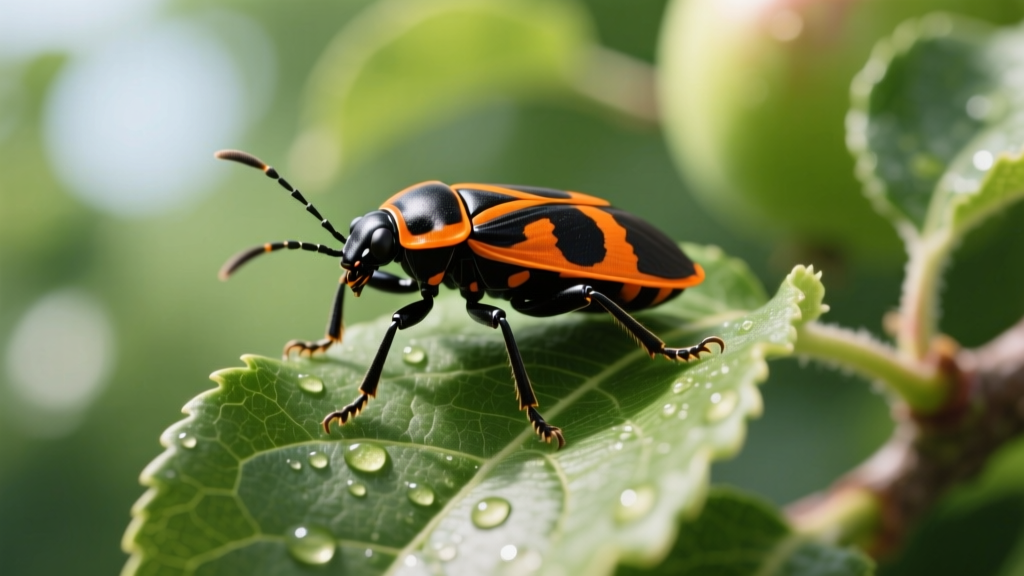
Black and Orange Bug on Apple Tree: ID & Pest Control Guide
The Usual Suspects: Identifying Your Black and Orange Bug
Spotting a vividly colored black and orange bug on your apple tree demands immediate identification before you reach for a spray bottle. Not all contrasting insects are destructive; some are vital predators, while others are mere nuisance visitors. Misidentification leads to unnecessary chemical applications that harm pollinators and disrupt your orchard's ecosystem. To mount an effective defense, you must first determine exactly which species has colonized your Malus domestica.
Homeowners typically encounter one of four distinct insects matching this color profile on fruit trees. The table below breaks down their visual markers, behaviors, and actual threat levels to your apple crop.
| Species | Visual Profile | Primary Diet & Behavior | Threat to Apples |
|---|---|---|---|
| Harlequin Bug (Murgantia histrionica) | Flat, shield-shaped. Brilliant orange/red and black geometric patterns. 3/8 inch long. | Piercing-sucking mouthparts. Feeds on plant sap, preferring brassicas but attacks fruit trees. | High. Causes cloudy spots on fruit, shoot wilting, and leaf necrosis. |
| Boxelder Bug (Boisea trivittata) | Elongated, oval. Black with distinct orange/red lines along the edges and thorax. 1/2 inch long. | Seed eater. Congregates on warm bark or fallen, fermenting fruit in late summer. | Low. Nuisance pest. Rarely damages living foliage or developing fruit. |
| Milkweed Bug (Oncopeltus fasciatus) | Oval, bright orange with three distinct black bands across the wings and a black head. | Seed predator. Primarily feeds on milkweed but wanders into orchards during peak summer. | None. Does not possess the mouthparts to damage apple tissue. |
| Convergent Lady Beetle (Hippodamia convergens) | Dome-shaped, oval. Orange/red with black spots (variable) and white markings behind the head. | Predator. Actively hunts soft-bodied insects like aphids and mites on apple foliage. | Beneficial. Crucial for natural aphid control. Never spray. |
Deep Dive: The Harlequin Bug Threat
If your black and orange bug on the apple tree is flat, shield-shaped, and actively piercing the leaves or developing fruit, you are dealing with the Harlequin Bug. While they prefer the mustard family (Brassicaceae)—such as cabbage, kale, and wild mustard—they are opportunistic and will heavily infest apple trees, especially if brassica weeds are present nearby or during late-summer population peaks.
Damage Signatures and Lifecycle
Harlequin bugs use piercing-sucking mouthparts to inject enzymes into plant tissue, liquefying the cells before consuming them. On apple leaves, this manifests as white or yellow stippling that eventually turns into necrotic, brittle patches. On the fruit itself, their feeding creates hard, cloudy, depressed spots just beneath the skin, rendering the apples unmarketable and prone to secondary fungal infections like white rot.
According to Penn State Extension, Harlequin bugs overwinter as adults in leaf litter and emerge in early spring. Females lay distinctive, barrel-shaped eggs in clusters of 12, arranged in two neat rows on the underside of leaves. These eggs are white with black "hoops" around the top, making them easy to spot during routine scouting.
The Boxelder Bug: Nuisance vs. Damage
If the insect is elongated with orange trim and is simply resting on the trunk or congregating around fallen, bruised apples on the ground, it is likely a Boxelder Bug. As noted by the University of Minnesota Extension, these bugs are primarily seed feeders that seek out warm surfaces as autumn approaches. They do not possess the robust mouthparts required to pierce healthy apple skin or tough leaf cuticles. If you identify Boxelder bugs, your defense strategy should focus on sanitation (removing fallen fruit) rather than chemical eradication.
Step-by-Step Eradication & Defense Strategy
Once you have confirmed the presence of Harlequin Bugs, immediate intervention is required to protect your apple yield. Relying solely on broad-spectrum insecticides is a flawed strategy that eliminates beneficial predators, often leading to secondary aphid outbreaks. Follow this integrated pest management (IPM) protocol.
Step 1: Cultural Controls and Trap Cropping
Harlequin bugs are magnetically drawn to wild mustard, shepherd’s purse, and pigweed. Eradicate these weeds within a 50-foot radius of your apple trees using a hoe or targeted post-emergent herbicide. To draw existing populations away from your trees, plant a sacrificial trap crop of mustard greens or cabbage 20 feet away from the orchard. Once the bugs congregate on the trap crop, destroy the plants or treat them with a localized contact spray.
Step 2: Mechanical Removal
For light infestations on dwarf or semi-dwarf apple trees, hand-picking is highly effective. Fill a bucket with one gallon of water and add two tablespoons of liquid dish soap (such as Dawn). The soap breaks the surface tension, ensuring the bugs drown instantly upon contact. Knock the adults and nymphs into the bucket by tapping the branches. Check the undersides of leaves for the barrel-shaped egg clusters and crush them manually.
Step 3: Targeted Organic Sprays
If the population exceeds manual control thresholds (more than 5 bugs per tree in spring), deploy organic sprays targeting the vulnerable nymph stage. Adults have a waxy cuticle that repels many contact sprays.
- Insecticidal Soap: Use a potassium salts of fatty acids formulation (e.g., Safer Brand Insect Killing Soap, ~$12 for 32oz). Mix at a rate of 2.5 fl oz per gallon of water. Apply directly to the nymphs; it must contact the insect to work.
- Neem Oil: A 1% to 2% horticultural neem oil emulsion acts as an antifeedant and growth regulator. Apply in the early morning to prevent phytotoxicity (leaf burn) on apple foliage.
Step 4: Conventional Chemical Intervention
For severe, orchard-wide infestations where fruit loss is imminent, Spinosad is the most effective, pollinator-conscious conventional option. Spinosad (e.g., Monterey Garden Insect Spray, ~$22 for 16oz) is derived from soil bacteria and disrupts the insect's nervous system.
CRITICAL APPLICATION WARNING: Spinosad is highly toxic to bees while wet. You MUST apply Spinosad sprays at dusk or after sunset when foraging bees have returned to their hives. Once the spray dries on the apple foliage (typically within 3 hours), it becomes practically non-toxic to bees while remaining lethal to Harlequin bugs for up to 14 days.
Decision Framework: When to Treat vs. When to Tolerate
Use this rapid assessment guide to determine your next action when spotting a black and orange bug on your apple tree:
- Assess the Shape: Is it dome-shaped and rounded? If yes, it is likely a lady beetle. Action: Tolerate and encourage.
- Assess the Location: Is it flat and shield-shaped, but only found on the trunk or fallen rotting fruit? If yes, it is a Boxelder bug. Action: Rake up fallen fruit; do not spray the tree.
- Assess the Damage: Is it shield-shaped, found on the leaves/new shoots, and leaving white stippling or cloudy fruit spots? If yes, it is a Harlequin bug. Action: Initiate the 4-step eradication protocol immediately.
Frequently Asked Questions
Will Harlequin bugs kill my mature apple tree?
No. While Harlequin bugs cause significant cosmetic and structural damage to the fruit and can defoliate young shoots, they will not kill a mature, established apple tree. The primary concern is yield loss and fruit quality degradation, not tree mortality.
Do predatory stink bugs look like Harlequin bugs?
Yes, the Spined Soldier Bug (Podisus maculiventris) is a beneficial predatory stink bug that can have yellowish-orange markings on its abdomen and legs. However, it lacks the bold, geometric black-and-orange shield pattern of the Harlequin bug and has distinct, sharp spines on its "shoulders." Spined Soldier Bugs eat caterpillars and beetle larvae; do not spray them.
How long does Spinosad remain effective on apple leaves?
Spinosad degrades under UV light. On exposed apple canopy leaves, its residual efficacy lasts about 7 to 10 days. Under dense foliage or during overcast weeks, it can remain active for up to 14 days. Reapply only if new nymph hatches are observed after the residual period expires, adhering to the product label's maximum annual application limits.

