
Pest Control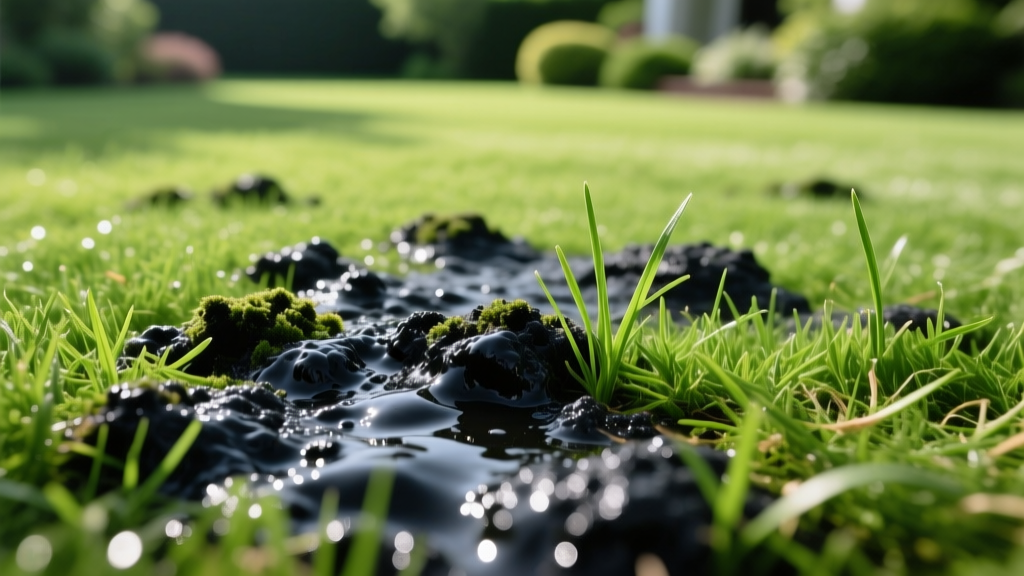
Black Slime Fungus Diagnosis: Rescue Fixes for Lawns & Gardens
The 'Black Slime' Confusion: Protists, Fungi, and Bacteria
When homeowners spot a dark, slimy, or powdery black substance spreading across their turf, mulch, or ornamental plants, the immediate assumption is a fungal infection. However, the colloquial term 'black slime fungus' actually encompasses three entirely different biological organisms: true slime molds (protists), sooty mold (fungi), and Nostoc (cyanobacteria). Misidentifying the culprit leads to wasted money on ineffective chemical treatments. For instance, applying a broad-spectrum fungicide like chlorothalonil (Daconil) to a slime mold is entirely useless because slime molds are not fungi; they are single-celled protists in the phylum Amoebozoa.
Quick Diagnostic Triage:
- Looks like black hair or tiny stalks on mulch/grass? True Slime Mold (Stemonitis spp.)
- Looks like black soot or powder coating leaves/stems? Sooty Mold (Capnodium spp.)
- Looks like black, jelly-like blobs on wet soil? Cyanobacteria (Nostoc commune)
Scenario 1: True Black Slime Mold (Stemonitis spp.)
Symptoms and Lifecycle
True black slime mold, most commonly Stemonitis fusca or Comatricha nigra, appears as clusters of tiny, black, hair-like stalks (sporangia) emerging from damp mulch, thatch, or directly on grass blades. Unlike the infamous 'dog vomit' slime mold (Fuligo septica) which starts bright yellow, Stemonitis is distinctly dark brown to black from the onset of its fruiting stage. It feeds on bacteria and decaying organic matter, not your living grass. According to Penn State Extension, slime molds do not parasitize turfgrass; they merely use the grass blades as scaffolding to release spores.
Rescue Fixes and Eradication
Because slime molds are harmless protists, chemical eradication is unnecessary and ecologically disruptive. The rescue protocol relies entirely on mechanical and cultural disruption:
- Mechanical Removal: Use a stiff-tined leaf rake to gently break up the spore stalks. Do this in the late morning after the dew has dried to prevent spreading spores via water droplets.
- Moisture Deprivation: Slime molds require constant surface moisture to fruit. Adjust your irrigation system to deliver 1 to 1.5 inches of water per week in two deep sessions, rather than daily light sprinklings.
- Thatch Management: If the mold is fruiting in your turf canopy, your thatch layer likely exceeds 0.5 inches. Schedule a dethatching or core aeration service to improve surface drainage.
Warning - Chemical Failure Mode: Do not apply systemic or contact fungicides (e.g., Heritage G, Daconil) to slime mold. These products target chitin in fungal cell walls. Protists lack chitin, rendering these expensive treatments 100% ineffective.
Scenario 2: Sooty Mold (The Insect-Driven Black Fungus)
The Honeydew Connection
If the 'black slime' is actually a powdery, soot-like coating on the leaves of ornamental trees, shrubs, or the grass beneath them, you are dealing with sooty mold. This is a true fungus, but it does not infect plant tissue. Instead, it grows exclusively on 'honeydew'—the sugary, sticky excrement left behind by sap-sucking insects like aphids, scale, and whiteflies. As noted by the University of California IPM, managing sooty mold requires a two-pronged approach: eliminating the insect vector and washing away the fungal growth.
Step-by-Step Eradication Protocol
Treating the black fungus without treating the insects guarantees the mold will return within 14 days. Follow this targeted rescue sequence:
- Step 1: Identify the Vector. Inspect the undersides of leaves and stems. If you see immobile, waxy bumps, you have armored scale. If you see soft, green, or black clustering insects, you have aphids.
- Step 2: Apply Targeted Insecticide.
- For Aphids/Soft Scale: Apply a horticultural oil or Neem oil (e.g., Bonide Neem Oil RTU, approx. $12-$15 per 32oz bottle). Spray at a rate of 2 to 4 tablespoons per gallon of water, ensuring complete coverage of leaf undersides.
- For Armored Scale (Severe): Contact sprays cannot penetrate the waxy shell. Use a systemic insecticide containing Dinotefuran (e.g., Safari 20SG, approx. $130 for 8oz). Apply as a basal trunk spray or soil drench at 4 to 8 oz per 100 gallons of water. This provides 12-month control.
- Step 3: Wash the Canopy. Once the insects are dead (wait 5-7 days post-treatment), use a pressurized garden hose or a pump sprayer filled with a mild insecticidal soap solution to physically blast the black sooty mold off the leaves. This restores photosynthesis immediately.
Diagnostic Comparison Matrix
| Feature | Slime Mold (Stemonitis) | Sooty Mold (Capnodium) | Cyanobacteria (Nostoc) |
|---|---|---|---|
| Appearance | Black/brown hair-like stalks | Black powdery soot on surfaces | Black, gelatinous jelly blobs |
| Organism Type | Protist (Amoebozoa) | Fungus (Ascomycota) | Bacteria (Cyanobacteria) |
| Primary Cause | High surface moisture, decaying organics | Honeydew from sap-sucking insects | Severe soil compaction, poor drainage |
| Chemical Fix | None required (mechanical only) | Systemic insecticides (Dinotefuran) | Copper-based fungicides / Moss control |
Scenario 3: Nostoc Cyanobacteria (Black Jelly Slime)
The Compaction Culprit
If the black substance on your lawn feels slippery, gelatinous, and looks like dark green or black jelly spreading across the soil surface after a rainstorm, you are dealing with Nostoc commune. Often mistakenly called 'star jelly' or 'black algae,' this is actually a colony of nitrogen-fixing cyanobacteria. It thrives in heavily compacted soils where turfgrass roots have suffocated, leaving bare, poorly draining dirt exposed.
Rescue Fixes for Nostoc
Scraping Nostoc off the surface only provides a temporary visual fix; the colony will regenerate from microscopic fragments left in the soil pores. Permanent eradication requires altering the soil physics:
- Deep Core Aeration: Rent a walk-behind core aerator and pull 3-inch deep plugs, spaced no more than 2 to 3 inches apart across the affected zone. This breaks up the anaerobic soil layer that Nostoc favors.
- Topdressing: Apply a 1/4-inch layer of coarse masonry sand or a 70/30 sand-to-compost mix over the aerated area. Drag it into the aeration holes with a mat. This permanently improves localized drainage.
- Chemical Suppression: For immediate knockdown of active colonies, apply a potassium salt of fatty acids (insecticidal/algicidal soap) or a copper-based fungicide labeled for algae control. Alternatively, granular moss control products containing iron sulfate (e.g., Scotts MossEX, approx. $25 for 10 lbs) will desiccate the cyanobacteria colonies within 7 to 10 days.
'Nostoc is a symptom of dead soil, not the cause of it. If you do not relieve the soil compaction and restore turfgrass density, the cyanobacteria will recolonize the bare dirt every time it rains.' — Turfgrass Pathology Field Notes
Preventative Soil and Moisture Management
All three organisms share a common environmental trigger: prolonged surface moisture and poor air circulation. To prevent recurrence of black slime mold, sooty mold, or cyanobacteria, implement these baseline cultural practices:
- Irrigation Timing: Run sprinklers exclusively between 4:00 AM and 6:00 AM. Watering in the evening leaves the canopy wet for 12+ hours, creating an ideal incubation environment for fungal and protist fruiting bodies.
- Canopy Pruning: Thin out the lower branches of ornamental trees and shrubs to a height of 3 feet. This increases UV penetration and airflow at the soil line, naturally suppressing slime molds and desiccating sooty mold vectors.
- Nitrogen Management: Avoid high-nitrogen, fast-release synthetic fertilizers (like urea) during peak summer humidity. Excess nitrogen promotes soft, succulent turf growth that is highly susceptible to the aphids and scale insects that cause sooty mold.

