
Pest Control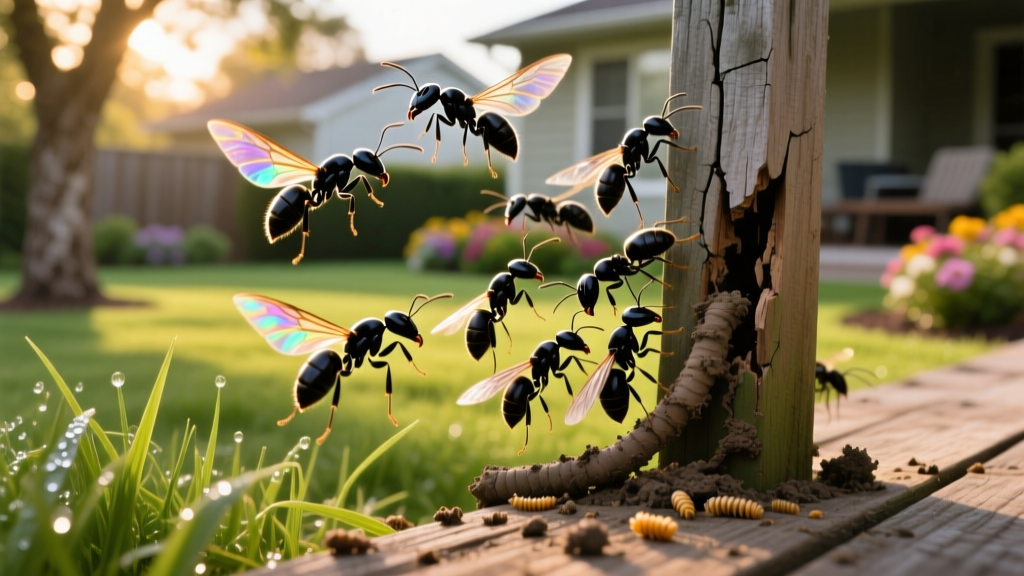
Black Termites With Wings: ID, Risks, and Yard Defense
The Alarm Bells: What Are Black Termites With Wings?
Spotting black termites with wings in your yard is an immediate red flag for structural vulnerability. These winged insects, scientifically known as alates or swarmers, are the reproductive caste of a mature termite colony. While most subterranean termite swarmers are pale or translucent, certain species—particularly the Formosan subterranean termite (Coptotermes formosanus) and specific drywood termites—feature dark brown to nearly black bodies. Furthermore, homeowners frequently misidentify black winged carpenter ants as termites, a mistake that can lead to entirely ineffective treatment protocols.
According to the Environmental Protection Agency (EPA), termites cause over $5 billion in property damage annually in the United States. When you see winged swarmers in your yard, it indicates that a subterranean colony has been established for at least three to five years and is now expanding. The swarmers themselves do not eat wood; their sole purpose is to mate and establish new satellite colonies. However, their presence confirms that a massive, wood-consuming worker caste is actively foraging beneath your soil.
Termite Swarmers vs. Winged Ants: The Crucial ID Matrix
Before deploying expensive termiticides, you must confirm the pest's identity. Black winged carpenter ants and dark termite swarmers behave similarly during spring nuptial flights, but their anatomical differences dictate entirely different eradication strategies. Use the matrix below to accurately identify the invader.
| Anatomical Feature | Black Termite Swarmers (Alates) | Black Carpenter Ants (Alates) |
|---|---|---|
| Waist | Broad, thick waist (no constriction between thorax and abdomen) | Narrow, pinched waist (distinct hourglass constriction) |
| Antennae | Straight, bead-like (moniliform) | Elbowed (bent at a 90-degree angle) |
| Wings | Two pairs of equal-length wings, milky/translucent, extending far past the body | Two pairs of unequal length (front wings longer than hind wings), smoky/dark tint |
| Swarm Behavior | Poor flyers, often lose wings shortly after landing, attracted to light | Stronger flyers, retain wings longer, often found near rotting wood |
Environmental Triggers: Why They Target Your Yard
Termites do not invade randomly; they follow strict environmental gradients. Penn State Extension notes that subterranean termites require constant contact with soil moisture to prevent desiccation. Your yard becomes a target when it provides an uninterrupted bridge between soil moisture and cellulose.
⚠️ The 24-Hour Swarm Rule
Termite swarms typically last less than 30 minutes. If you find piles of discarded, translucent wings on your patio, windowsills, or lawn, the swarm has already concluded. Do not wait to see live insects; the discarded wings are definitive proof of an active, mature colony on your property.
Primary Yard Vulnerabilities
- Mulch-to-Siding Contact: Wood mulch piled against vinyl or brick siding retains moisture and hides termite mud tubes. Maintain a strict 6-inch gap between mulch and your foundation.
- Fence Post Bases: Wooden fence posts set directly in concrete or soil act as primary foraging highways. Termites will travel up the post and bridge over to your home's eaves.
- Grading and Drainage: Negative grading that pools water against the foundation creates the high-moisture soil environment that black termite colonies require to thrive.
Tactical Yard Defense: Step-by-Step Eradication Protocols
Eliminating a mature subterranean colony requires breaking their foraging paths and introducing a slow-acting, non-repellent active ingredient. Repellent chemicals (like Bifenthrin) will only cause the colony to split and find a new entry point. You must use a non-repellent transfer toxicant.
Phase 1: Perimeter Trenching and Liquid Barrier
The industry standard for DIY and professional liquid defense is Fipronil (9.1% concentration), commonly sold under the brand name Taurus SC or Termidor HE.
- Dig the Trench: Using a trenching shovel, dig a continuous trench 6 inches wide and 6 inches deep around the entire perimeter of your home's foundation.
- Mix the Solution: Mix 0.8 fluid ounces of Taurus SC per gallon of water. You will need 4 gallons of finished solution for every 10 linear feet of trench.
- Apply and Backfill: Pour the solution evenly into the trench. Immediately backfill the trench with the excavated soil, treating the backfill soil at a rate of 1 gallon per 5 cubic feet to ensure a continuous chemical envelope.
- Drill and Treat Slabs: Where concrete patios or driveways abut the foundation, use a hammer drill with a 1/2-inch masonry bit to drill holes 6 inches deep, spaced 12 inches apart. Inject 0.5 gallons of solution into each hole and plug with concrete.
Phase 2: Bait Station Deployment (For Highly Sensitive Landscapes)
If trenching is impossible due to complex hardscaping or sensitive garden beds, deploy in-ground bait stations containing Noviflumuron (e.g., Sentricon Always Active). Install stations every 10 feet around the perimeter. Unlike liquid barriers, bait stations rely on worker termites finding the station, consuming the chitin synthesis inhibitor, and transferring it back to the queen. This process takes 60 to 90 days to achieve total colony collapse.
Cost Analysis: DIY Liquid Barrier vs. Professional Baiting
Budgeting for termite defense requires understanding the long-term ROI of different methodologies. Below is a cost breakdown for a standard 2,500 sq. ft. home with a 200-linear-foot perimeter.
| Treatment Method | Upfront Cost | Annual Maintenance | Time to Colony Elimination |
|---|---|---|---|
| DIY Fipronil Trenching | $150 - $250 (Materials) | $0 (Lasts 10 years in soil) | 30 - 90 Days (Transfer effect) |
| Pro Liquid Barrier | $1,200 - $1,800 | $150 - $250 (Annual warranty) | 30 - 90 Days |
| DIY Bait Stations | $400 - $600 (Hardware + Bait) | $200 - $300 (Bait replacement) | 90 - 180 Days |
| Pro Bait Network | $800 - $1,200 | $300 - $450 (Monitoring fee) | 90 - 180 Days |
Expert Insights & Common Application Pitfalls
According to North Carolina State Extension, the most common reason DIY termite treatments fail is incomplete perimeter coverage. Termites can exploit a gap as small as 1/32 of an inch. If you miss a 2-foot section behind an AC condenser unit, the colony will simply route their mud tubes through that untreated gap.
"Homeowners often treat the visible mud tubes on the surface without addressing the soil beneath. Subterranean termites travel through the soil matrix, not just on the surface. A surface spray of over-the-counter pyrethroids is entirely useless against a colony foraging 18 inches below grade. You must create a continuous, treated soil envelope."
Post-Treatment Yard Maintenance
Once your chemical or bait barrier is established, alter your landscaping practices to prevent re-infestation:
- Remove Cellulose Debris: Clear all buried stumps, form boards, and railroad ties from the yard. These act as secondary food sources that will draw new foragers to your property.
- Irrigation Audits: Fix leaking sprinkler heads immediately. Chronically wet soil near the foundation degrades Fipronil barriers faster and creates ideal termite nurseries.
- Wood Storage: Never stack firewood directly on the soil against your home. Store it on elevated metal racks at least 20 feet away from the foundation.
Frequently Asked Questions
Do black termites with wings bite humans or pets?
No. Termite swarmers lack the mandible strength to bite humans or pets, and they do not possess stingers. They are entirely harmless to biological life; their threat is strictly structural.
Will exterior bug zappers kill the swarmers?
While UV bug zappers will kill some alates, they are not a viable defense strategy. Swarmers emerge in the thousands, and a zapper will only catch a fraction of them. Furthermore, the zapper does nothing to address the worker termites actively consuming your home's framing beneath the soil.
How long do the swarmers live after they fly?
Most swarmers die within 24 hours due to desiccation, predation by birds, or failure to find a mate and suitable soil. Finding dead, wingless black insects on your lawn the morning after a swarm is a classic indicator of a recent nuptial flight.

