
Pest Control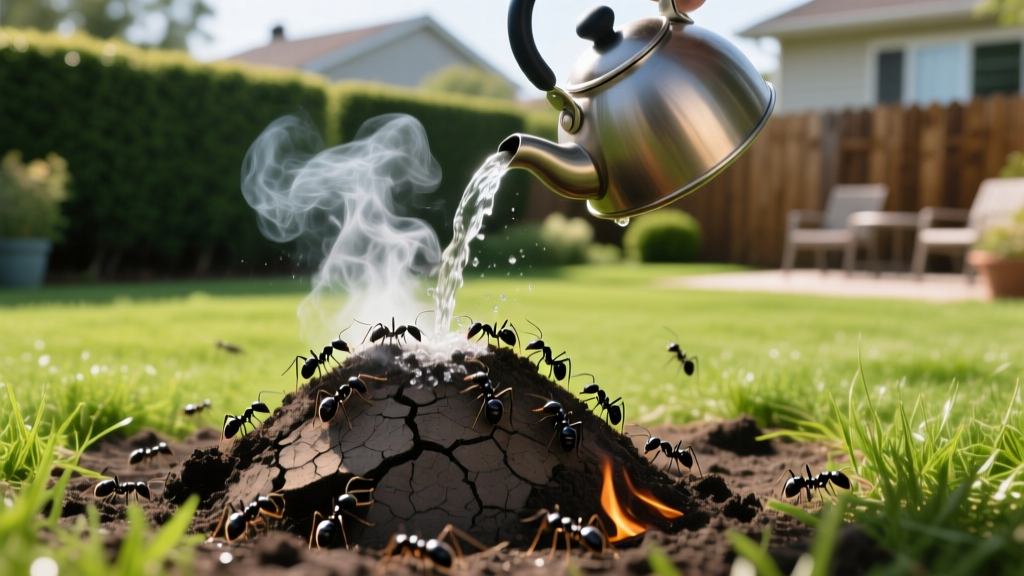
How to Use Boiling Water for Fire Ants: An Organic Control Guide
The Thermodynamics of Thermal Ant Control
Using boiling water for fire ants is one of the oldest organic pest control methods, relying on rapid thermal shock rather than chemical toxicity. The red imported fire ant (Solenopsis invicta) is a poikilothermic organism, meaning its internal body temperature matches its environment. Insect proteins begin to denature and cellular structures collapse at temperatures exceeding 115°F (46°C). By introducing water at 212°F (100°C), you create a lethal thermal envelope that cooks the colony from the inside out.
However, soil is a highly effective insulator. According to research from the Texas A&M Fire Ant Project, the temperature of boiling water drops exponentially as it penetrates the soil matrix. To achieve a 60% to 70% colony elimination rate, the application must deliver sufficient thermal mass to reach the queen's chamber before the water cools below the lethal 115°F threshold.
⚠️ Severe Burn Hazard Warning
Carrying 3 gallons of boiling water weighs over 25 pounds and presents a massive scalding risk. Never use open-top buckets. Always use a specialized thermal-safe watering can with a long spout or a tightly sealed, heat-rated pump sprayer designed for hot liquids. Wear closed-toe leather boots, heavy denim, and thick leather work gloves.
Step-by-Step Mound Drench Protocol
Success with boiling water relies entirely on execution. A haphazard pour will only kill surface foragers and agitate the colony, causing them to relocate the queen deeper underground or bud into satellite mounds.
1. Timing the Application
The colony's vertical position within the mound changes based on ambient temperature and moisture. Apply boiling water when ambient air temperatures are between 70°F and 85°F. During this window, the queen and the majority of the brood are typically clustered in the upper 12 inches of the mound. If you treat during mid-day heat (above 90°F), the ants will have retreated to deep subterranean galleries where boiling water cannot reach them.
2. Volume and Heating
You need a minimum of 2 to 3 gallons of water per standard-sized mound (roughly 18 inches in diameter). For larger, established mounds exceeding 24 inches, increase the volume to 4 gallons. Heat the water using an outdoor propane burner (like a turkey fryer) to maintain a rolling boil right up until the moment of application.
3. The Penetration Pour
Do not dump the water all at once. A flash flood will cause the water to run off the hydrophobic outer crust of the mound. Instead, pour slowly at a rate of roughly 1 gallon per minute. Start at the exact center of the mound, allowing the water to melt the crust and create a vertical channel, then slowly spiral outward to the base. This ensures the thermal mass penetrates the core rather than washing over the sides.
Efficacy Matrix: Boiling Water vs. Alternative Organic Treatments
While boiling water is free and chemical-free, it is not always the most efficient organic option. The University of Florida IFAS Extension notes that organic management often requires a multi-pronged approach. Below is a comparison of boiling water against other leading organic fire ant controls.
| Treatment Method | Mound Kill Rate | Time to Kill | Cost Per Mound | Turfgrass Impact |
|---|---|---|---|---|
| Boiling Water | 60% - 70% | Immediate | $0.05 (Propane) | Severe (Cooks roots) |
| Spinosad Bait | 85% - 95% | 2 - 4 Weeks | $0.50 - $1.00 | None |
| D-Limonene (Orange Oil) | 70% - 80% | 1 - 3 Days | $2.50 - $4.00 | Moderate (Can burn grass) |
| Diatomaceous Earth | < 20% (Mound) | Variable | $0.25 | None |
Why Treatments Fail: Edge Cases and Soil Variables
If you have applied boiling water and the mound reactivates within 48 hours, one of the following variables compromised the thermal transfer:
- High Clay Content Soil: Heavy clay soils compact tightly and become hydrophobic when dry. The boiling water pools on the surface and runs off the edges rather than penetrating the core. Fix: Pre-wet the mound with a light spray of room-temperature soapy water 10 minutes before the boiling drench to break the surface tension.
- Satellite Budding: Agitating the mound with a slow or insufficient pour causes the queen to flee through deep lateral tunnels. You may kill 10,000 workers, but the surviving queen will simply emerge 4 feet away three days later.
- Oversized Mounds: Mounds exceeding 30 inches in diameter contain deep subterranean galleries that extend below the 14-inch thermal penetration zone of 3 gallons of water. These require chemical baits or mechanical destruction combined with organic drenches.
Turfgrass Impact and Soil Recovery
The most significant drawback of using boiling water for fire ants is the collateral damage to your lawn. Water at 212°F will instantly kill the crown and root systems of warm-season turfgrasses like Bermudagrass, Zoysia, and St. Augustine. Expect a dead, brown patch roughly 18 to 24 inches in diameter over the treated mound.
Mitigating Lawn Damage
Once the soil has cooled completely (wait at least 4 hours), the thermal shock will have also sterilized the top layer of soil, killing beneficial nematodes and earthworms. To accelerate recovery:
- Core aerate the dead patch to break up any baked, hardened clay.
- Apply a half-inch top dressing of high-quality compost to reintroduce soil microbes.
- Overseed with a compatible grass variety or lay a fresh piece of sod cut to the exact diameter of the dead zone.
Pro-Tip: The Two-Step Organic Follow-Up
Because boiling water only achieves a 70% success rate, inspect the treated mound 5 days later. If you see fresh soil excavation or active foragers, do not boil the mound again. Instead, apply an organic Spinosad-based bait (such as Ferti-lome Come and Get It) around the perimeter of the damaged turf. The surviving ants will carry the bait down to the remaining brood, eliminating the colony without further damaging your grass.
Expert FAQs on Thermal Ant Control
Can I add dish soap or vinegar to the boiling water?
Adding 2 tablespoons of liquid dish soap to the boiling water acts as a surfactant, breaking the water's surface tension and allowing it to penetrate the soil matrix faster. This increases the kill rate by roughly 10%. However, avoid adding white vinegar; while acidic, it does not increase thermal transfer and can unnecessarily alter the soil pH, hindering future grass recovery.
Does boiling water leave toxic residue in the garden?
No. Unlike synthetic pyrethroids or broad-spectrum insecticides, boiling water leaves zero chemical residue. Once the soil cools and the moisture evaporates, the area is entirely safe for pets, children, and edible garden plants, making it an ideal treatment for fire ant mounds that appear near vegetable raised beds.

