
Pest Control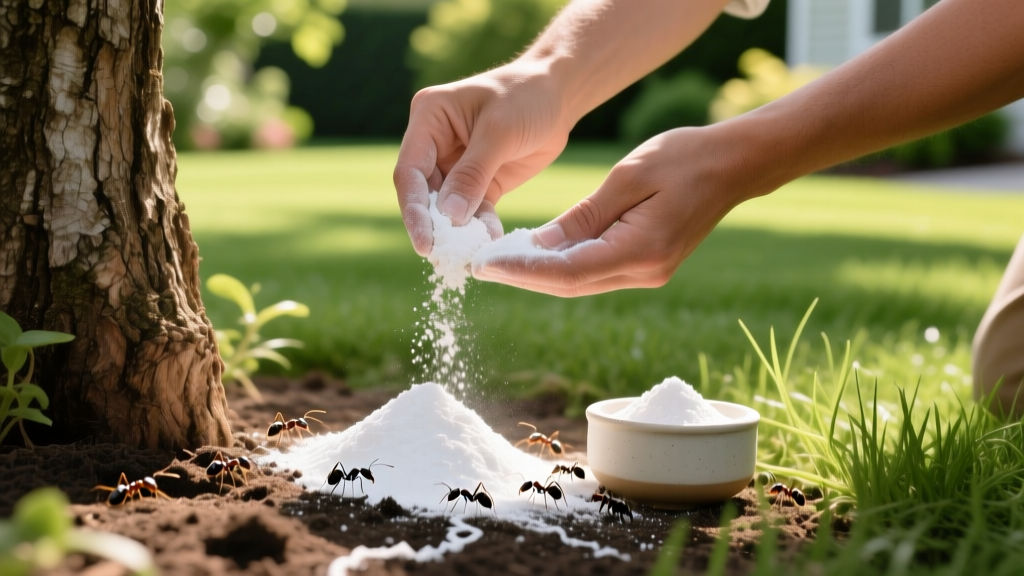
How to Get Rid of Ants Naturally Using Borax and Diatomaceous Earth
Eliminating an ant infestation without synthetic neurotoxins requires an understanding of colony biology, precise bait formulations, and physical barrier management. When homeowners ask how to get rid of ants naturally, the most effective approach combines slow-acting metabolic disruptors (borax) with mechanical desiccants (diatomaceous earth) and habitat modification. This guide details the exact measurements, application techniques, and failure modes of organic ant control strategies verified by integrated pest management (IPM) standards.
The 10% Forager Rule: Why Contact Sprays Fail
The most common mistake in natural pest control is attempting to eradicate a colony by killing the ants you see. According to the University of California Statewide Integrated Pest Management Program, the ants foraging in your kitchen or across your patio represent only 5% to 10% of the total colony. The remaining 90%—including the queens, brood, and workers—remain hidden in the nest.
Spraying foragers with vinegar, boiling water, or pure essential oils only kills the visible 10%. The colony quickly detects the loss of workers, triggers a survival response, and often buds into multiple satellite colonies, making the infestation worse. To achieve total colony collapse organically, you must exploit trophallaxis—the biological process where foragers regurgitate food to share with the nest.
Method 1: The Borax and Sugar Bait Matrix
Borax (sodium tetraborate) is a naturally occurring mineral that interferes with the ant's digestive system and metabolism. Because it acts slowly (taking 24 to 48 hours to kill), foragers have ample time to carry the toxic sugar solution back to the nest and feed it to the queen.
Pro-Tip: The Golden Ratio
The concentration of borax is critical. If the mixture is too strong, it kills the forager before it returns to the nest. If it is too weak, it fails to kill the queen. The optimal concentration for most sweet-eating ants (like odorous house ants and Argentine ants) is a 1% to 2% borax solution by volume.
The concentration of borax is critical. If the mixture is too strong, it kills the forager before it returns to the nest. If it is too weak, it fails to kill the queen. The optimal concentration for most sweet-eating ants (like odorous house ants and Argentine ants) is a 1% to 2% borax solution by volume.
Exact Liquid Bait Recipe
- Heat 1 cup of distilled water until warm (not boiling, to prevent caramelizing the sugar).
- Dissolve 1/2 cup of white granulated sugar into the water.
- Stir in exactly 1.5 tablespoons of 20 Mule Team Borax (or any pure sodium tetraborate powder) until fully dissolved.
- Soak 3 to 4 standard cotton balls in the solution.
- Place the soaked cotton balls inside reusable plastic bait stations or small jar lids with holes punched in the lids to prevent rain dilution and protect non-target wildlife.
Addressing Bait Failure Modes
If ants swarm the bait on day one but ignore it on day two, the borax concentration is likely too high, causing rapid mortality. Dilute the remaining mixture with an additional 1/2 cup of warm water. Conversely, if ants ignore the bait entirely, the colony may be in a protein-feeding cycle (common in early spring and late summer). Switch the carbohydrate base from sugar to creamy peanut butter or bacon grease, maintaining the same 1.5 tablespoon borax ratio per 1/2 cup of lipid base.
Method 2: Diatomaceous Earth (DE) Perimeter Defense
While borax baits eliminate the existing colony, Diatomaceous Earth prevents new scouts from establishing trails. DE consists of fossilized diatoms with microscopic, razor-sharp silica edges. When ants crawl over DE, the particles lacerate their waxy exoskeleton, causing fatal dehydration within 24 to 72 hours.
For pest control, you must use OMRI-listed Food Grade Diatomaceous Earth. Pool-grade DE is chemically treated and highly toxic to mammals. According to Clemson University's Home and Garden Information Center, DE is entirely non-toxic to humans and pets when ingested, but the fine particulate matter can cause respiratory irritation.
Application Specifications
- Equipment: Use a bellows hand duster or a bulb duster. Shaking DE from a cup creates a thick, visible pile that ants will simply walk around.
- Thickness: Apply a barely visible, 1/8-inch thick dusting. Ants must be forced to walk through the dust, not over a mountain of it.
- Placement: Target foundation cracks, weep holes, window sills, and the junction where siding meets the soil.
- The Moisture Caveat: DE loses its mechanical efficacy when wet. It must be applied in dry conditions and reapplied after heavy rainfall or overhead irrigation. Once it dries out, its abrasive properties return.
Botanical Repellents: Essential Oil Barrier Sprays
Essential oils do not eliminate colonies, but they disrupt the pheromone trails ants use to navigate. By erasing these chemical highways, you force foragers to abandon established routes. The efficacy of these oils relies on their specific active compounds.
| Essential Oil | Active Compound | Mechanism of Action | Dilution Rate (per 16 oz water) |
|---|---|---|---|
| Peppermint | Menthol / Menthone | Overloads olfactory receptors, masking pheromone trails | 20 drops + 1 tsp castile soap |
| Sweet Orange | d-Limonene | Dissolves the waxy cuticle of the exoskeleton on direct contact | 30 drops + 1 tsp castile soap |
| Cedarwood | Cedrol / Thujopsene | Blocks octopamine receptors, causing neurological retreat | 25 drops + 1 tsp castile soap |
Note: The castile soap acts as an emulsifier. Essential oils and water do not mix naturally; without soap, the oils will float to the top and clog your sprayer nozzle while delivering uneven application.
Troubleshooting Natural Ant Control Failures
Organic pest control requires observation and adaptation. Use this diagnostic matrix when your initial treatments stall.
Diagnostic Decision Tree
- Symptom: Ants are walking over the Diatomaceous Earth without dying.
Cause: The DE layer is too thick, or the ambient humidity is above 80%.
Fix: Vacuum the old DE, wait for the surface to dry completely, and reapply a micro-thin layer using a bellows duster. - Symptom: Ants are swarming the borax bait but the colony persists after two weeks.
Cause: You are dealing with a species that requires multiple queens or a protein-based diet (e.g., Carpenter ants or Pharaoh ants).
Fix: For Pharaoh ants, switch to a protein bait (borax mixed with wet cat food). For Carpenter ants, locate the satellite nest in moisture-damaged wood and apply DE directly into the gallery voids. - Symptom: Ants are farming aphids on your garden plants, ignoring your baits.
Cause: The ants are harvesting honeydew (a sugary secretion from aphids) and have a superior, natural food source.
Fix: Eradicate the aphids using insecticidal soap (potassium salts of fatty acids). Once the honeydew supply is cut off, the ants will return to your borax sugar baits.
Lawn and Garden Habitat Modification
Natural eradication is temporary if the environment continues to invite colonization. Ants seek three things: moisture, shelter, and food bridges.
- Mulch Management: Keep organic mulch (pine straw, cedar bark) at a maximum depth of 2 to 3 inches, and maintain a 6-inch bare-soil gap between the mulch bed and your home's foundation. Deep, damp mulch is the primary nesting site for pavement and carpenter ants.
- Canopy Bridges: Trim all tree branches and shrubs so they are at least 12 inches away from your roofline and siding. Ants use these branches to bypass your ground-level DE and essential oil barriers.
- Irrigation Audits: Fix leaking drip lines and adjust sprinkler heads that spray directly onto the foundation. Ants will abandon a dry, well-drained foundation for a damp, rotting one.
By combining the metabolic disruption of borax baits, the physical barrier of diatomaceous earth, and rigorous habitat modification, you can achieve long-term ant suppression without introducing synthetic pyrethroids or neonicotinoids into your local ecosystem.

