
Pest Control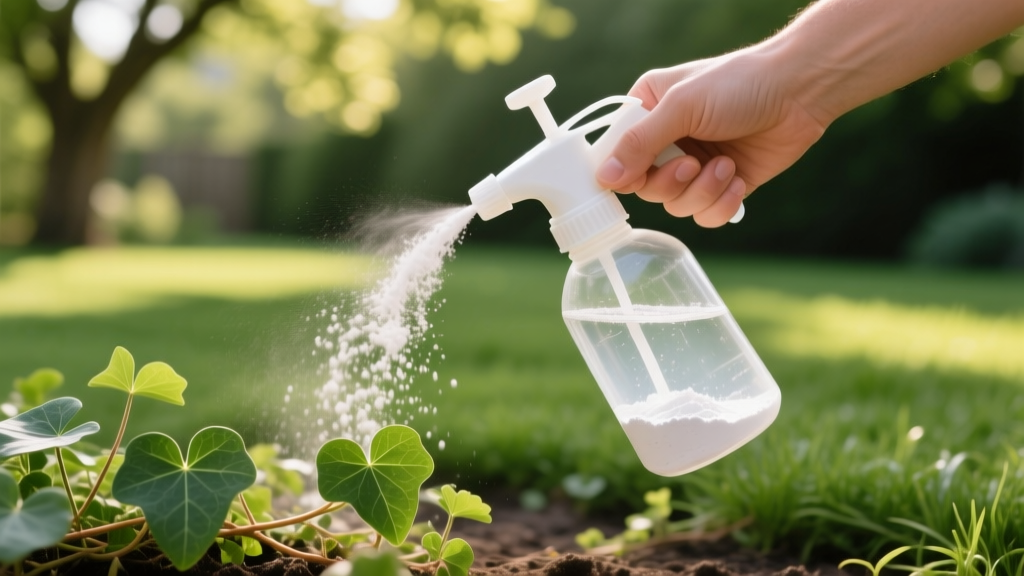
How to Mix and Apply Borax Weed Killer for Creeping Charlie
The Biochemistry of Boron Toxicity in Broadleaf Weeds
Household borax (sodium tetraborate decahydrate) has gained traction as a low-cost, non-synthetic spot treatment for specific lawn weeds. Its efficacy relies on boron, an essential micronutrient that becomes highly toxic to plants when concentrations exceed narrow thresholds. Boron disrupts cell wall formation, inhibits protein synthesis, and interferes with ATP production.
The reason a borax weed killer works selectively in turfgrass lies in plant physiology. Monocots (like Kentucky bluegrass, fescue, and bermudagrass) possess boron-exclusion mechanisms at their root zones and can tolerate higher tissue concentrations. Dicots (broadleaf weeds) lack these robust exclusion mechanisms. When sprayed foliarly, broadleaf weeds rapidly absorb the boron, leading to cellular collapse, necrotic spotting, and eventual root starvation. However, this selectivity has strict limits; over-application will overwhelm the grass's exclusion capacity and sterilize the soil.
Target Species Efficacy Matrix
Borax is not a universal broadleaf herbicide. It is highly effective against specific stoloniferous and rhizomatous weeds, but struggles with deep-taproot species. According to research published by the Iowa State University Extension, borax is specifically recommended for ground ivy control, rather than general lawn spraying.
| Weed Species | Susceptibility | Mechanism of Action | Treatment Notes |
|---|---|---|---|
| Creeping Charlie (Ground Ivy) | High | Foliar absorption disrupts stolon growth points | Primary target. Requires only 1-2 applications spaced 14 days apart. |
| Broadleaf Plantain | Moderate | Cell wall collapse in rosette leaves | Less effective on mature plants with thick cuticles; use surfactant. |
| White Clover | Low to Moderate | Nodule disruption and leaf burn | Often recovers due to extensive root system and nitrogen-fixing resilience. |
| Dandelion | Very Low | Superficial leaf necrosis only | Not recommended. The deep taproot survives foliar boron exposure. |
⚠️ CRITICAL WARNING: Soil Sterilization Risk
Boron does not break down or degrade in the environment; it is an elemental compound. In alkaline soils (pH above 7.0) and heavy clay profiles, boron binds tightly to soil particles and accumulates. Applying a borax weed killer more than once a year, or exceeding the recommended dosage, will result in bare patches where neither grass nor weeds will germinate for up to three years.
The Exact University-Backed Mixing Protocol
While commercial triclopyr and dicamba concentrates have seen price increases in 2026 (often averaging $45 to $65 per bottle), a standard 76-ounce box of 20 Mule Team Borax costs roughly $7 and yields enough solution to treat over 7,000 square feet. Precision in mixing is mandatory to prevent nozzle clogging and turf burn.
The University of Minnesota Extension outlines the following precise ratio for treating 1,000 square feet of turf:
- Measure the Borax: Weigh out exactly 10 ounces (by weight, not volume) of standard household borax. This equates to roughly 1.25 standard measuring cups or 20 level tablespoons.
- Pre-Dissolve in Warm Water: Borax has notoriously low solubility in cold water. Dissolve the 10 ounces of powder into 4 ounces of warm water (approx. 100°F to 110°F) in a separate glass jar. Agitate vigorously until the solution is completely clear and no granular sediment remains.
- Dilute in the Sprayer Tank: Fill a 2.5-gallon garden pump sprayer halfway with cool water. Pour the dissolved borax concentrate into the tank.
- Add a Non-Ionic Surfactant: Broadleaf weeds like creeping Charlie have waxy leaf cuticles. Add 1 teaspoon of a non-ionic surfactant (or a few drops of plain, non-degreasing liquid dish soap) to break the surface tension and ensure foliar adherence.
- Top Off and Agitate: Fill the sprayer to the 2.5-gallon mark with water, seal the lid, and shake thoroughly to ensure a homogeneous mixture.
Application Parameters and Environmental Constraints
Foliar herbicides require specific environmental conditions to translocate effectively from the leaf surface down to the stolon nodes and root system. Applying a borax weed killer outside these parameters will result in superficial leaf burn and rapid weed recovery.
- Temperature Window: Apply only when daytime temperatures are strictly between 65°F and 80°F. Below 60°F, the weed's metabolic rate is too slow to translocate the boron to the roots. Above 85°F, the water carrier evaporates too quickly, leaving concentrated boron crystals on the leaf surface that will burn the surrounding turfgrass.
- Moisture Conditions: The target weeds must be actively growing and well-hydrated. If the lawn is experiencing drought stress, irrigate deeply 24 hours before application. Do not apply if the foliage is currently wet from dew or rain.
- Rainfastness: The solution requires a minimum of 48 hours to fully absorb through the cuticle. Check the forecast to ensure zero precipitation for two full days post-application.
- Nozzle Selection: Use a flat fan nozzle producing medium to coarse droplets. Fine mist nozzles create drift that can settle on desirable ornamental broadleaf plants, causing severe phytotoxicity.
Edge Cases: Soil pH Interaction and Remediation
The long-term behavior of residual boron in your soil is dictated by your soil's pH and cation exchange capacity (CEC). In acidic soils (pH 5.0 - 6.0), boron remains highly soluble and is prone to leaching out of the root zone with heavy rainfall. While this reduces the risk of long-term soil sterilization, it may necessitate a second application 14 days later to achieve complete creeping Charlie control.
Conversely, in alkaline soils (pH 7.5+), boron becomes tightly adsorbed to clay colloids and organic matter. If you accidentally over-apply and sterilize a patch of alkaline soil, remediation is difficult but possible. You must apply calcitic lime or agricultural gypsum (calcium sulfate) at a rate of 50 lbs per 1,000 square feet. The calcium ions will compete with boron for soil binding sites, displacing the boron and allowing it to be slowly leached out through deep, prolonged irrigation over several weeks.
Frequently Asked Questions
Can I mix borax with commercial selective herbicides?
No. Mixing sodium tetraborate with ester-based or amine-based commercial herbicides (like 2,4-D or dicamba) can alter the pH of the tank mix, causing the active ingredients to precipitate out of solution. This will clog your sprayer and render the commercial herbicide ineffective. Apply them as separate treatments spaced at least 14 days apart.
Will borax kill moss in my lawn?
While borax is sometimes touted as a moss killer, it is highly inefficient for this purpose. Moss lacks a true vascular system and root structure, meaning it does not translocate boron effectively. Furthermore, the high application rates required to desiccate moss will almost certainly sterilize the underlying soil, preventing grass seed from germinating in the bare spots left behind. Use iron sulfate (ferrous sulfate) for moss control instead.
How long until I see results on creeping Charlie?
Under optimal temperature conditions (70°F to 75°F), you will observe chlorosis (yellowing) and necrotic brown spotting on the scalloped leaves within 5 to 7 days. Complete stolon collapse and browning typically occur between days 14 and 21. Do not reapply before the 14-day mark, as the initial application needs time to reach the root nodes.

