
Pest Control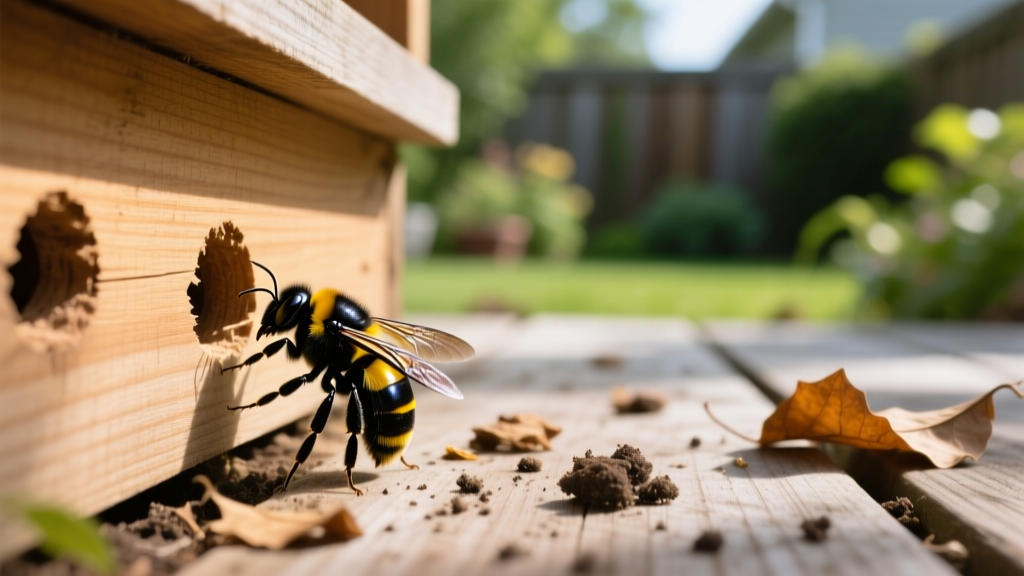
Borer Bees Prevention: Defending Wooden Yard Structures
The Reality of 'Borer Bees' in Your Yard
When homeowners search for borer bees prevention, they are almost exclusively battling Xylocopa species—commonly known as carpenter bees. Unlike termites or wood-boring beetles, carpenter bees do not consume wood for nutrition. Instead, the females use their robust mandibles to excavate perfectly cylindrical galleries inside wooden yard structures to lay their eggs. Over time, this tunneling compromises the structural integrity of pergolas, deck railings, fence posts, and wooden playsets.
Effective yard defense requires understanding that these insects are not merely a nuisance; they are a structural threat that invites secondary damage. The goal of this guide is to provide a comprehensive, scientifically backed framework for identifying, preventing, and eradicating carpenter bee infestations using 2026 industry-standard protocols.
Identifying the Culprit: Carpenter Bees vs. Lookalikes
Before applying any treatment, accurate identification is critical. Misidentifying a ground-nesting miner bee or a beneficial bumblebee can lead to unnecessary pesticide use and ecological harm. According to University of Kentucky Entomology, Eastern carpenter bees (Xylocopa virginica) are the primary wood-boring threat in North America.
| Species | Physical Characteristics | Nesting Behavior | Yard Threat Level |
|---|---|---|---|
| Carpenter Bee (Xylocopa) | Large (1 inch), shiny black abdomen, yellow fuzz on thorax only. | Burrows into untreated softwoods (pine, cedar, cypress). | High (Structural damage) |
| Bumblebee (Bombus) | Similar size, but fuzzy/hairy all over, including the abdomen. | Nests in underground rodent burrows or thick grass clumps. | None (Beneficial pollinator) |
| Wood-Boring Beetle | Varies, often smaller, cylindrical bodies with long antennae. | Larvae tunnel inside wood, leaving D-shaped or oval exit holes. | High (Consumes wood) |
| Miner Bee (Andrena) | Smaller (0.5 inch), solitary, often metallic or heavily haired. | Digs small tunnels in bare soil or sparse lawn patches. | None (Aeration benefit) |
The Anatomy of Yard Damage and Secondary Threats
A female carpenter bee initiates a nest by chewing a perfectly round entry hole exactly 1/2 inch in diameter. She then tunnels inward about an inch before turning 90 degrees to bore a gallery parallel to the wood grain. These galleries typically extend 6 to 10 inches but can reach up to 4 feet in older, reused nests.
⚠️ Warning: The Woodpecker Multiplier Effect
The most severe structural damage often comes from secondary predators. Woodpeckers can hear carpenter bee larvae moving inside the wood. To extract them, woodpeckers will peck massive, jagged holes into your deck fascia or pergola beams, causing exponentially more cosmetic and structural damage than the bees themselves. Treating the bee larvae early prevents this secondary avian destruction.
Proactive Borer Bees Prevention Strategies
Prevention is vastly more cost-effective than eradication. Carpenter bees are highly selective about their nesting sites, heavily favoring untreated, unpainted, and weathered softwoods. Implementing physical and chemical barriers will deter scouting females.
1. Surface Modification and Physical Barriers
- Paint vs. Stain: Paint is significantly more effective than stain. A thick coat of 100% acrylic latex exterior paint creates a physical barrier that carpenter bees rarely attempt to chew through. If you prefer the natural wood look, you must apply a heavy-duty polyurethane or marine-grade varnish over your stain.
- Pressure-Treated Wood: While modern pressure-treated lumber (using micronized copper azole) is more resistant than raw pine, it is not entirely immune. Sealing the cut ends of pressure-treated boards with a copper naphthenate brush-on treatment is mandatory, as the exposed end-grain is highly attractive to scouting bees.
- Hardwood Upgrades: When replacing rotted yard structures, opt for dense hardwoods like Ipe or Mahogany, or composite materials (e.g., Trex). Carpenter bees lack the mandible strength to efficiently bore into high-density tropical hardwoods.
2. Chemical and Botanical Repellents
For existing wood that cannot be painted, residual liquid insecticides act as a powerful deterrent. NC State Extension recommends applying micro-encapsulated formulations that withstand UV degradation and rain wash-off.
- FenvaStar EcoCap (Lambda-cyhalothrin 6.0%): This micro-encapsulated suspension provides up to 90 days of residual control. Apply it to eaves, pergola rafters, and fence rails in early spring (March/April) before the first mating flights.
- Botanical Oils: For organic yard defense, almond oil and citrus-based d-limonene sprays disrupt the bees' olfactory receptors. Spray pure almond oil directly into existing, empty holes to prevent overwintering bees from returning to the same gallery in the spring.
Step-by-Step Eradication for Active Nests
If you find fresh sawdust (frass) beneath a 1/2-inch hole, the nest is active. Do not use liquid sprays for active nests. Liquids only coat the surface and fail to penetrate the deep, right-angled galleries. Instead, use an insecticidal dust.
- Timing is Everything: Treat nests at dusk or after dark. Carpenter bees are diurnal and will be dormant inside the gallery at night, minimizing the risk of stings and ensuring the bee walks directly through the dust.
- Select the Right Dust: Use Delta Dust (Deltamethrin 0.06%) or Drione Dust (Silica gel + Pyrethrins). Delta Dust is uniquely waterproof, making it ideal for outdoor yard structures exposed to humidity and rain.
- Application Technique: Use a hand-held bellows duster (like the JT Eaton Duster). Insert the nozzle into the hole and puff 2-3 times. Do not overfill; the goal is a light coating that the bee will track deep into the nest on its legs and body.
- The 48-Hour Rule: Leave the hole open for 48 hours to allow foraging bees to return and contact the dust. After two days, plug the hole tightly with a wooden dowel coated in wood glue, and seal it with exterior-grade wood putty.
💡 Pro Tip: Steel Wool Plugs
If woodpeckers are actively targeting a specific beam, stuff the hole with coarse copper mesh or steel wool before applying the wood putty. The metal mesh will deter the woodpecker's beak while the putty cures and seals the gallery permanently.
Cost Breakdown: DIY vs. Professional Yard Defense (2026 Pricing)
Managing carpenter bees can be done independently or through professional pest control services. Below is a comparative analysis of the costs associated with both routes for a standard residential yard with a wooden deck and pergola.
| Service / Product | DIY Cost Estimate | Professional Service Cost | Effectiveness & Longevity |
|---|---|---|---|
| Residual Liquid Spray (Prevention) | $35 - $55 (Concentrate) | $150 - $225 (Perimeter visit) | High (60-90 days) |
| Insecticidal Dust (Active Nests) | $20 - $30 (1 lb canister) | $175 - $300 (Targeted treatment) | Very High (Permanent if plugged) |
| Wood Putty & Dowels (Exclusion) | $15 - $25 (Hardware store) | Included in service fee | Permanent physical barrier |
| Paint / Polyurethane (Long-term) | $60 - $120 (Per gallon) | $400+ (Contractor painting) | Multi-year prevention |
Note: Professional services in 2026 average $175 for a specialized bee treatment, which is often more economical than purchasing full-sized commercial concentrates if you only have a few isolated nests.
Frequently Asked Questions
Are carpenter bees aggressive? Will they sting?
Male carpenter bees are highly territorial and will aggressively 'dive-bomb' intruders near their nests, but they lack stingers entirely. Female carpenter bees possess a potent stinger but are extremely docile and will only sting if physically handled or trapped. As noted by Penn State Extension, they are vital pollinators for native flora, so eradication should be limited strictly to structural threats.
Why do they keep returning to the same spot every year?
Carpenter bees exhibit high nest-site fidelity. Offspring often return to the exact same gallery where they were born, expanding the tunnel network year after year. If you fail to plug the hole with a dowel and wood putty after dusting, the next generation will simply clean out the old frass and reuse the infrastructure.
Can I use wasp freeze spray on carpenter bee holes?
Aerosol 'wasp freeze' sprays (typically containing Tetramethrin) are ineffective for carpenter bee galleries. The spray only penetrates the first few inches of the tunnel and quickly evaporates, failing to reach the larvae or the female at the back of the 10-inch gallery. Insecticidal dust is the only reliable chemical method for deep-tunnel eradication.

