
Pest Control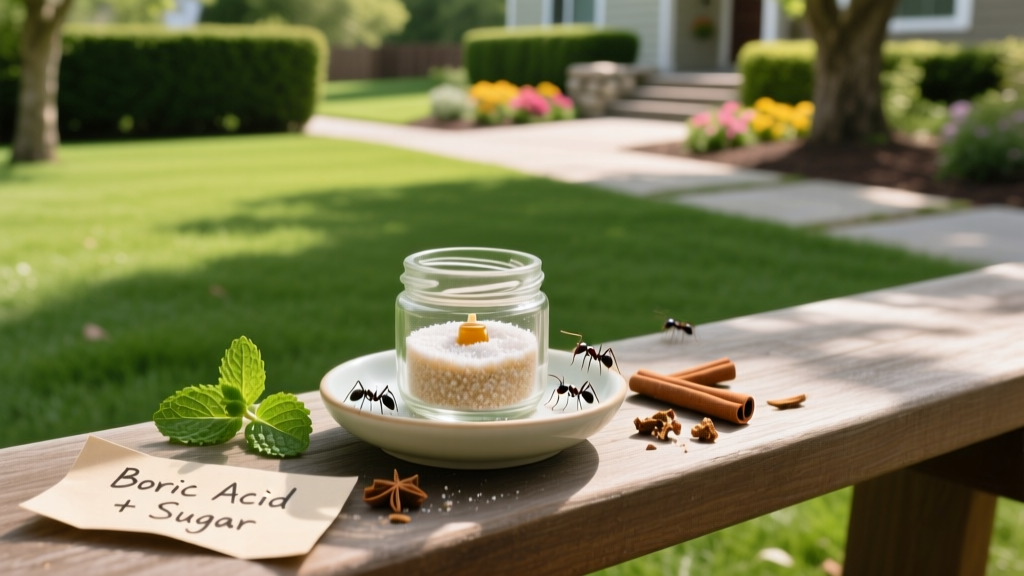
Best Home Remedy for Ants: DIY Boric Acid Bait Recipes That Work
Why Contact Sprays Fail the Organic Test
When a trail of pavement or odorous house ants invades your kitchen, the immediate instinct is to reach for a chemical contact spray. However, from an organic pest management perspective, aerosol sprays and liquid contact killers are fundamentally flawed. These products only eliminate the visible foragers, which typically represent less than 10% of the total colony. The queen, safely hidden deep within the nest, simply accelerates egg production to replace the lost workers.
To achieve true colony collapse without broadcasting synthetic neurotoxins across your lawn or home, you need a slow-acting, transferable toxin. The most reliable, scientifically backed home remedy for ants relies on a specific formulation of boric acid paired with a targeted food attractant. This method exploits the ant's natural food-sharing behavior, known as trophallaxis, to deliver the active ingredient directly to the queen and the brood.
The Science Behind the Best Home Remedy for Ants
Boric acid (H3BO3) is a naturally occurring compound derived from boron. While it has low toxicity for humans and pets when used correctly, it is highly lethal to ants. When ingested, boric acid acts as a stomach poison that disrupts the insect's metabolic processes and damages its exoskeleton from the inside out. Because it acts slowly—taking 24 to 72 hours to kill—the foraging ants have ample time to carry the bait back to the nest and regurgitate it for the larvae and queen.
According to the University of California Statewide Integrated Pest Management Program, baiting is the most effective long-term strategy for ant control, as it targets the reproductive core of the colony rather than just the peripheral foragers.
⚠️ Organic Safety Warning: While boric acid is a staple in organic gardening, it is not entirely harmless. Keep DIY bait stations away from areas accessible to small children and pets. If you have dogs or cats that tend to lick spills, place your baits inside commercial plastic bait stations or behind heavy appliances where pets cannot reach them.
The Golden Ratio: Formulating Your DIY Bait
The most common mistake homeowners make when searching for a home remedy for ants is mixing boric acid and sugar in equal parts. A 50/50 mixture is far too concentrated. It will kill the foraging ant before it can return to the nest, effectively turning your bait into a contact killer and defeating the entire purpose of the strategy. The ideal concentration of boric acid in a liquid bait is between 1% and 5%.
Recipe 1: The Sweet Tooth Liquid Bait
This formulation targets sugar-feeding ants, which are most common in the spring and summer when colonies are seeking carbohydrates to fuel worker activity.
- 1 cup (236 ml) warm water
- 1/4 cup (50g) white granulated sugar
- 1 teaspoon (approx. 4.5g) 99% pure boric acid powder
Instructions: Dissolve the sugar and boric acid completely in the warm water. Allow the mixture to cool to room temperature before deployment. This yields a roughly 1.8% boric acid concentration, perfect for slow-kill trophallaxis.
Recipe 2: The Protein/Grease Paste Bait
In late summer and autumn, many ant species shift their dietary preferences toward proteins and fats to rear the next generation of reproductives. If your ants ignore the sugar water, switch to this paste.
- 2 tablespoons organic creamy peanut butter
- 1/4 teaspoon boric acid powder
Instructions: Thoroughly fold the boric acid into the peanut butter until uniformly distributed. The high fat content masks the bitter taste of the boric acid, increasing acceptance rates among grease-loving species like Thief ants or Pharaoh ants.
Comparison Matrix: Identifying Your Ant's Dietary Preference
Deploying the wrong food matrix is the primary reason DIY baits fail. Use this matrix to determine which home remedy for ants to deploy based on seasonal behavior and species traits.
| Ant Species | Primary Diet | Preferred Bait Type | Peak Foraging Season |
|---|---|---|---|
| Argentine Ants | Sweets / Honeydew | Sugar Water Liquid | Spring & Summer |
| Odorous House Ants | Sweets / Meats | Sugar Water Liquid | Year-round |
| Pharaoh Ants | Proteins / Fats | Peanut Butter Paste | Late Summer & Fall |
| Carpenter Ants | Proteins / Sweets | Both (Dual Deployment) | Spring & Nighttime |
Strategic Deployment: Building Your Bait Grid
Placement is just as critical as the formulation. Do not simply pour the liquid on the floor. Follow these deployment protocols to maximize colony ingestion:
- Use Capillary Wicks: Soak small cotton balls or folded paper towels in the liquid bait. This prevents the liquid from spreading and allows ants to easily drink and carry the moisture back to the nest.
- Deploy in Micro-Stations: Place the soaked cotton balls inside plastic bottle caps, or use reusable commercial plastic bait stations. This protects the bait from rapid evaporation and keeps it away from household foot traffic.
- Map the Trail: Identify the primary entry points and place 3 to 5 bait stations directly along the pheromone trail. Do not disrupt the trail or kill the visible ants; you need them alive to transport the toxin.
- Refresh Every 48 Hours: Liquid baits dry out and lose their palatability. Replace the cotton balls and fresh solution every two days until foraging activity ceases entirely.
Troubleshooting Common Baiting Failures
Even the best home remedy for ants can fail if environmental variables are ignored. Here is how to diagnose and fix common issues:
- The ants swarm the bait but die immediately nearby: Your boric acid concentration is too high. Dilute the mixture with an additional 1/2 cup of water to lower the toxicity and allow foragers to survive the journey home.
- The ants completely ignore the bait: You have misidentified their current dietary preference. Switch from the sugar liquid to the peanut butter paste, or try substituting the sugar with pure organic honey or apple jelly.
- The bait develops mold before the ants eat it: You are using a sugar source with impurities, or the environment is too humid. Add a single drop of organic vegetable glycerin to the liquid mixture; it acts as a natural preservative and moisture-retainer without deterring the ants.
- Activity increases before it decreases: This is normal. The sudden abundance of food will recruit more foragers from the nest. Maintain the bait grid and wait 7 to 14 days for the population to crash.
Supplemental Organic Deterrents for the Perimeter
While boric acid baits eliminate the active colony, you must simultaneously fortify your home's perimeter to prevent satellite colonies from moving in. The EPA recommends integrating multiple low-risk pest control methods to create a robust defense.
Food-Grade Diatomaceous Earth (DE)
Apply a continuous, 2-inch wide band of food-grade Diatomaceous Earth along the exterior foundation of your home, focusing on cracks, weep holes, and utility penetrations. DE is composed of fossilized diatoms that microscopically lacerate the ant's waxy exoskeleton, causing fatal dehydration. Note that DE loses its efficacy when wet; reapply after heavy rainfall or irrigation.
Botanical Pheromone Disruptors
Once the indoor baiting program has eliminated the colony (usually after 3 weeks), erase the residual pheromone trails using a 50/50 solution of distilled white vinegar and water. Add 10 drops of pure peppermint essential oil to the mixture. This organic solvent destroys the chemical markers left by the scouts, blinding new foragers looking to establish a new route into your kitchen.
Colony Elimination Summary Checklist
- Verify ant dietary preference (Sweet vs. Protein) using a test dab.
- Mix bait at a strict 1% to 5% boric acid concentration.
- Deploy 3-5 micro-stations along active trails without killing foragers.
- Refresh liquid wicks every 48 hours to maintain palatability.
- Apply food-grade DE to exterior foundation cracks for perimeter defense.
- Erase indoor trails with vinegar/peppermint solution only AFTER baiting is complete.

