
Pest Control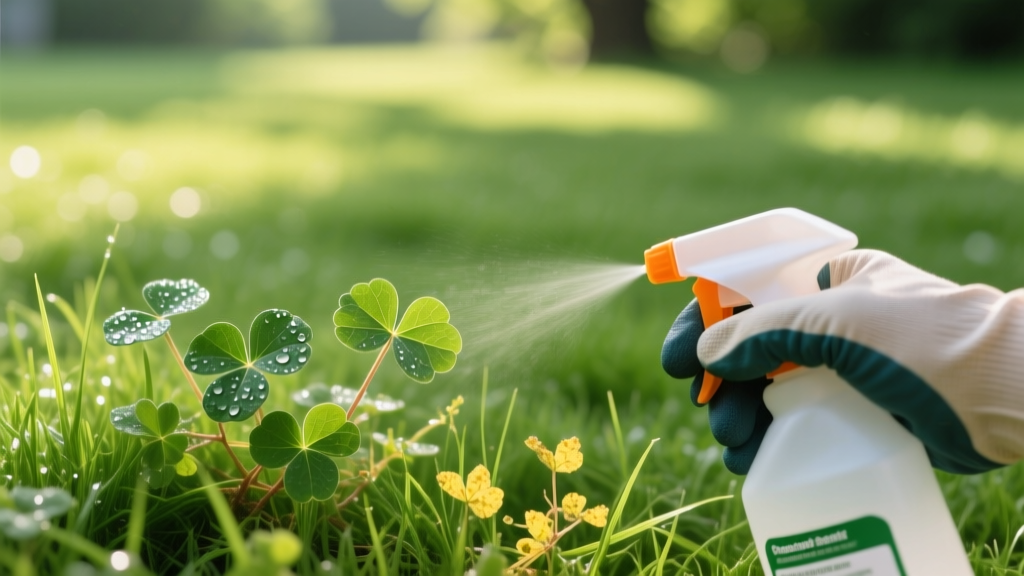
Choosing the Right Broadleaf Herbicide for Creeping Charlie
The Soil Nutrition Link: Why Creeping Charlie Invades
Creeping Charlie (Glechoma hederacea), also known as ground ivy, is a perennial broadleaf weed that aggressively colonizes lawns via creeping stolons. While many homeowners view it strictly as a pest management issue, from a soil nutrition perspective, creeping charlie is a biological indicator of underlying turf stress. It thrives in environments where desirable turfgrass struggles: compacted soils, poorly drained zones, heavily shaded areas, and soils deficient in specific micronutrients.
According to University of Minnesota Extension, ground ivy is particularly opportunistic in lawns lacking vigorous nitrogen feeding programs and adequate boron levels. Before reaching for a chemical solution, understanding the soil deficits that allowed the invasion is critical for long-term eradication.
Soil Test Targets for Turfgrass Dominance:
- Soil pH: 6.2 to 6.8 (Optimizes nutrient availability for turf, slightly disadvantaging broadleaves).
- Boron (B): 1.0 to 2.0 ppm (Deficiencies below 0.5 ppm heavily favor ground ivy).
- Phosphorus (P) & Potassium (K): Maintain at medium-high levels to support deep turf root competition.
Active Ingredients: Selecting a Broadleaf Herbicide for Creeping Charlie
Not all broadleaf weed killers are created equal. Standard 2,4-D formulations often burn the top growth of creeping charlie but fail to translocate to the deep root system, resulting in rapid regrowth. To achieve systemic control, you must select a broadleaf herbicide for creeping charlie that contains specific synthetic auxins.
| Active Ingredient | Efficacy on Creeping Charlie | Application Rate (per 1,000 sq ft) | Turf Safety Profile |
|---|---|---|---|
| Triclopyr | Excellent (Gold Standard) | 0.75 - 1.5 fl oz | Safe for cool-season grasses; toxic to warm-season (Bermuda, St. Augustine). |
| Fluroxypyr | Excellent | 0.5 - 0.7 fl oz | Broad spectrum safety across most turf types. |
| 2,4-D + Dicamba | Moderate (Requires multiple apps) | Varies by blend | Safe for most established lawns; watch for volatilization in heat. |
For the most reliable control, professional-grade concentrates combining Triclopyr, 2,4-D, and Dicamba (such as T-Zone SE or SpeedZone) offer a synergistic effect. These concentrates typically cost $45 to $65 per pint, which dilutes to cover over 15,000 square feet, making them vastly more economical than $15 ready-to-spray consumer hoses that cover only 5,000 square feet.
Application Chemistry: Surfactants and Translocation
The leaves of Glechoma hederacea feature a thick, waxy cuticle that repels water-based herbicide solutions. If you apply a broadleaf herbicide for creeping charlie without a surfactant, the droplets will bead up and roll off the scalloped leaf edges, wasting the chemical and failing to penetrate the plant tissue.
The Surfactant Requirement
You must add a Non-Ionic Surfactant (NIS) to your tank mix. Look for products containing at least 80% alkyl polyoxyethylene ether. Mix the NIS at a rate of 0.25% v/v (approximately 1/2 teaspoon per gallon of water). This reduces the surface tension of the spray, allowing the herbicide to flatten out, adhere to the waxy cuticle, and penetrate the leaf stomata.
Timing for Root Translocation
As detailed in Purdue University's Turfgrass Science guidelines, the physiological state of the plant dictates herbicide success. Apply your treatment in the fall (mid-September through the first hard frost). During autumn, creeping charlie shifts its biological processes from upward leaf growth to downward root storage. The plant will actively pull the systemic herbicide down into its extensive rhizome network, ensuring the roots are destroyed rather than just top-burned.
Warning: Temperature Limits
Do not apply broadleaf herbicides when daytime temperatures exceed 85°F (29°C). High heat causes esters and certain amines to volatilize (vaporize), which can drift onto and severely damage nearby ornamental shrubs, tomato plants, and flower beds.
Do not apply broadleaf herbicides when daytime temperatures exceed 85°F (29°C). High heat causes esters and certain amines to volatilize (vaporize), which can drift onto and severely damage nearby ornamental shrubs, tomato plants, and flower beds.
Post-Herbicide Soil Rehabilitation Protocol
Killing the weed is only half the battle. If the soil nutrition and physical structure remain compromised, creeping charlie seeds and surviving stolons will rapidly recolonize the bare patches. Follow this rehabilitation protocol 14 days after your final herbicide application.
- Core Aeration: Relieve the soil compaction that ground ivy loves. Extract 2-to-3-inch soil cores across the affected area to improve oxygen flow and drainage.
- Micronutrient Correction: If your soil test indicated Boron levels below 1.0 ppm, apply a professional micronutrient blend containing Solubor. Caution: The margin between boron deficiency and boron toxicity is extremely narrow. Never exceed 0.1 lbs of actual boron per 1,000 square feet, or you will induce severe turfgrass phytotoxicity.
- Nitrogen Loading and Overseeding: Apply a high-quality, slow-release nitrogen fertilizer (such as methylene urea or polymer-coated urea) at a rate of 1.0 lb N per 1,000 sq ft. Immediately overseed the bare zones with a shade-tolerant, aggressive turfgrass blend (like fine fescues or advanced turf-type tall fescues) to outcompete future weed germination.
Troubleshooting Common Application Failures
- Mowing too soon: Wait at least 48 hours after application before mowing. Mowing immediately removes the herbicide-treated leaf surface before it has time to translocate to the roots.
- Rainfastness errors: Ensure no rainfall is expected for at least 6 to 8 hours post-application. Triclopyr requires time to penetrate the waxy cuticle.
- Spring application traps: Applying in May often results in 'burn-back' without root kill, as the plant is pushing energy upward to flower rather than downward to roots.
Frequently Asked Questions
Will broadleaf herbicide kill my grass?
Selective broadleaf herbicides containing Triclopyr and 2,4-D are designed to target the specific growth hormones (auxins) found only in dicotyledonous plants (broadleaves). Monocotyledonous plants (turfgrasses) metabolize these chemicals safely. However, warm-season grasses like St. Augustine and Centipede are highly sensitive to Triclopyr; always verify the product label against your specific turf species.
Can I use household Borax instead of commercial herbicide?
While older internet guides suggest mixing Borax (sodium borate) with water to kill creeping charlie, this is highly discouraged by modern agronomists. Borax does not break down easily in the soil, and achieving the concentration required to kill ground ivy will likely result in long-term boron toxicity, creating a dead zone where neither weeds nor grass will grow for years. Stick to systemic herbicides and precise, soil-test-driven micronutrient amendments.

