
Pest Control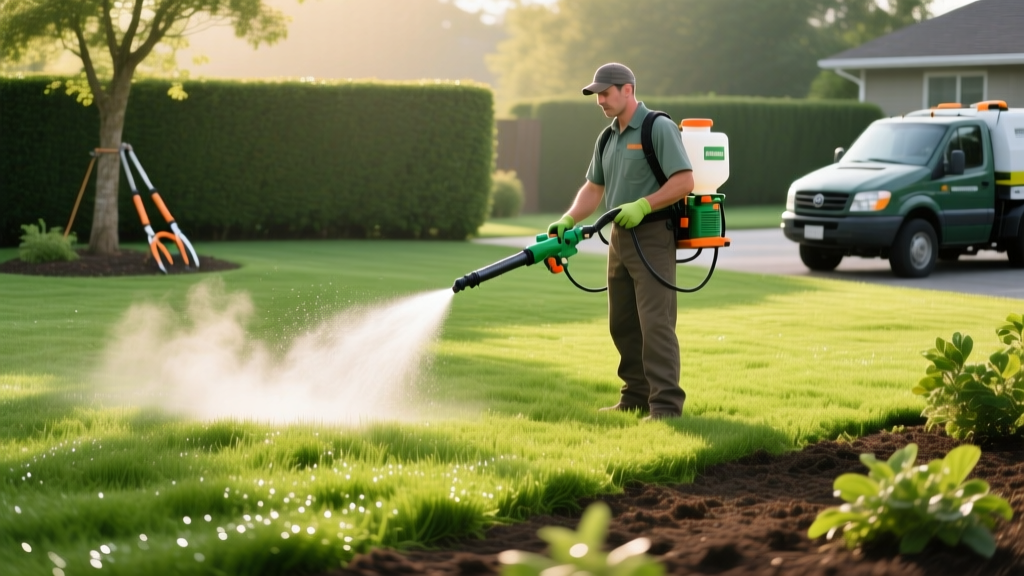
Broadleaf Herbicide and Fertilizer Timing Guide for Turf Health
The Root Zone Conflict: Why Timing Dictates Success
Homeowners frequently treat weed control and soil nutrition as isolated weekend chores, but in the turfgrass ecosystem, they are deeply intertwined. Applying a broadleaf herbicide simultaneously with a high-nitrogen fertilizer often results in reduced herbicide efficacy, severe turf burn, or wasted capital. The physiological mechanisms that drive nutrient uptake in grass roots can directly antagonize the systemic translocation required to kill broadleaf weeds like dandelions, clover, and plantain.
According to turfgrass researchers at NC State TurfFiles, the goal of an integrated lawn care program is to maximize turf density while minimizing chemical inputs. Achieving this requires a strategic separation of post-emergent broadleaf herbicides and soil-applied fertilizers, governed by soil chemistry, ambient temperatures, and plant metabolism.
The Soil Chemistry Connection: pH and Herbicide Efficacy
Before mixing any chemicals, you must understand your soil's pH. Most broadleaf herbicides—specifically those containing 2,4-D, Dicamba, and MCPP—are weak acids. Their ability to penetrate the waxy cuticle of a weed's leaf is heavily dependent on the pH of the spray solution and the underlying soil chemistry.
Optimal pH Targets for 2026 Turf Management:
- Cool-Season Grasses (Fescue, Kentucky Bluegrass): pH 6.2 to 6.8. At this range, 2,4-D amine formulations remain highly soluble and easily absorbed by broadleaf weeds.
- Warm-Season Grasses (Bermuda, Zoysia): pH 6.0 to 6.5. Slightly more acidic soils improve the availability of micronutrients like iron, which thickens the turf canopy and naturally shades out weed seedlings.
If your soil pH exceeds 7.2, the efficacy of many systemic broadleaf herbicides drops significantly. The alkaline environment causes the active ingredients to dissociate into salt forms that cannot easily cross the weed's leaf membrane. Furthermore, applying granular limestone (to raise pH) or sulfur (to lower pH) on the same day as a liquid herbicide application can alter the droplet pH upon contact, neutralizing the chemical before it penetrates the plant.
Separation vs. Combination: Analyzing the 'Weed and Feed' Approach
The retail market is saturated with granular 'Weed and Feed' products. While convenient, these combination products force a compromise between optimal fertilization timing and optimal herbicide timing. Broadleaf weeds must be actively growing and have sufficient leaf surface area to absorb the granular herbicide, which requires moisture (dew or light irrigation) to stick the granules to the weed leaves. However, watering the lawn to activate the granular herbicide simultaneously washes fast-release nitrogen into the soil, potentially pushing rapid, weak turf growth that is susceptible to disease.
| Application Strategy | Estimated Cost (per 1,000 sq ft) | Efficacy & Turf Impact |
|---|---|---|
| Granular Weed & Feed (e.g., Scotts Turf Builder Weed & Feed) |
$6.50 - $8.00 | Moderate weed kill. High risk of herbicide missing the weed leaf entirely if applied during dry spells. Excellent for maintenance, poor for heavy infestations. |
| Liquid Herbicide + Slow-Release Organic Fert (e.g., SpeedZone + Milorganite) |
$11.00 - $14.00 | Superior weed kill (95%+). Slow-release nitrogen prevents disease-prone flush growth. Best for premium lawn care programs. |
| Liquid Herbicide + Fast-Release Synthetic (e.g., Trimec Classic + Urea 46-0-0) |
$4.50 - $6.00 | High weed kill, but extreme risk of turf burn if temperatures exceed 85°F. Requires strict watering schedules. |
The 72-Hour Rule: Step-by-Step Application Sequence
To maximize the ROI of your soil nutrition program while eradicating broadleaf weeds, separate your applications by a minimum of 72 hours. This allows the herbicide to fully translocate to the weed's root system before the introduction of high salts and nitrogen from fertilizers.
- Day 1: Mow and Prep. Mow the lawn to 2.5 inches. This removes the top layer of older, waxy grass blades and exposes the broadleaf weed rosettes. Do not bag the clippings if weeds have not yet gone to seed.
- Day 2: Liquid Herbicide Application. Mix a 3-way broadleaf herbicide (such as Trimec Classic or SpeedZone) at the label rate—typically 1.5 oz per 1,000 square feet. Add a non-ionic surfactant at 0.25% v/v to break the water tension. Spray during the early morning when temperatures are between 65°F and 80°F.
- Day 3 & 4: The Translocation Window. Do not water, mow, or apply any soil amendments. The University of Minnesota Extension notes that systemic herbicides like 2,4-D require 48 to 72 hours to move from the leaf tissue down to the root crown. Watering during this window dilutes the chemical and halts translocation.
- Day 5: Fertilizer Application. Apply your chosen granular fertilizer. For spring, use a 24-0-6 formulation with at least 50% slow-release nitrogen (like methylene urea). For fall, switch to a high-potassium winterizer (e.g., 10-0-20) to promote root storage without top growth.
- Day 5 (Evening): Water In. Apply 0.5 inches of irrigation to wash the fertilizer granules off the grass blades and into the soil profile, activating the nutrients without disturbing the now-dried herbicide residue on the weeds.
Troubleshooting Common Failure Modes
Even with perfect timing, environmental variables can disrupt the chemical interaction between soil nutrition and weed control. Use this diagnostic guide to identify what went wrong.
-
⚠️ Symptom: Weeds curl and turn yellow, but recover after two weeks.
Cause: Mowing too soon. If you mowed within 48 hours of spraying, you physically removed the leaf tissue containing the herbicide before it reached the root. Fix: Wait a full 72 hours, and ensure your mower blades are sharp to avoid tearing the weed leaves post-spray. -
⚠️ Symptom: Turf tips turn brown and brittle 24 hours after combined application.
Cause: Solvent and salt burn. Applying liquid ester-based herbicides (which contain petroleum solvents) on the same day as fast-release synthetic fertilizers creates a massive osmotic shock to the grass blades, especially if daytime highs touch 85°F. Fix: Always separate liquid esters and synthetic nitrogen by at least 5 days, and only apply esters in late fall when temperatures drop below 70°F. -
✅ Symptom: Weeds die, but the lawn remains thin and pale.
Cause: Herbicide succeeded, but soil nutrition is locked up. This is almost always a pH or compaction issue. Fix: Perform a core aeration and apply liquid humic acid (1 oz per 1,000 sq ft) to improve the Cation Exchange Capacity (CEC) of the soil, allowing future fertilizers to actually reach the roots.
Expert FAQ: Integrating Weed and Feed Strategies
"The most common mistake I see in residential turf management is the 'calendar approach'—applying weed and feed on April 15th regardless of soil temperature or weed germination stages. Biological timing always beats calendar timing."
— Dr. James Hart, Turfgrass Pathologist
Can I mix liquid broadleaf herbicide and liquid fertilizer in the same sprayer tank?
Technically, yes, but it is highly discouraged for homeowners. Mixing liquid nitrogen (like UAN 28%) with 2,4-D or Dicamba in a single tank drastically increases the risk of phytotoxicity (leaf burn). The nitrogen forces the grass stomata open, which pulls the herbicide solvents into the desirable turfgrass tissue, causing severe damage. Keep them in separate tanks and apply on different days.
How does soil organic matter affect herbicide performance?
Soils with high organic matter (above 4%) have a high Cation Exchange Capacity (CEC). While this is excellent for holding onto fertilizer nutrients, organic matter can also bind to certain pre-emergent and post-emergent herbicides, neutralizing them before they work. If you have heavily amended, compost-rich soil, you may need to use the upper end of the labeled herbicide application rate to achieve control, as noted by Purdue University Turfgrass Science.
Should I use an amine or ester formulation for my spring broadleaf spray?
Always use an amine formulation (e.g., 2,4-D amine) in the spring and early summer. Amines are water-soluble, odorless, and much less likely to volatilize (turn into a gas) and drift onto neighboring ornamental flowers and vegetable gardens. Ester formulations are highly volatile in warm weather and should be strictly reserved for late fall applications when temperatures are consistently below 70°F, as they penetrate the waxy cuticles of cold-stressed weeds much more effectively.

