
Pest Control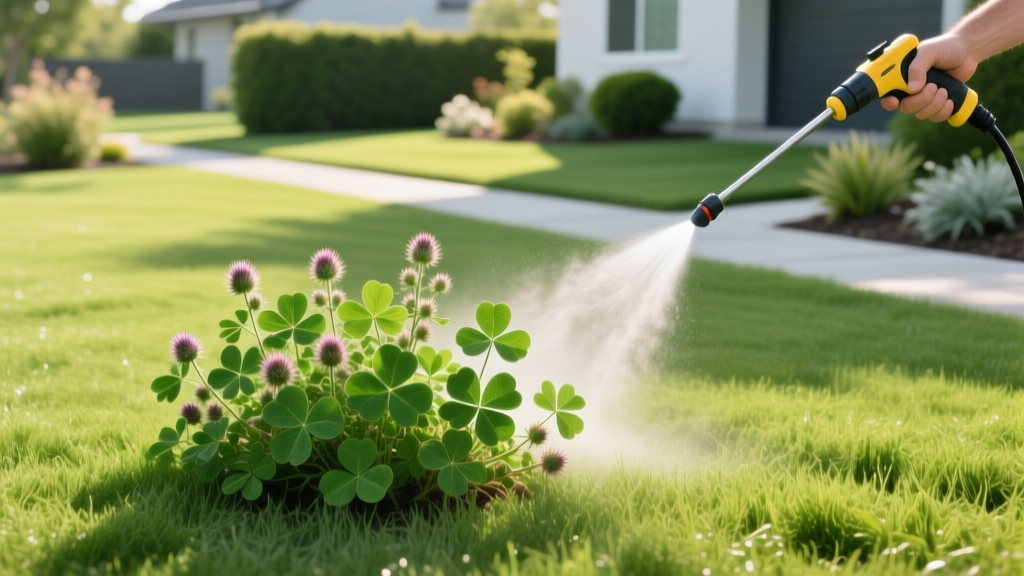
Targeted Broadleaf Weed Killer Guide: Spot-Treating Clover & Thistle
The Chemistry of Targeted Broadleaf Weed Killers
Broadcast spraying an entire lawn to eliminate a few isolated weed patches is an outdated practice that wastes chemical, damages soil biology, and increases turf stress. Modern integrated pest management relies on precision spot-treatment. However, selecting the correct broadleaf weed killer requires understanding the specific active ingredients and how they interact with different weed species and turfgrass types. As of 2026, professional-grade ester and amine formulations remain the gold standard for homeowners seeking rapid, systemic control without relying on expensive lawn care services.
Broadleaf herbicides are synthetic auxins. They mimic the plant hormone indole-3-acetic acid (IAA), causing unregulated, unsustainable cellular growth that ultimately ruptures the plant's vascular tissue. The efficacy of this mechanism depends entirely on matching the active ingredient to the weed's specific biological defenses.
| Active Ingredient | Primary Target Weeds | Cool-Season Turf Safety | Warm-Season Turf Safety |
|---|---|---|---|
| 2,4-D (Amine/Ester) | Dandelion, Plantain, Chickweed | Excellent | Moderate (Can stunt Bermuda/Zoysia) |
| Triclopyr | White Clover, Ground Ivy, Violets | Excellent | Poor (Severe damage to St. Augustine/Centipede) |
| Dicamba | Knotweed, Spurge, Black Medic | Excellent | Moderate |
| Penoxsulam | Clover, Dollarweed, Buttonweed | Good | Excellent (Safe for St. Augustine) |
| Carfentrazone | Burn-down accelerator for all broadleaves | Excellent | Good (Requires lower rates) |
Species-Specific Spot Treatment Protocols
1. White Clover (Trifolium repens)
White clover is notoriously difficult to eradicate due to its waxy leaf cuticle and creeping stolons that root at the nodes. A standard 2,4-D product will often cause the leaves to curl and turn purple without killing the root system. To penetrate the waxy cuticle, you must use a broadleaf weed killer containing Triclopyr combined with a high-quality non-ionic surfactant (NIS) or methylated seed oil (MSO).
Pro Formulation Tip: Products like T-Zone SE (Triclopyr + 2,4-D + Dicamba + Sulfentrazone) or SpeedZone Southern (for warm-season grasses) are industry standards. As of early 2026, a half-gallon of T-Zone SE retails for $65–$80, which yields enough concentrate to treat over 20,000 square feet of spot-weed pressure.
Mixing Protocol for Clover: Mix 1.5 fluid ounces of Triclopyr-based concentrate per 1.0 gallon of water. Add 0.25% v/v of a non-ionic surfactant (approximately 1/3 teaspoon per gallon). The surfactant breaks the surface tension of the water, allowing the herbicide to spread evenly across the clover's hydrophobic leaves rather than beading up and rolling onto the soil.
2. Canada Thistle (Cirsium arvense)
Canada thistle possesses an extensive, deep rhizome network that can extend 15 feet laterally and 6 feet deep. Spot-treating thistle in the spring or early summer is a common failure mode; the plant is actively pushing energy upward to produce flowers, meaning the herbicide will not translocate down into the rhizomes.
For systemic eradication, spot-treatment must occur during the early fall rosette stage (typically September to mid-October, depending on your USDA hardiness zone). During this window, the plant is actively pulling carbohydrates down into its root system for winter storage, carrying the synthetic auxins directly to the rhizomes. Use a high-ester 2,4-D and Triclopyr combination, ensuring you thoroughly wet the basal rosette leaves without drenching the surrounding soil.
3. Dandelion (Taraxacum officinale)
Dandelions rely on a thick, brittle taproot that can regenerate if the crown is left intact. While almost any broadleaf weed killer will burn down dandelion foliage, achieving total taproot necrosis requires adequate volume. When spot-spraying, do not just mist the yellow flower heads. Aim the nozzle at the center of the basal rosette where the leaves meet the crown, applying the solution until the leaves are uniformly wet and a single drop is just about to fall from the leaf tip.
Equipment and Application Masterclass
The effectiveness of your broadleaf weed killer is heavily dictated by your application hardware. The standard cone nozzle included with most cheap 1-gallon pump sprayers produces large, uneven droplets that lead to runoff and poor coverage.
- Nozzle Selection: Upgrade to a 110-degree flat fan nozzle (such as the TeeJet XR11004). This produces a uniform spray pattern that ensures consistent coverage on broadleaf surfaces.
- Pressure Control: Maintain tank pressure between 20 and 30 PSI. Pumping the sprayer to maximum pressure (often 60+ PSI) creates a fine mist that is highly susceptible to wind drift, potentially damaging nearby ornamental shrubs or vegetable gardens.
- Drift Guards: When treating weeds near flower beds, attach a physical shield or cone guard to the spray wand to prevent accidental overspray onto desirable broadleaf plants.
Common Failure Modes and Troubleshooting
Even with the correct broadleaf weed killer, environmental factors and mixing errors can lead to treatment failure. Refer to this troubleshooting matrix before reapplying chemicals.
Symptom: Leaves curl and turn purple, but the weed does not die.
Cause: Application during cool weather. Synthetic auxins require active plant metabolism to translocate. If daytime temperatures are below 55°F (13°C), the plant's vascular system is largely dormant.
Fix: Wait for a 48-hour window where daytime highs consistently exceed 65°F and nighttime lows remain above 45°F.
Symptom: Surrounding turfgrass shows severe yellowing or bleaching.
Cause: Over-application or application during high heat. Applying ester-based herbicides when temperatures exceed 85°F causes volatilization. The chemical turns into a gas and settles on surrounding turf and desirable plants. Alternatively, the mix rate exceeded the label's maximum threshold for your specific grass species.
Fix: Restrict spot treatments to early morning hours. Always calibrate your mix rate based on the specific turfgrass cultivar listed on the product label.
"Volatilization of Dicamba and 2,4-D esters during summer temperature inversions can cause severe epinasty (leaf cupping) in sensitive off-target trees like redbuds and tomatoes, even if physical wind drift was zero. Always check local atmospheric conditions before mixing your tank." — University Turfgrass Extension Guidelines
Authoritative References and Further Reading
Proper identification and chemical selection are critical for lawn health and environmental safety. The protocols outlined above are synthesized from current university extension research and integrated pest management guidelines. For localized weed identification and specific turfgrass cultivar tolerances, consult the following authoritative resources:
- Penn State Extension: Broadleaf Weeds in Turf - Comprehensive identification guides and cultural control methods for cool-season lawns.
- University of Minnesota Turfgrass Science: Broadleaf Weed Control - Research-backed timing protocols for fall and spring auxin applications in northern climates.

