
Pest Control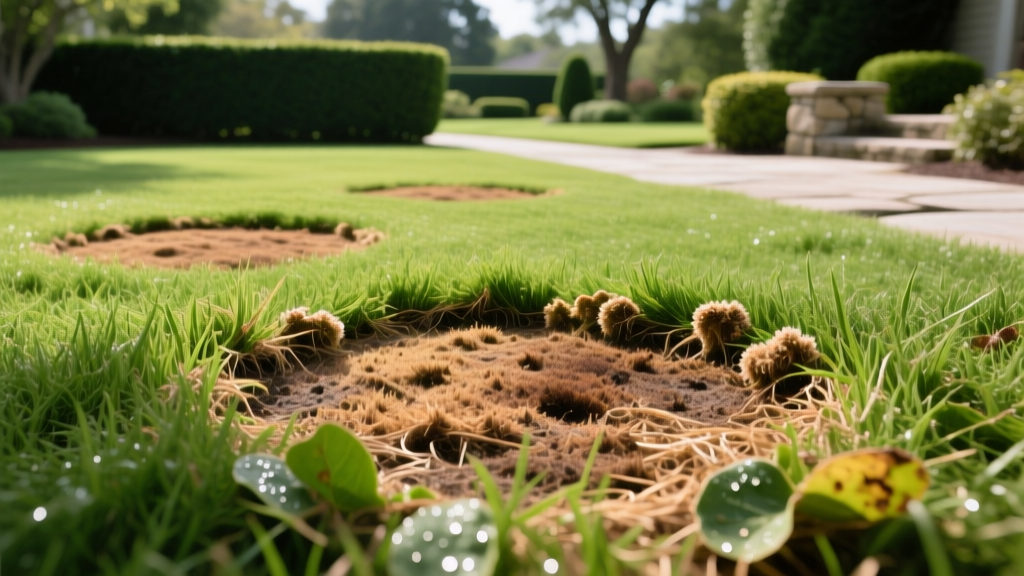
Brown Patch St Augustine Diagnosis and Rescue Fixes
The 60-Second Symptom Checklist: Confirming Rhizoctonia Solani
St. Augustinegrass is highly susceptible to Rhizoctonia solani, the pathogen responsible for brown patch. Before applying any chemical treatments, you must definitively confirm the diagnosis. Misidentifying brown patch as drought stress, chinch bug damage, or Take-All Root Rot (TARR) will waste time and money while the fungus destroys your turf's stolons.
Rapid Field Diagnosis Matrix
- The Smoke Ring Test: Inspect the lawn at dawn when dew is present. Active brown patch displays a dark, water-soaked 'smoke ring' border about 1 to 2 inches wide at the outer edge of the circular patch. If the ring is absent and the grass is uniformly brittle, suspect drought or dormancy.
- The Pull Test: Grasp a leaf blade at the edge of the damaged area and pull gently. If the leaf sheath rots and the blade pulls cleanly away from the stolon with a dark, mushy base, brown patch is active. If the entire stolon and root system pull up easily with black, necrotic roots, you are dealing with Take-All Root Rot, not brown patch.
- Patch Geometry: Brown patch forms distinct circular or irregular patches ranging from 1 to 5 feet in diameter. Chinch bug damage typically starts as localized yellowing at the edges of driveways or sidewalks and lacks circular geometry.
According to turf pathology research from NC State University's TurfPath program, Rhizoctonia solani primarily attacks the leaf tissue and sheaths of St. Augustinegrass, rarely killing the crown or roots outright. This means rapid rescue is highly achievable if caught before secondary pathogens invade the weakened tissue.
The Environmental Triggers: Why Your Lawn Infected
Brown patch does not occur randomly. It requires a specific microclimate to germinate and spread. If your lawn is currently infected, one or more of the following thresholds have been breached:
- Nighttime Temperature Trap: The fungus thrives when nighttime temperatures remain between 70°F and 90°F. Daytime heat is less relevant than the lack of nighttime cooling.
- Leaf Wetness Duration: Spores require a minimum of 10 to 12 hours of continuous leaf wetness to infect. Evening irrigation or heavy evening dew combined with poor air circulation creates this window.
- Thatch Accumulation: A thatch layer exceeding 0.5 inches acts as an insulator, trapping moisture against the soil surface and harboring fungal sclerotia from previous seasons.
- Excess Nitrogen: Applying quick-release nitrogen (like urea) during late spring or early fall forces rapid, succulent leaf growth that is highly vulnerable to fungal penetration.
The 48-Hour Rescue Treatment Protocol
Once brown patch is confirmed, you have a narrow window to halt the spread. Follow this exact 48-hour protocol to arrest the disease and protect uninfected tissue.
Step 1: Immediate Cultural Triage (Hours 1-4)
Stop all nitrogen fertilization immediately. Do not apply weed-and-feed products or iron supplements, as the salts and nitrogen will stress the compromised leaf tissue. Adjust your irrigation controller to water only between 4:00 AM and 6:00 AM. This ensures the grass blades dry rapidly once the sun rises, breaking the 10-hour leaf wetness cycle the fungus needs to reproduce.
Step 2: Curative Fungicide Application (Hours 4-24)
Over-the-counter fungicides work, but only if applied at curative rates, which are significantly higher than the preventative rates listed on the front of the bag. You must use a systemic fungicide that penetrates the leaf tissue.
| Active Ingredient (FRAC Group) | Common Brand (Consumer) | Curative Application Rate | Est. Cost per 1,000 sq ft |
|---|---|---|---|
| Azoxystrobin (Group 11) | Scotts DiseaseEX | 4.0 lbs / 1,000 sq ft (Granular) | $12.00 - $15.00 |
| Propiconazole (Group 3) | BioAdvanced Fungus Control | 2.0 to 4.0 oz / 1,000 sq ft (Liquid) | $4.00 - $8.00 |
| Myclobutanil (Group 3) | Spectracide Immunox | 2.0 to 4.0 oz / 1,000 sq ft (Liquid) | $5.00 - $9.00 |
Critical Resistance Warning: Rhizoctonia solani rapidly develops resistance to Group 11 (QoI) fungicides like Azoxystrobin. If you apply Scotts DiseaseEX for your initial rescue treatment, your follow-up application 14 to 21 days later must be a Group 3 DMI fungicide like Propiconazole. Never apply Group 11 chemicals consecutively.
Step 3: Post-Application Hydration (Hours 24-48)
If you applied a granular fungicide like DiseaseEX, you must water the lawn with exactly 0.1 to 0.2 inches of irrigation immediately after spreading. This washes the active ingredient off the leaf blades and into the thatch layer where the pathogen resides. Do not overwater; heavy runoff will carry the chemical past the root zone and waste your investment. If you used a liquid Propiconazole spray, do not water for at least 24 hours to allow foliar absorption.
Differential Diagnosis: When It Is Not Brown Patch
Treating the wrong disease is the most common reason homeowners fail to rescue their St. Augustine lawns. Use this quick-reference guide to rule out look-alike issues before buying fungicides.
- Take-All Root Rot (TARR): Caused by Gaeumannomyces graminis. Unlike brown patch, TARR causes severe root necrosis. The stolons will be black and shriveled. Fungicides containing Azoxystrobin will help, but cultural fixes require lowering soil pH to 5.5 using elemental sulfur and applying sphagnum peat moss top-dressings.
- Gray Leaf Spot: Presents as small, oval, ash-colored lesions on individual leaf blades rather than large circular patches. Thrives in high-nitrogen environments during late summer. Requires Group 11 or Group 3 fungicides, but demands immediate cessation of evening watering.
- Chinch Bug Damage: Look closely at the transition zone between dead and healthy grass. If you see tiny black and white insects scurrying in the thatch, you have a pest problem, not a fungal one. Treat with Bifenthrin or clothianidin, not fungicides.
Long-Term Cultural Rescue Fixes
Fungicides only suppress the pathogen; they do not cure the underlying environmental flaws. To prevent a secondary outbreak 30 days later, implement these permanent cultural shifts:
Mowing Height Calibration
St. Augustinegrass is frequently scalped by homeowners using rotary mowers set too low. Scalping removes the photosynthetic canopy and exposes the moisture-retaining thatch layer to direct sunlight, creating a humid microclimate at the soil level. Raise your mower deck to a minimum of 3.5 to 4.0 inches. Ensure your mower blade is sharpened; a dull blade shreds the leaf tips, creating open wounds that Rhizoctonia spores exploit for entry.
Potassium Supplementation
While nitrogen fuels fungal growth, potassium (K) thickens the plant's cell walls, making physical penetration by fungal hyphae much more difficult. If a soil test reveals low potassium levels, apply a 0-0-20 or 0-0-25 sulfate of potash fertilizer at a rate of 1 lb of K2O per 1,000 sq ft during the peak summer infection window. The Clemson University Home & Garden Information Center specifically recommends avoiding high-nitrogen fertilizers in late summer and shifting to potassium-heavy turf builders to enhance disease tolerance.
Aeration and Thatch Management
If your thatch layer exceeds 0.5 inches, schedule core aeration for the following spring when the grass is actively growing and can recover. Do not aerate or dethatch during an active brown patch outbreak; the mechanical wounding will spread the fungal sclerotia across the lawn via the aerator tines. Wait until the fungicide has suppressed the disease and the turf is actively pushing new stolons.
Rescue Protocol Summary
1. Confirm via the Pull Test and Smoke Ring.
2. Shift irrigation to 4:00 AM.
3. Apply Group 11 (Azoxystrobin) at 4 lbs/1k sq ft curative rate.
4. Rotate to Group 3 (Propiconazole) 21 days later.
5. Raise mowing height to 4 inches and halt nitrogen applications.

