
Pest Control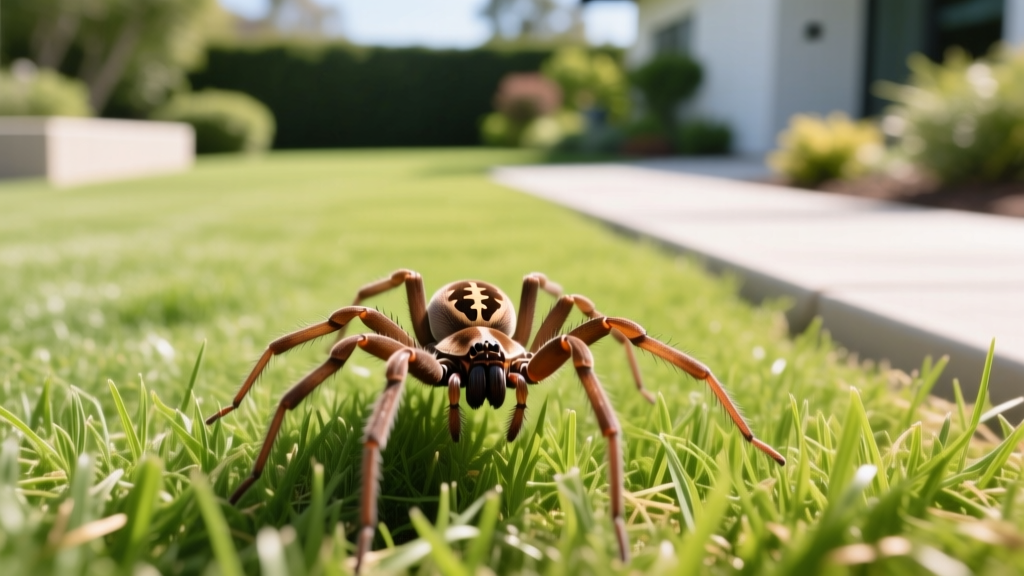
Brown Recluse Grass Spider: Diagnosis and Yard Rescue Fixes
The "Brown Recluse Grass Spider" Misconception
When homeowners spot a brown spider darting across their lawn or resting in a turf web, panic often leads to a frantic search for the "brown recluse grass spider." However, from an entomological standpoint, there is no such species. The brown recluse (Loxosceles reclusa) is a necrotic-venomous spider that strictly avoids open, sunlit grass. They are reclusive by nature, seeking dark, undisturbed harborage like woodpiles, rock crevices, and dense leaf litter.
If you are seeing brown spiders actively hunting in your grass or building funnel-shaped webs in your turf, you are almost certainly looking at harmless funnel weavers (Agelenidae) or wolf spiders (Lycosidae). Brown recluses only end up in lawn environments if your yard features severe overgrowth, untended debris borders, or woodpiles resting directly on the turf. This guide provides a diagnostic framework to accurately identify the spider in your yard and actionable rescue fixes to eliminate actual brown recluse habitats from your property perimeter.
Symptom Diagnosis: Is It a Brown Recluse or a Harmless Grass Spider?
Misidentification is the leading cause of unnecessary pesticide use in residential lawns. Many harmless spiders possess a dorsal "violin" or "fiddle" marking, making visual identification based on back patterns highly unreliable. To accurately diagnose the spider in your yard, you must evaluate eye arrangement, leg spination, and web structure.
Visual Identification Matrix
| Diagnostic Feature | Brown Recluse (L. reclusa) | Grass Spider (Funnel Weaver) | Wolf Spider |
|---|---|---|---|
| Eye Count | 6 eyes (arranged in 3 pairs) | 8 eyes (two rows of 4) | 8 eyes (three rows: 4-2-2) |
| Leg Texture | Uniform color, completely smooth (no spines or hairs) | Banded patterns, visibly hairy | Thick, heavily spined and hairy |
| Web Type | Irregular, non-sticky retreat webs in dark debris | Dense, funnel-shaped horizontal webs in turf | No web (active ground hunter) |
| Behavior in Grass | Rare; only found hiding under debris/rocks on turf edges | Sits at the mouth of the grass funnel web | Runs rapidly across open grass to hunt |
Diagnostic Pro-Tip: If you cannot safely get close enough to count the eyes, look at the legs. Brown recluses have uniformly colored, completely hairless legs. If the spider's legs look spiky, banded, or fuzzy, it is not a brown recluse. For definitive confirmation, capture the spider using a clear glass jar and consult your local University Extension Office.
Yard Rescue Fixes: Eliminating Brown Recluse Habitats
If you have confirmed the presence of brown recluses in your yard debris, or if you simply want to rescue your lawn's perimeter from becoming a harborage zone, you must alter the microclimate. Brown recluses require high humidity and physical cover. Implement these targeted rescue fixes immediately.
1. The 20-Foot Perimeter Clearance Rule
Brown recluses migrate from yard debris into homes during late summer and early autumn. Establish a strict 20-foot clearance zone between your home's foundation and any potential harborage.
- Woodpile Elevation: Never store firewood directly on the grass or soil. Elevate logs at least 12 inches off the ground using a steel rack (such as the Panacea Products 16-Inch Steel Log Rack, typically priced around $45). Move the pile at least 20 feet from the house.
- Debris Removal: Clear leaf litter, discarded lumber, and rock piles from the lawn's edge. Mulch beds should be kept to a maximum depth of 2 inches and pulled back 6 inches from the foundation.
- Turf Mowing Heights: Maintain your lawn at 2.5 to 3.5 inches. Overgrown grass traps ground-level moisture, creating the exact humid microclimate that attracts the insects that spiders prey upon.
2. Lighting and Prey Reduction
Spiders congregate where food is abundant. Standard white exterior LED and incandescent bulbs attract massive swarms of nocturnal insects, which in turn draw hunting spiders to your lawn's perimeter.
Switch all exterior porch, garage, and pathway lights to yellow sodium vapor bulbs or warm LEDs rated at 2700K or lower. These wavelengths are virtually invisible to most flying insects, effectively cutting off the food supply that draws spiders to your yard.
Chemical Rescue: Targeted Perimeter Treatments
Broadcast spraying your entire lawn for spiders is an ecological mistake that destroys beneficial turf predators. If a brown recluse population is confirmed in your yard debris, use a targeted perimeter barrier treatment.
Recommended Active Ingredients and Application
For 2026 rescue treatments, professional-grade pyrethroids remain the most effective barrier. Bifenthrin (found in products like Talstar P, costing roughly $50 per gallon concentrate) is highly effective against wandering recluses.
- Mixing Rate: Mix 1 fluid ounce of Bifenthrin concentrate per 1 gallon of water.
- Application Zone: Using a pump sprayer, apply the solution to the bottom 2 feet of your home's exterior foundation and the adjacent 3 feet of soil/mulch. Do not spray the open grass.
- Debris Targeting: Lightly mist the undersides of retained rock walls, the base of woodpiles, and the interior corners of outdoor sheds.
- Reapplication: Reapply every 60 to 90 days during the active season (May through October), or immediately after heavy rainfall exceeding 1 inch.
If the infestation is severe, hiring a licensed pest control professional for a targeted exterior perimeter treatment typically costs between $150 and $250 for a standard 1/4-acre lot. Ensure the technician uses a micro-encapsulated formulation (like Onslaught FastCap), which provides better UV resistance and longer residual control in outdoor environments.
First Aid and Bite Protocol
While brown recluse bites in the yard are exceedingly rare (they are non-aggressive and only bite when crushed against the skin), knowing the correct rescue protocol is critical. If you suspect a bite while doing yard work:
- Immediate Action: Wash the area thoroughly with soap and water. Apply a cold compress or ice pack to reduce localized swelling.
- What NOT to Do: Never apply a tourniquet, attempt to cut the wound, or use suction devices. These outdated methods cause severe tissue damage and increase the risk of secondary infection.
- Medical Intervention: Monitor the site for 24 to 72 hours. If the bite develops a spreading red halo, a central blister, or signs of necrosis (tissue turning dark or black), seek immediate medical attention. According to the Mayo Clinic, systemic symptoms like fever, chills, or nausea require emergency intervention.
Summary of Actionable Steps
Stop treating your entire lawn for a spider that doesn't live in the grass. Accurately diagnose the spider using the 6-eye and leg-hair rules. If it is a harmless grass spider, leave it alone to control your mosquito and grub populations. If it is a brown recluse, execute the 20-foot perimeter clearance, elevate your woodpiles, and apply a targeted Bifenthrin barrier to your foundation and debris zones.

