
Pest Control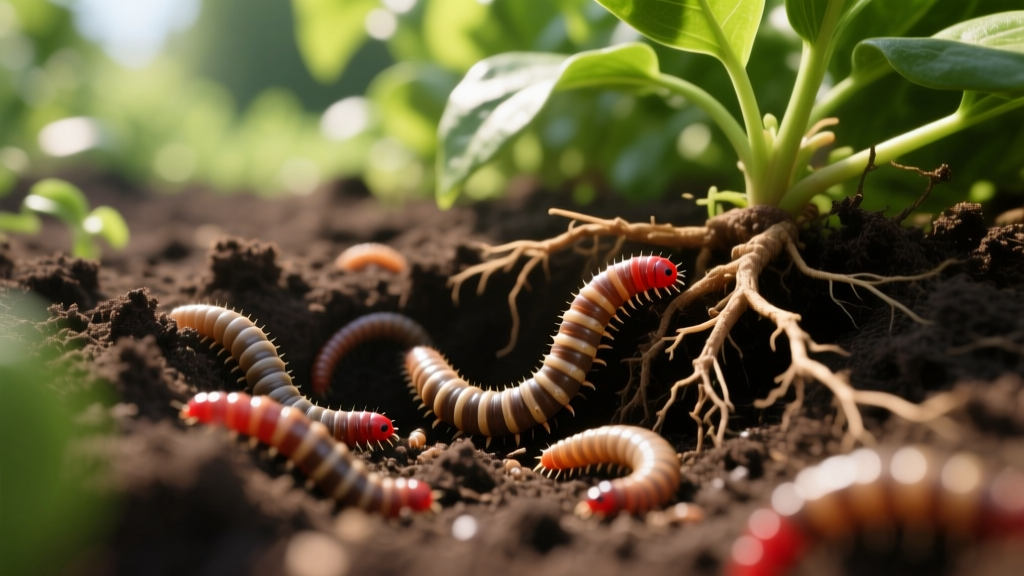
Destructive Worms in Garden Beds: Identification and Treatment
The 'Worm' Misconception: Beneficial vs. Destructive
When homeowners discover worms in garden soil, the immediate instinct is often eradication. However, accurate identification is the cornerstone of effective yard defense. True worms, such as the common earthworm (Lumbricus terrestris), are vital ecosystem engineers that aerate soil and cast nutrient-rich humus. The destructive pests commonly referred to as 'worms' are actually the larval stages of insects—specifically caterpillars (moths/butterflies) and grubs (beetles).
Telling them apart requires a visual inspection. Earthworms possess a distinct clitellum (a raised, saddle-like band near the head), lack legs entirely, and move via muscular contraction. Insect larvae, conversely, feature distinct head capsules, mandibles, and either fleshy prolegs (caterpillars) or jointed thoracic legs (grubs). Applying broad-spectrum pesticides without confirming the species will annihilate your beneficial earthworm populations, leading to long-term soil compaction and nutrient lock-up.
Identification Matrix: The Big Three Garden Pests
To mount an effective defense, you must identify the specific larval pest attacking your plants. Below is a diagnostic matrix for the most common destructive 'worms' found in North American garden beds and turf margins.
| Pest Larva | Visual Characteristics | Primary Damage Signs | Active Zone & Time |
|---|---|---|---|
| Cutworms (Agrotis ipsilon) |
1-2 inches, gray/brown, curl into a tight 'C' when disturbed. Greasy appearance. | Seedlings severed cleanly at the soil line. Stems chewed through at night. | Top 1 inch of soil. Nocturnal feeders (Spring/Early Summer). |
| White Grubs (Phyllophaga spp.) |
0.5-1 inch, plump, milky white with brown heads. Six jointed legs near the head. | Root systems consumed. Turf rolls back like carpet. Plants wilt despite watering. | 2-6 inches deep in the soil profile. Mid-Summer to Fall. |
| Armyworms (Spodoptera frugiperda) |
1-1.5 inches, green/brown with distinct yellowish stripes down the back and an inverted 'Y' on the head. | Rapid, massive defoliation. Leaves chewed down to the midrib. Entire beds stripped in days. | Surface foliage and thatch layer. Feed day and night (Late Summer/Fall). |
Biological Defense Strategies: Organics That Actually Work
For gardeners managing edible crops or sensitive pollinator habitats, biological controls offer lethal specificity against pest larvae while leaving earthworms, bees, and mammals unharmed.
1. Targeted Bt Applications (For Cutworms & Armyworms)
Bacillus thuringiensis (Bt) is a naturally occurring soil bacterium that produces crystalline proteins toxic to specific insect guts. However, not all Bt is created equal. You must use Bt var. kurstaki (Btk) for caterpillars like cutworms and armyworms. (Bt var. israelensis is strictly for mosquito/fungus gnat larvae and will fail against garden worms).
- Product Recommendation: Monterey B.t. Insect Spray or Bonide Thuricide.
- Application Rate: 1.5 to 2 fluid ounces per 3 gallons of water. Apply as a foliar spray and soil drench around the base of seedlings at dusk.
- Cost: Approximately $15 to $18 per 16 oz bottle, treating up to 5,000 sq ft.
- Limitation: UV light degrades Btk within 3 to 5 days. Reapply after heavy rainfall or weekly during peak hatches. Btk is entirely ineffective against white grubs.
2. Beneficial Nematodes (For White Grubs & Cutworms)
Microscopic, unsegmented roundworms act as parasitic assassins. They enter the pest larva through natural openings, release symbiotic bacteria (Xenorhabdus or Photorhabdus), and kill the host within 48 hours. Earthworms are too large and biologically incompatible to be harmed by these specific nematode strains.
- Strain Selection: Use Heterorhabditis bacteriophora (Hb) for deep-dwelling white grubs. Use Steinernema carpocapsae (Sc) for shallow-dwelling cutworms and armyworms.
- Application Protocol: Mix 10 million nematodes in 1-2 gallons of cool, distilled water (chlorine in tap water will kill them). Apply via watering can or hose-end sprayer without screens.
- Environmental Triggers: Soil temperature must be between 55°F and 85°F. Water the area heavily before and immediately after application; nematodes require a moisture film to swim through soil pores.
- Cost: $35 to $45 per 10 million nematodes (covers ~1,500 sq ft) from suppliers like Arbico Organics.
"The most common failure mode with beneficial nematodes is thermal shock. If the package sits in a hot mailbox or if you apply them to dry, sun-baked soil at noon, the mortality rate approaches 100% before they ever reach a grub." — Integrated Pest Management Guidelines, University of Minnesota Extension (Source)
Chemical Interventions: When Organics Fail
When larval populations exceed economic thresholds and biological controls cannot keep pace, targeted synthetic chemistry is required. The goal is maximum efficacy with minimal soil persistence.
Preventative Grub Control: Chlorantraniliprole
For lawns and perennial borders suffering from annual white grub cycles, Chlorantraniliprole (the active ingredient in Scotts GrubEx) is the industry standard. It acts as a ryanodine receptor modulator, causing muscle paralysis in grubs. It is highly effective against scarab beetle larvae but has an exceptionally low toxicity profile for earthworms, birds, and mammals.
- Timing: Apply between April 1 and May 15. This targets the newly hatched, highly vulnerable first-instar grubs.
- Rate: 2.87 lbs of product per 1,000 sq ft.
- Activation: Must be watered in with at least 0.5 inches of irrigation immediately after spreading to move the chemical into the root zone.
Curative Cutworm & Armyworm Control: Spinosad
If you discover active surface-feeding caterpillars mid-season, Spinosad (derived from the soil bacterium Saccharopolyspora spinosa) provides rapid knockdown. Products like Captain Jack's Deadbug Brew are OMRI-listed for organic use but possess the aggressive feeding-stop action of a synthetic. Apply at a rate of 2 oz per gallon. Note: Spinosad is highly toxic to bees while wet; apply strictly in the late evening when pollinators are inactive.
Decision Framework: The 'Dig and Count' Threshold
Do not treat your yard blindly. Use the square-foot sampling method to determine if intervention is economically justified.
- Cut a 1-foot by 1-foot square of turf or garden soil, 3 inches deep.
- Place it on a tarp and break it apart by hand, counting the grubs or larvae.
- Turfgrass Threshold: If you count 10 or more white grubs per square foot, chemical or nematode treatment is required. Under 10, the turf can outgrow the root damage.
- Vegetable Garden Threshold: If you find more than 1 cutworm per square yard of seedling beds, deploy Btk and physical collars immediately. Seedlings have zero tolerance for stem severing.
Frequently Asked Questions
Can I use milky spore to kill garden worms?
Milky spore (Paenibacillus popilliae) is a highly specific biological control that only targets Japanese beetle grubs. It will not kill cutworms, armyworms, wireworms, or the grubs of other scarab beetles like June bugs or European chafers. Furthermore, milky spore requires a host population to establish in the soil; it is ineffective as a quick-fix curative treatment and can take 2 to 4 years to reach peak efficacy in northern climates.
How do I protect individual transplants from cutworms without chemicals?
Deploy physical 'cutworm collars'. Cut 3-inch strips of cardboard or aluminum foil. Wrap them around the base of the transplant stem, ensuring 1 inch is buried below the soil line and 2 inches protrude above it. This creates an impenetrable physical barrier against nocturnal foraging cutworms. Remove the collars after 3 weeks once the plant stem has lignified (hardened).
Are wireworms the same as grub worms?
No. Wireworms are the larvae of click beetles (Elateridae). They are hard-bodied, segmented, and range from yellow to rust-brown, resembling thin pieces of copper wire. Unlike soft, C-shaped white grubs, wireworms bore directly into root vegetables like carrots, potatoes, and radishes. The EPA notes that Bt products do not affect wireworms. Crop rotation and the use of bait traps (burying half a potato on a stick and retrieving it weekly) are the most effective non-chemical defenses against wireworms in root crop beds.

